
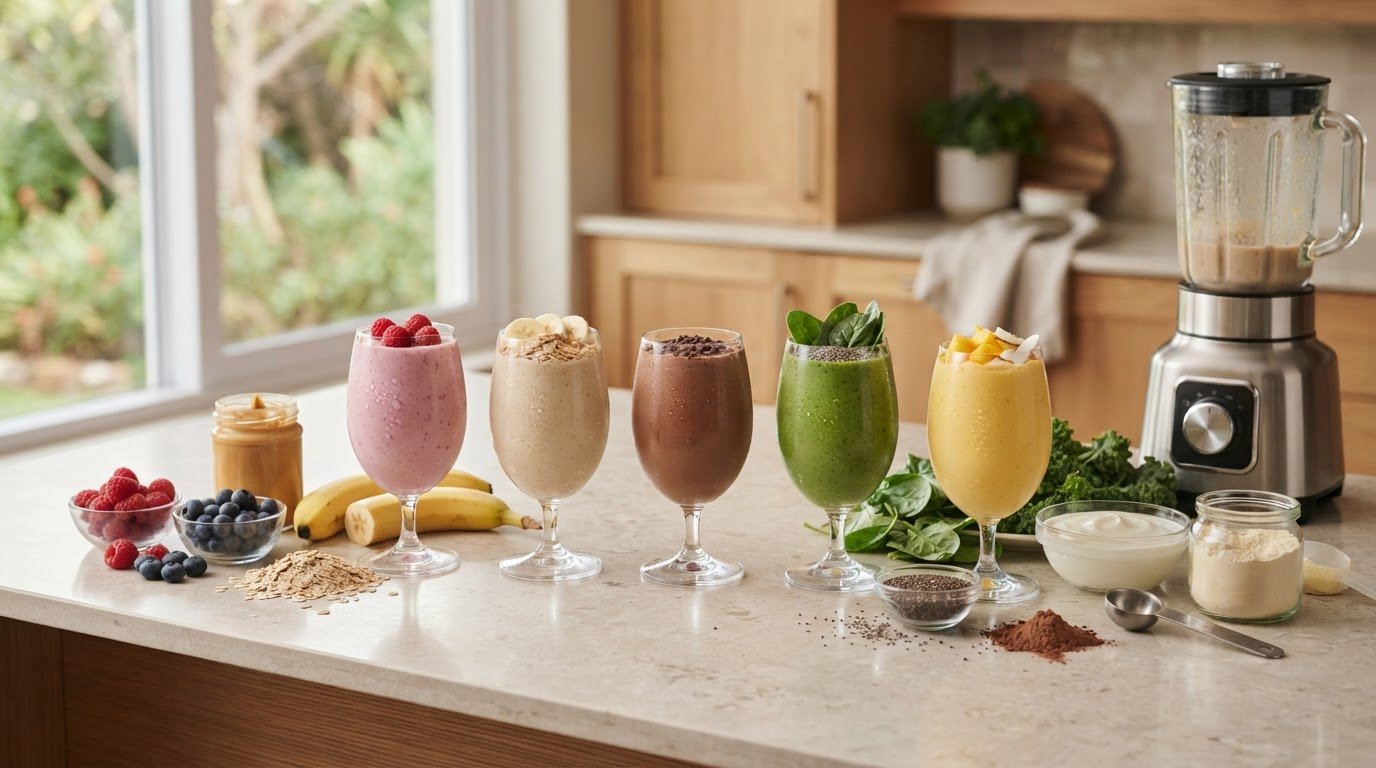
A smoothie can be quick and fruity, yet still leave you looking for something more before the morning’s done. The difference is a deliberate protein base, paired with ingredients that bring flavour and texture. These high protein smoothie recipes for breakfast give you a practical place to start.
When mornings are rushed, measuring out a sit-down meal isn’t always realistic. But if fruit is doing all the work, your smoothie may not include much protein. Use measured ingredients, straightforward steps and label information to check what’s in your glass rather than relying on guesswork.
Here you’ll find five breakfast smoothies with different flavours and ingredient options, including food-based protein and the option to add protein powder. Each recipe shows you what to blend and where you can make a suitable swap. Protein values vary by brand and serving size, so use the labels for the exact ingredients you choose. Pick a recipe, prepare the ingredients and make breakfast work with your morning routine.
Key Takeaways
- Judge a smoothie by its protein per serving, not its name or appearance. Check ingredient and product labels for the quantities you use.
- Build a balanced blend around a protein base, fruit or vegetables, liquid and an optional fibre-rich addition.
- Explore five high protein smoothie recipes for breakfast, including berry-and-yoghurt, banana-oat and chocolate-banana options.
- Adjust thickness gradually with liquid or other ingredients, and remember that changes can affect the smoothie’s nutrition.
- Choose a recipe to suit your taste and dietary preferences. Protein powder is optional, not a required part of breakfast.
What makes a breakfast smoothie genuinely high in protein?
A thick texture, a handful of berries or a name that promises a protein boost doesn’t tell you how much protein is in the drink. Check the amount in the portion you’ll actually have. There isn’t one universal cut-off that makes a smoothie high-protein for everyone, so compare the measured ingredients and their nutrition labels. That gives you a clear basis for assessing high protein smoothie recipes for breakfast.
Protein can come from yoghurt, dairy milk, soy milk or an optional protein powder. Fruit adds flavour and carbohydrate, but usually isn’t the main protein source. A banana can sweeten a smoothie and help it blend smoothly; it won’t replace a purposeful protein ingredient. For background on what is a smoothie, see the general overview, then focus on the ingredients and quantities in your glass.
Which ingredients add meaningful protein to a smoothie?
Compare options using the protein listed for the portion you’ll use. Dairy yoghurt can add protein and a creamy texture, while milk contributes protein as well as liquid. Soy milk is a plant-based option, but its protein content varies by product. Protein powder can be convenient, though serving sizes, protein values and suitability depend on the specific product. Check its label before measuring. Muscle Works offers whey and plant-based protein powders, including 100% Whey Protein 1kg, Iso-Tech Whey and Plant Protein 1.2kg. Use the current product label for serving information.
Nut butters can add a rich, nutty flavour and contribute protein, but a spoonful isn’t automatically a like-for-like substitute for yoghurt, milk or protein powder. Check the label and measure the amount you add. Even a small change can alter the recipe’s total.
How do you check the protein in one serving?
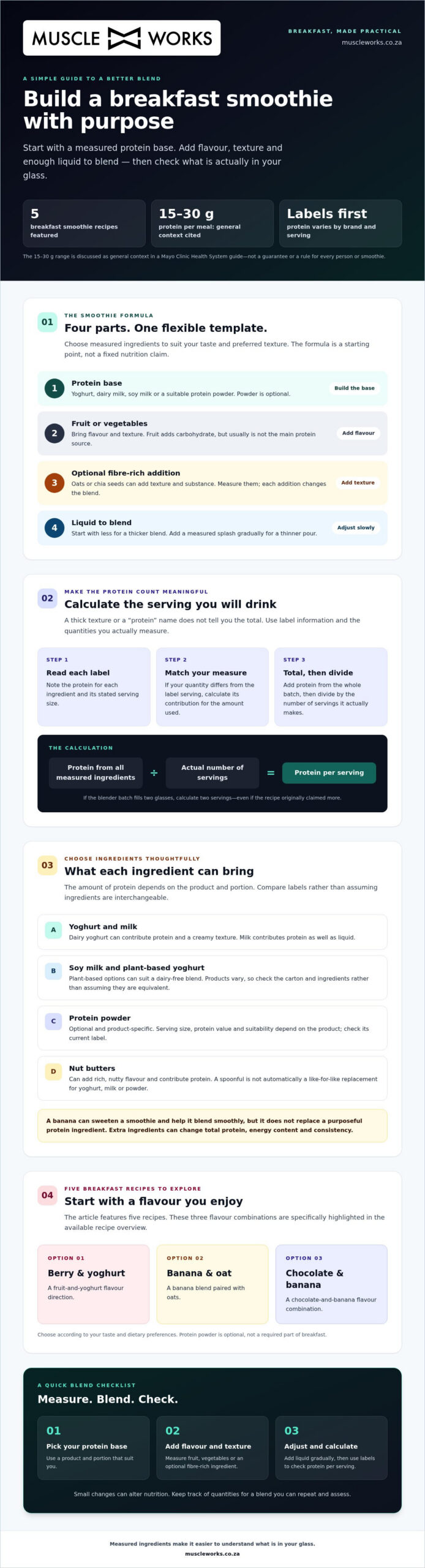
Use the same calculation each time. Note the protein on the nutrition label for each measured ingredient. If the quantity you use differs from the label’s serving size, work out the protein contribution for your actual amount. Add the contributions for the whole blender batch, then divide the total by the number of servings it really makes. If your pour fills two glasses, calculate two servings, even if the recipe originally claimed more.
Don’t copy a powder’s protein figure and use it as the total for the smoothie. Add the contributions from the yoghurt, milk, soy milk and other protein-containing ingredients too. Check that the label’s serving size matches the amount you measured. Brands and formulations vary, so verify recipe totals against the ingredients you actually use. A clear calculation makes it easier to compare recipes and adjust a serving with confidence.
The breakfast smoothie formula: protein, fruit and staying power
Use a simple structure: start with a protein base, add fruit or vegetables, choose an optional fibre-rich ingredient, then pour in liquid to blend. Your protein base might be yoghurt, milk, soy milk or a suitable protein powder. Oats, chia seeds and fruit can add texture and substance, but each extra ingredient also changes the smoothie’s energy content, consistency and total protein.
Build a smoothie from a measured protein base, fruit or vegetables, an optional fibre-rich addition and enough liquid to reach your preferred texture. This is a flexible template, not a fixed nutrition claim. The result depends on what you add and how much you use. Mayo Clinic Health System discusses a general range of 15 to 30 grams of protein per meal in its guide to recommended protein per meal. Treat this as context, not a guarantee that every smoothie suits every person or breakfast.
How can you make a smoothie filling enough for breakfast?
Pair your protein source with ingredients that suit the recipe, such as oats, fruit or seeds. They bring different flavours and textures, so measure them rather than adding handful after handful. For a thicker blend, start with less liquid and add more gradually. For a thinner pour, add a measured splash. Appetite and the rest of your day’s meals matter too, so choose a portion that works for you rather than relying on a promised number of hours of fullness.
More ingredients can make a smoothie richer, thicker or larger, but they also change its overall nutrition. If you adjust a recipe, note the quantities. That keeps the result repeatable and makes its protein total easier to check.
What can you use instead of dairy or protein powder?
For a dairy-free blend, try soy milk or a suitable plant-based yoghurt. Plant drinks differ in protein content and ingredients, so check the carton rather than assuming one is nutritionally equivalent to another. Protein powder is optional. If you choose one, follow its product label for serving information and suitability.
Muscle Works offers whey and plant-based protein options, including 100% Whey Protein 1kg, Iso-Tech Whey and Plant Protein 1.2kg. If you’re considering powder as one ingredient in your blend, check the current label first, then explore the protein powder options that may suit your preferences.
5 High-protein smoothie recipes for breakfast to put into rotation
Choose a flavour, measure the ingredients and blend until smooth. Each recipe makes one serving. Protein values aren’t listed because the amounts in yoghurt, milk and protein powder vary by product. Use the calculation below each recipe to check the protein in your actual serving before describing it as high-protein.
Berry yoghurt and banana-oat breakfast smoothies
1. Berry and yoghurt
Ingredients: 150 g plain yoghurt, 100 g mixed berries, 100 ml milk and 10 g chia seeds. Add everything to a blender and blend until smooth. For a dairy-free swap, use suitable plant-based yoghurt and soy milk, then recalculate using their labels.
Protein check: Add the protein in 150 g yoghurt, 100 ml milk and 10 g chia seeds, using each product’s label and the quantity used. Divide the total by one serving.
2. Banana and oat
Ingredients: 150 g plain yoghurt, 150 ml milk, 1 medium banana (about 120 g peeled) and 30 g rolled oats. Blend until creamy. Add a little more measured milk if you prefer a thinner texture.
Protein check: Add the label-based protein contributions from the yoghurt, milk and oats. Include the banana’s contribution from its label or a reliable nutrition reference if you’re calculating a complete total. Divide the batch total by one serving.
Chocolate, green and dairy-free smoothie options
3. Chocolate and banana
Ingredients: 250 ml milk, 1 medium banana (about 120 g peeled), 5 g unsweetened cocoa and one serving of protein powder, measured according to its label. Blend until smooth.
Protein check: Add the protein from the exact amount of milk and powder used, plus the banana and cocoa if included in your calculation. Use their labels or a reliable nutrition reference.
4. Green fruit
Ingredients: 150 g plain yoghurt, 100 ml milk, 30 g baby spinach, 100 g peeled pear and 30 ml water. Blend until smooth. The pear’s sweetness helps balance the mild flavour of spinach.
Protein check: Add the label-based values for yoghurt and milk, along with the measured spinach and pear, then divide by one serving.
5. Dairy-free berry blend
Ingredients: 250 ml soy milk, 100 g suitable plant-based yoghurt, 100 g berries and one label serving of plant protein powder. Blend until combined.
Protein check: Add the protein from the measured soy milk, yoghurt and powder using their current labels. Include the berries if calculating the full recipe total.
For all five recipes, your calculation is only as accurate as the quantities and labels you use. Record the total for the full blend, then divide by the number of servings it actually makes. Keep swaps separate from the core recipe and recalculate whenever you change an ingredient. These high protein smoothie recipes for breakfast are starting points, so verify the finished smoothie’s protein before presenting a figure.
How to customise, blend and prep breakfast smoothies
A reliable blend starts with measured ingredients, not guesswork. Follow this sequence, then adjust the texture while keeping track of any changes to the recipe:
- Measure: Set out the ingredients and portion sizes first. This makes the recipe easier to repeat.
- Add liquid and softer ingredients: Pour in the measured liquid, then add yoghurt, ripe fruit or other soft ingredients.
- Blend: Blend until smooth. Add firmer or frozen ingredients as needed for your blender.
- Adjust: Check the consistency. Add liquid a little at a time for a thinner pour, or use suitable frozen fruit or ice for a colder, thicker result.
If you’re only changing the texture, keep the core protein ingredient and its measured quantity steady. Any added ingredient can still alter the smoothie’s total nutrition, and changing the batch size or number of glasses changes the protein per serving. Recalculate using the quantities and labels you actually use, especially when scaling one of these high protein smoothie recipes for breakfast.
How should you adjust a smoothie’s texture and serving size?
Add liquid gradually. A small splash can loosen a thick blend, while too much at once can leave it thinner than intended. For extra thickness, try frozen fruit or ice if they suit the recipe. Bear in mind that extra fruit changes the ingredients and nutrition. If you divide a batch into more portions or scale it up, work out the protein for the full blend and divide by the actual number of servings.
Can you prepare breakfast smoothies ahead of time?
Texture and quality depend on the ingredients and how the smoothie is stored. Fresh fruit, yoghurt, milk and other additions may behave differently after blending, so don’t assume every recipe keeps equally well. If you make a smoothie ahead, refrigerate it promptly in a clean, covered container and follow reliable food-safety guidance for the ingredients and storage conditions. Check advice that applies to your specific recipe before setting a storage time limit.
For a simpler morning, prepare ingredient packs instead. Measure suitable dry or frozen ingredients into portions, then add the liquid and any perishable ingredients when you blend. Keep protein powder separate if the product label advises particular handling or serving instructions. Whether you prepare a pack or blend the full drink in advance, recalculate nutrition whenever you swap ingredients, change quantities or alter serving sizes.
If you want to include protein powder, check the serving directions and suitability on the current product label. Explore Muscle Works protein options as one possible ingredient choice.
Choose your smoothie, then fuel your morning with confidence
The best option is the one that fits your taste, ingredients and morning routine. Use the five recipes as a starting point, then choose the style you’re most likely to make:
- Fruity: Pick the berry-and-yoghurt blend for a bright, familiar flavour.
- Oat-based: Go for banana and oats when you want a thicker, breakfast-style smoothie.
- Chocolatey: Choose chocolate and banana for a cocoa-led blend.
- Green: Try the spinach and pear option if you want vegetables in your breakfast.
- Dairy-free: Use the berry blend with suitable plant-based ingredients, checking labels and recalculating its protein.
These high protein smoothie recipes for breakfast aren’t a mandatory routine. A smoothie is one breakfast option, not a requirement to use supplements. Yoghurt, milk, soy milk and other food ingredients can form the base. Choose a powder only if it works for your recipe and preferences.
When could protein powder make the recipe more convenient?
A measured serving of protein powder can be a practical way to include it in a blend, but it isn’t essential. Muscle Works offers 100% Whey Protein 1kg and Plant Protein 1.2kg. Before adding either, check the current product label for serving information, protein content, ingredients, allergens and suitability. Don’t assume the two products have the same values or suit every dietary preference.
If you’re comparing whey, read the 100% Whey Protein 1kg guide, then check the product label against the amount you plan to use. This guide covers whey protein, so use the relevant product information when comparing plant-based options.
Keep your choice simple: select a flavour you enjoy, measure the ingredients and verify the finished recipe’s protein total. If a powder suits your breakfast, the whey protein guide is one place to start.
Build a breakfast that works for you
A dependable smoothie starts with a measured protein source, then brings in fruit, vegetables or oats for the flavour and texture you want. Choose from the five recipes to match your morning, and check labels whenever you change ingredients or serving sizes. That’s how to make high protein smoothie recipes for breakfast practical, not guesswork.
Protein powder can be convenient, but it isn’t compulsory. Muscle Works offers whey and plant-based protein options. Check the current product label for serving details, protein content and suitability before adding one to a recipe. Keep the ingredients simple, measure them carefully and adapt the blend to your preferences.
Ready to compare options for your next smoothie? Explore Muscle Works protein options. Choose a recipe and prepare your ingredients for breakfast.
Frequently Asked Questions
What should I put in a high-protein smoothie for breakfast?
Start with a measured protein source, such as yoghurt, milk, soy milk or optional protein powder. Add fruit for flavour, then consider oats or seeds for texture and extra substance. The best combinations in high protein smoothie recipes for breakfast depend on your preferences and appetite. Check labels, total the protein contributions from the ingredients you use, then divide by the number of servings the recipe makes.
Can a smoothie be a complete breakfast?
A smoothie can work as breakfast if its ingredients and portion suit your needs, but no single recipe is right for everyone. Consider combining a protein source with fruit and an ingredient such as oats or seeds. If you’re hungry soon afterwards, adjust the portion or pair the smoothie with another food. A smoothie doesn’t have to replace everyone’s usual breakfast.
How much protein should a breakfast smoothie have?
There’s no single protein target that suits every person. Individual needs vary with body size, activity, health and the rest of the day’s diet. To check a recipe, calculate protein from the exact ingredient quantities and current product labels, then divide the total by the number of servings. If you have a medical condition or a specific dietary target, ask a registered dietitian or other qualified health professional for individual guidance.
Are high-protein smoothies good for weight loss?
A smoothie doesn’t cause weight loss by itself. Its overall energy content, portion size and place in your usual eating pattern all matter. Nut butter, oats and sweeteners can change a recipe’s nutrition, so measure them rather than guessing. Choose a breakfast that suits your preferences and needs. For personalised weight-management support, speak with a qualified health professional.
Can I make a high-protein breakfast smoothie without protein powder?
Yes. Yoghurt, dairy milk or soy milk can contribute protein without powder, depending on the recipe and product. Measure your portions and check labels, as protein content differs between products. Blend your chosen base with fruit and the other recipe ingredients. To find the finished smoothie’s protein amount, add the contributions from the quantities used, then divide by the number of servings.
Can I make breakfast smoothies the night before?
You can prepare some smoothies ahead, but ingredients may separate or change texture, and safe storage depends on how the drink is handled. Refrigerate it promptly in a suitable covered container and follow current food-safety guidance. For a fresher texture, portion dry ingredients or frozen fruit in advance, then blend them with the liquid and protein source in the morning. Don’t assume one storage time suits every recipe.
Is whey or plant protein better in a breakfast smoothie?
Neither is automatically better for everyone. Whey is dairy-derived, while plant-based powders may suit people who prefer or require a non-dairy option, depending on the product. Compare current labels for protein per serving, ingredients and allergens, and follow the product directions. Consider the recipe’s flavour and your dietary preferences too. Choose the option that fits your needs rather than assuming one type suits everyone.