

A higher price tag doesn’t mean a supplement will work better. So, are expensive supplements worth it? Only when the evidence, ingredients and quality justify the extra spend. A premium label may look impressive, but it won’t tell you whether the serving provides a useful amount or whether the product fits your goals.
It’s sensible to question the hype. Labels can bury key details, while bold claims make it easy to confuse marketing with evidence. If a supplement doesn’t address a genuine dietary or training need, even a well-made product may be the wrong purchase.
This guide gives you a practical way to judge. You’ll learn how to assess evidence, read ingredient and serving information, check quality signals and compare products without treating price as proof. You’ll also see how to prioritise options that match your needs, so you can keep your routine focused and spend with purpose. No guesswork, and no paying extra just for the packaging.
Key Takeaways
- Are expensive supplements worth it? Judge each option by evidence, quality and fit, not its price tag or packaging.
- Check the active ingredients, serving details and full label before deciding what a product may offer.
- Compare like with like: match ingredient type, serving information and intended use before weighing up value.
- Start with your goal and a genuine need. Be wary if a product’s purpose or ingredient information isn’t clear.
- Use the same criteria to assess sports supplements, including Muscle Works options, against your training needs.
Are Expensive Supplements Worth It? Start With the Result You Need
Sometimes. An expensive supplement may be worthwhile if its ingredients, evidence and quality suit a real need. But a higher price proves nothing on its own. Start with the result you’re pursuing, then ask whether the product has a clear purpose and whether its label gives you enough information to assess it. A dietary supplement is a broad category, not a promise of better results.
Supplement value comes from the fit between credible evidence, suitable ingredients, trustworthy quality and a genuine need, not the size of the price tag.
Keep the hierarchy straight. Supplements sit alongside the foundations: purposeful training, adequate food, recovery and consistency. They don’t replace them. A product may still be useful for convenience, such as helping you include a particular ingredient in your routine, but convenience doesn’t make it essential for everyone.
What does “worth it” mean when buying a supplement?
Worth starts with fit. Identify what you want the product to do, then check whether its ingredients and stated purpose align with that goal. Perceived value is different: premium packaging, polished branding or an elaborate formula may make a product feel more impressive, but those signals don’t establish that it works better. Evidence relates to specific ingredients and uses, not every claim made about a finished product.
Consider three separate questions: does the product make sense for your need, is it convenient enough to use, and is there credible evidence for its intended purpose? Don’t let a “premium” label answer all three for you.
When should supplements come after the basics?
Before adding a product, take stock of your training, food and recovery habits. Ask what’s missing from your routine and whether a supplement is a practical way to address that specific gap. If you can’t name the need, pause. Adding products without a clear reason can complicate your routine without addressing what’s holding you back.
For example, someone who struggles to include a suitable protein source in their usual meals might consider a protein powder for convenience. That doesn’t mean everyone who trains needs one, or that any particular option is right for every person. Keep the decision grounded in your circumstances, and seek qualified advice for individual health concerns.
How to Judge Supplement Evidence, Ingredients and Product Quality
Read the label before the claims on the front of the pack. Find the active ingredients, amount per serving, directions for use, full ingredient list and any warnings. Then check how many servings the container provides. These details help you compare what you’d actually take, rather than relying on pack size, a long ingredient list or broad promises.
Evidence for an ingredient in a specific use doesn’t prove every product claim, formula or marketing promise. Research applies to the ingredient, amount and context studied. It can’t automatically validate a finished product’s advertised benefits or show that one brand is superior to another. Transparent labelling makes a product easier to assess, but transparency alone doesn’t prove effectiveness or manufacturing quality.
Do expensive formulas contain better ingredients?
Price doesn’t establish an ingredient’s identity, amount, quality or suitability for your goal. Compare products that serve the same purpose, and check whether each label clearly names its active ingredients and gives amounts per serving. If amounts are hidden in a proprietary blend, it’s harder to assess what you’re getting. Don’t assume a longer formula or premium presentation means a better choice.
Ingredient forms and serving details can differ between products, so check the current label before comparing them. Don’t infer a specific dose or formula from a product name or category.
What quality and safety signals should buyers check?
Look for clear manufacturer or responsible-party details, a complete ingredient list, directions for use and relevant warnings. If a product displays an independent testing or certification seal, check what the named organisation verifies and whether the claim applies to that specific product. A logo by itself doesn’t confirm effectiveness or prove every aspect of a product’s quality.
The NIH Office of Dietary Supplements’ What You Need to Know guide outlines consumer considerations, including safety and effectiveness. Its discussion of FDA oversight relates to the US, so don’t treat it as a summary of South African requirements. If you have a medical condition, use medication or have a safety concern, ask a qualified health professional before taking a supplement.
Apply the same checks to options in the Muscle Works supplement range. Compare current labels against your intended use, and let the disclosed information, not the price, guide your judgement.
Premium vs Budget Supplements: Compare Value, Not Packaging
To answer “are expensive supplements worth it”, compare products that do the same job. A protein powder and an amino acid product aren’t like-for-like alternatives simply because both are sports supplements. Check the ingredient type, serving details and intended purpose first. Premium positioning is not evidence of superior outcomes.
| What to compare | What to check |
|---|---|
| Label transparency | Are the ingredients and serving information clearly stated? |
| Evidence | Does the available evidence relate to the named ingredient and its intended use? |
| Intended use | Does the product’s stated purpose match a need you’ve identified? |
| Convenience | Does its format or serving approach make it practical for your routine? |
| Quality checks | Are manufacturer details and any testing or certification claims clear and verifiable? |
Use this framework before considering presentation or pack size. The NIH Office of Dietary Supplements’ What You Need to Know guide also offers a consumer resource for assessing supplement labels, effectiveness and safety. Its regulatory information concerns the United States, so don’t mistake it for guidance on South African requirements.
Which supplement categories may justify closer comparison?
Protein powders can suit different dietary preferences and convenience needs. Compare whey and plant-based options by checking their current labels and serving information, then decide whether the product fits your diet and routine. Creatine monohydrate is another category to assess on its own terms; the creatine monohydrate guide provides ingredient-specific detail. Amino acid products also have distinct purposes, so compare their labels and intended use rather than treating them as interchangeable with protein powders.
How can buyers compare a premium and budget label?
Ignore the front-of-pack pitch at first. Compare the ingredient identity, disclosed amounts per serving, serving directions and product purpose. Then work out the cost per serving: divide the product’s price by the number of servings stated on its label. This is a comparison method, not a verdict. A lower figure doesn’t prove better value if the products differ in ingredients, purpose or information disclosed.
Make a like-for-like comparison. If key serving details are unclear, don’t fill in the gaps with assumptions. Choose based on what the label supports and how well the product fits your needs.
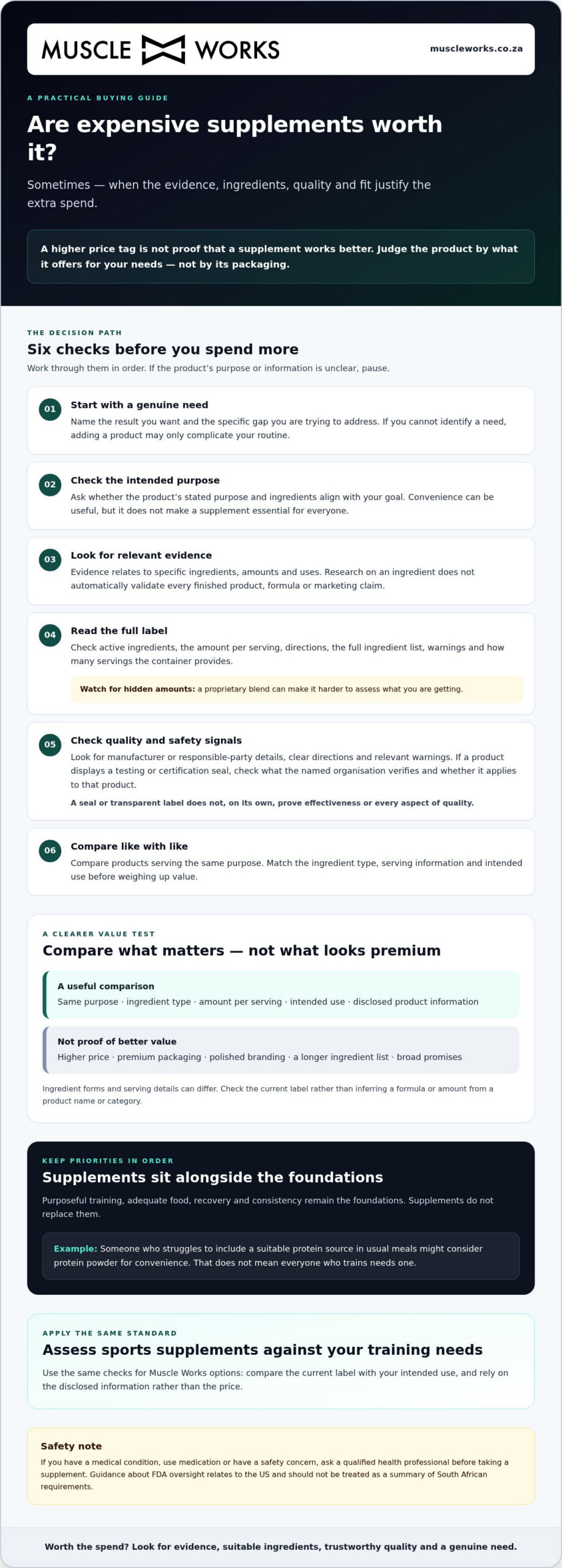
A Practical Checklist for Deciding Whether to Spend More
Use this sequence before adding a product to your routine. It keeps the decision tied to a real need, not a persuasive label or a flashy promise.
- Define the goal. Be specific about what you want the supplement to help you address. Ask what change you’d look for, rather than relying on a broad claim such as “better performance”.
- Assess the need. Consider whether your usual food and routine already cover it. Could a practical change to meals or training habits address the gap instead?
- Inspect the label. Check the ingredient list, serving information, directions and warnings. If you can’t tell what the product contains or how it’s intended to be used, don’t guess.
- Verify the claims. Look for evidence relevant to the stated ingredient and purpose. Treat vague promises and unsupported claims as reasons to pause.
- Compare options. Match products by purpose and ingredient details. Factor in dietary preferences, tolerance, format and whether the product fits your day-to-day routine.
If protein is the specific need you’re assessing, use this 100% Whey Protein 1kg buying guide to explore that category. Check the product’s current label and decide whether it suits your diet and intended use. The guide is a starting point for comparison, not a substitute for checking the details yourself.
What questions should you ask before buying?
Put the decision under pressure. What need is this product meant to address? Does the label give enough detail to assess its ingredients and directions? Could food or a simpler product already meet that need? If the purpose or ingredient information stays unclear after checking, reject the product. More ingredients don’t automatically make a formula a better fit.
When is it sensible to choose a simpler option?
Choose the clearly labelled option that matches your intended use. Don’t pay extra for features, ingredients or presentation you don’t need. A simpler product may be more practical if it fits your dietary preferences and routine, but simplicity alone doesn’t prove quality or suitability. Compare the disclosed details and decide based on evidence and fit.
Individual circumstances matter. If you have a medical condition, take medication or are unsure about a supplement’s safety, ask a qualified health professional for advice. Ready to compare products against these criteria? Explore sports supplements and assess each option by its label, purpose and fit.
Choosing a Muscle Works Supplement That Fits Your Training Goal
Once you’ve defined your need and know what to check on a label, apply the same standard to real options. Muscle Works is a South African sports supplement retailer offering protein powders, amino acids, creatine monohydrate and targeted bundles. Its range gives you products to assess against your goals, but a brand name or premium position isn’t proof that one option will outperform another.
How can Muscle Works products fit different needs?
Start with the category, not the marketing. If you’re comparing protein options, Iso-Tech Whey and Plant Protein are distinct choices to review against your dietary preferences and routine. Check each product’s current label for ingredients, serving information and directions. For more on a specific whey protein type, see the whey protein isolate guide.
Creatine monohydrate and Beef Aminos are other categories in the range. Treat them as different products with different ingredient identities and intended uses. Don’t assume they’re interchangeable or infer results from the category name alone. If you’re considering a bundle rather than an individual product, the 21 Day Grow Stack guide can help you review that option. A bundle still needs to match your actual needs.
What should you check before choosing a product?
Bring the checklist to the label. Confirm the ingredients, serving details, directions and warnings on the current product information. Then compare its stated purpose with the need you identified earlier. If the label doesn’t give you enough detail to judge the product, pause rather than filling in the gaps with assumptions.
Ask yourself: does this category suit my dietary preferences and routine? Is the product’s purpose clear? Can I assess what the label says without relying on a broad promise? Those questions matter more than premium packaging. They keep the decision grounded in fit and transparency.
If a product appears relevant, compare its disclosed information with other options before deciding. Explore the Muscle Works supplement range, review the product labels and choose with purpose, not hype.
Make Your Next Supplement Choice With Purpose
Are expensive supplements worth it? They can be, but only if the product’s evidence, ingredients and quality checks support its intended use and it fits a genuine need. A higher price or polished label isn’t a shortcut to better results. Keep the foundations in place, compare like with like, and walk away if the product’s purpose or label details aren’t clear.
That gives you a stronger way to choose: focus on what you need, inspect what’s in the product and decide whether the format works for your routine. Muscle Works is a South African sports supplement brand with protein, amino acid and creatine options. Products such as Iso-Tech Whey, Plant Protein and Creatine monohydrate are examples to assess against your own criteria, not proof that one option is right for everyone.
Ready to put the framework into action? Explore the Muscle Works supplement range, review the labels and choose with purpose. Make the call on evidence and fit, then bring the same discipline to your training.
Frequently Asked Questions
Are expensive supplements more effective than cheaper ones?
Not automatically. Are expensive supplements worth it? Only if the higher price reflects something relevant to your needs, such as clearer ingredient information, a useful format or verifiable quality checks. Compare products designed for the same purpose, including ingredient identity and amount per serving where disclosed. A premium label, longer ingredient list or bold promise doesn’t establish greater effectiveness. Pay for a demonstrable advantage, not presentation.
How can I tell whether a supplement is worth buying?
Check whether it addresses a specific need and whether its stated purpose matches that need. Review the ingredients, serving details, directions and relevant warnings. Look for evidence that relates to the ingredient and its intended use, rather than relying on broad product claims. Consider whether you’ll use the format consistently and whether it suits your dietary preferences. If key details are unclear, pause before buying.
Can cheap supplements be good quality?
Yes. A lower price doesn’t automatically mean poor quality, just as a premium price doesn’t guarantee better quality. Assess the same factors for every option: clear ingredient information, serving details, manufacturer information, directions and relevant warnings. Check whether quality-testing claims can be verified. If two products serve the same purpose, compare their disclosed details directly instead of judging by packaging or price alone.
What should I check on a supplement label?
Start with the full ingredient list, active ingredients and the amount per serving where stated. Check the number of servings, directions for use, manufacturer or responsible-party details, and any warnings. Look for ingredients grouped into blends if amounts aren’t disclosed, as this can make comparisons harder. Confirm that the product’s stated purpose fits your need. Don’t assume the front label tells the whole story.
Are protein powders worth the extra money?
They can be useful for convenience if a protein powder suits your diet and helps you include protein in your routine. They aren’t essential for everyone, and a higher price doesn’t automatically mean a better fit. Compare protein products by type, serving information, ingredients and intended use. Consider whether ordinary food already meets your needs, and check the current label before choosing between whey and plant-based options.
Do I need supplements to build muscle?
No. Supplements aren’t a requirement for building muscle. Consistent resistance training, suitable nutrition and adequate recovery are the foundations; a supplement may be a convenient addition if it addresses a genuine need. It can’t replace those basics or guarantee a particular outcome. Before buying, identify what you want the product to contribute and check whether its ingredients and intended use make sense for your routine.
Is a supplement stack better value than buying products separately?
Not necessarily. A stack may group products for convenience, but it’s only a useful fit if its contents and intended purpose match your needs. Check each included product’s current label, serving details and directions. Consider whether you’d use every item, and compare the stack with the individual products on a like-for-like basis. Don’t assume a bundle is better value simply because several products are packaged together.