

A cutting stack won’t strip fat for you. Your calorie deficit, diet and training do the heavy lifting. The best supplement stack for cutting should support that work by helping you meet your protein needs or address a specific training-related need, without promising shortcuts.
Conflicting claims can make it hard to know whether protein powder, creatine, caffeine or a fat burner belongs in your routine. Choose supplements for a clear purpose, not because a label promises rapid fat loss. This guide compares common options, explains their limits and shows you what to check on a label, including ingredients and serving information. The aim is a simple stack with realistic expectations, built around the plan you’re already following.
Key Takeaways
- The best supplement stack for cutting starts with your nutrition and training priorities, not a shelf full of fat burners.
- Compare whey and plant protein against your dietary preferences, tolerance and protein needs.
- Assess creatine, amino-acid products and stimulant-based options by their potential role, limitations and label details.
- Identify genuine gaps before adding optional supplements to your routine.
- Check current ingredients, serving information, allergens and nutrition details on product labels before choosing.
Best supplement stack for cutting: what supplements can and cannot do
A cutting phase aims to reduce body fat while keeping nutrition and training consistent. Supplements may help address a specific need, but they’re support tools, not the engine of progress. The best supplement stack for cutting won’t replace a suitable eating plan or guarantee fat loss.
What does a cutting supplement stack actually mean?
A cutting supplement stack is a planned combination of optional products chosen to support a structured nutrition and training plan. Each product should have a relevant purpose, such as helping you meet your protein needs or supporting your training routine. It isn’t a complete diet, a fat-loss programme or a requirement for getting leaner.
Protein powder, creatine, amino-acid products and stimulant-based supplements have different intended uses and limitations. For background on common bodybuilding supplements, see Wikipedia’s overview. Don’t confuse nutritional or training support with a claim that a product directly burns body fat. A “fat burner” label doesn’t mean the product melts fat away.
Use a purpose-first filter: What need are you addressing? Does the label make that purpose clear? If you can’t identify a practical reason to use a product, it may not belong in your stack.
Why results still depend on the fundamentals
Body-fat reduction requires an energy deficit over time: your body must use more energy than you take in. Supplements don’t create that deficit automatically. Food choices, portions and consistency shape your nutrition, whilst training gives your body a reason to keep performing.
Resistance training can support strength and muscle-focused goals during a cut, but no supplement guarantees that you’ll maintain muscle or reach a particular result. Adequate nutrition matters too. A product that helps meet a genuine dietary need may be useful; one that adds little to your routine won’t fix an inconsistent plan.
Keep the order straight:
- Build the base: organise your nutrition around a suitable energy deficit and keep resistance training consistent.
- Identify a real gap: consider whether a supplement could help meet a specific nutrition or training need.
- Check the label: compare ingredients, serving details and nutrition information with your requirements.
Progress varies with diet, training, health and adherence. Start with what you can sustain, then judge optional products by whether they serve a clear purpose.
How protein and training support a cutting phase
Protein powder can make it easier to reach your individual protein target when meals alone don’t fit your routine. It’s a convenient food supplement, not a fat-loss product. Pair it with consistent resistance training and a nutrition plan that suits your needs. A shake won’t replace either one.
Choose protein powder for convenience and dietary fit
Whey and plant protein can both be options. Choose based on dietary preference, tolerance, ingredients and the nutrition information on the current label, not a claim that one type is always superior. Check protein per serving, allergens, serving guidance and any other ingredients that matter to you.
If you’re considering an isolate, read the whey protein cutting guide for more detail. Muscle Works offers whey options as well as Plant Protein 1.2kg, so you can compare the labels with your diet and protein needs. Check the current product label rather than assuming serving sizes or ingredients.
Should creatine be part of a cutting stack?
Creatine monohydrate is a training-support consideration, not a fat-loss supplement. It may suit someone whose priority is supporting training performance, but it doesn’t replace a calorie deficit or guarantee that strength will be maintained during a cut. For a deeper look at its role and use, see the creatine monohydrate guide.
Changes on the scales can have several causes, including shifts in body water, food intake and body tissue. Don’t interpret every change in scale weight as fat loss or gain. Track your training and nutrition alongside weight, and consider the broader trend rather than reacting to one reading.
The practical takeaway: meet your nutrition needs, train consistently, then consider a supplement only if it fills a clear gap. Protein powder may offer convenience; creatine has a different, training-focused role. Neither replaces the work. Select products for a defined purpose and assess their fit with your plan.
To compare options, review the current labels for Muscle Works protein and creatine supplements and check their ingredients and serving details against your requirements.
Compare cutting supplements: which options deserve consideration?
Compare products by the job they’re meant to do, not by how many claims fit on the tub. A larger stack doesn’t automatically mean faster fat loss. Protein powder, creatine, amino-acid products and stimulants serve different purposes, and none is a shortcut around your nutrition plan.
| Category | Potential purpose | Limitations | What to check |
|---|---|---|---|
| Protein powder | A convenient way to add dietary protein when food alone doesn’t suit your routine or needs. | It isn’t a fat-loss product and may be unnecessary if your diet already meets your needs. | Protein per serving, ingredients, allergens, serving guidance and nutrition information. |
| Creatine | A training-focused option to consider separately from fat-loss products. | It doesn’t directly reduce body fat. Scale weight can shift for reasons other than fat change. | Ingredient details, serving guidance and any relevant cautions on the current label. |
| Amino-acid products | An optional category that may suit a specific preference or routine. | They aren’t essential for every shopper; assess their role alongside your overall diet. | Ingredients, serving details and whether the product addresses a genuine need. |
| Stimulant-based options | May be considered by some people for alertness or workout energy. | Tolerance varies. These products don’t guarantee fat loss and may cause unwanted effects. | Caffeine and other stimulant ingredients, total intake from all sources, and label warnings. |
Protein, creatine and amino acids have different roles
Keep the categories straight. Protein powder can help with dietary convenience; creatine is a separate training consideration; amino-acid products are optional, not a default requirement. Read the amino acid supplements guide for more on that category. Check whether a product fits your diet and routine before adding it.
Scrutinise stimulants and fat-loss claims
Check all sources of caffeine, including coffee and other supplements, and be honest about your own tolerance. Don’t assume a product is suitable based on a bold front-label claim. Review the full ingredient list and warnings, and be cautious of a proprietary blend if it prevents you from understanding what’s included. Product labels can change, so use current information rather than assumptions.
Choose with care. Suitability, evidence and possible interactions vary by person and product. If you have a medical condition, take medication or have concerns about stimulants, speak to a qualified healthcare professional before use. A focused stack based on genuine needs is more useful than the longest list of products.
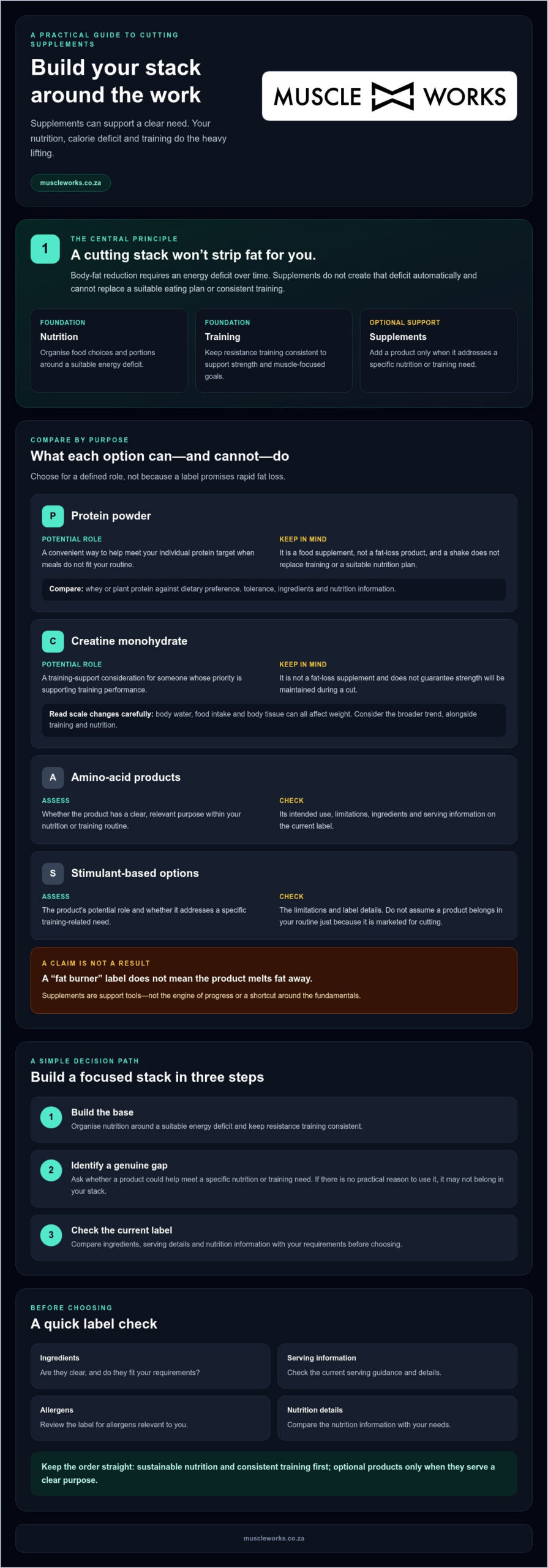
Build a practical cutting stack around your priorities
Build around your routine, not a preset bundle. Food, resistance training, sleep and consistency set the foundation. Supplements are optional tools for specific gaps. Your stack may be simple, and should reflect your diet, training schedule, convenience needs and tolerance.
A simple decision process before you buy
- 1. Establish your nutrition needs. Look at your usual meals and identify what you’re trying to support during the cut.
- 2. Find a genuine gap. Ask what specific need a supplement would address. If there isn’t a clear answer, hold off.
- 3. Choose a relevant product. Match the category to your priorities, such as protein powder for convenient dietary protein or creatine as an optional training-focused choice.
- 4. Review the current label. Check ingredients, serving information, allergens and warnings. Don’t assume details based on a product name or older information.
- 5. Reassess. Consider whether the product still fits your routine and needs. Avoid adding more products simply because progress feels slow.
Check for overlap before combining supplements. Products can share ingredients, including stimulants, so review the combined intake rather than assessing each label in isolation. If a label is unclear, or you have health concerns or take medication, seek qualified advice before use.
Match the stack to your diet and routine
Choose for fit. Whey may suit someone who includes dairy and finds it convenient; plant protein may better match a plant-based diet or personal preference. Neither is automatically right for everyone. Compare the current label, including ingredients, protein per serving, allergens and serving guidance, with your needs.
Creatine and amino-acid products are choices, not mandatory cutting essentials. Consider whether either has a defined role in your training or nutrition routine before buying. Your schedule matters too: a product is practical only if it fits the way you eat and train. Stimulant-containing options deserve extra attention to personal tolerance and total intake.
Make one considered choice at a time, then assess whether it serves its intended purpose. If you’ve defined your priorities and want to compare relevant categories, explore Muscle Works supplement options. Check each current product label before deciding what fits your plan.
Choosing Muscle Works products for a focused cutting routine
Choose by need, not by the promise on a tub. Muscle Works offers whey and plant protein options, creatine monohydrate and amino-acid products. These categories may suit different routines, but none should be treated as a fat-loss solution or a guarantee of muscle retention. Use the current product label to decide whether an option fits your diet and training plan.
Which confirmed product categories could fit your plan?
If you want a convenient way to add protein to your diet, compare 100% Whey Protein 1kg and Iso-Tech Whey with Plant Protein 1.2kg. Dietary preference, tolerance and the label should guide your choice. Check protein per serving, ingredients, allergens, serving guidance and nutrition information. Don’t assume two products in the same category have identical contents or suit the same person.
Creatine monohydrate may be considered separately as a training-focused option, not a fat-loss product. Beef Aminos and L-Glutamine are amino-acid category choices. Consider them only if you’ve identified a specific reason to explore them, then review their current labels and suitability. Don’t assume any product is necessary just because you’re cutting.
Product names alone aren’t enough to assess ingredients, serving sizes, allergens or intended use. Check the current label before deciding, especially if you have dietary restrictions, take medication or have a health concern. Don’t infer that a bundle such as the 21 Day Grow Stack is designed for cutting without verified product details.
Make the final choice with evidence, not hype
Return to the need you identified earlier. Do the product’s stated contents match that need? Can you understand the serving information and fit it into your diet? If the label doesn’t provide the details you need, pause and seek clarification rather than filling the gaps with assumptions.
The best supplement stack for cutting is individual. For one person, a protein option may offer useful convenience; another may have no need to add a product. Creatine and amino-acid products are choices to assess, not mandatory parts of a cutting routine. Keep your wider plan in charge: food, training, sleep and consistency still matter.
Compare current labels against your priorities, then decide without pressure. Explore Muscle Works supplements and assess each option by its stated contents and fit with your plan.
Choose your stack with purpose, then stay consistent
The best supplement stack for cutting isn’t the one with the most products. It’s the one that fits a clear need within your nutrition and training plan. Protein powder can offer convenience if you need help meeting your protein needs; creatine and amino-acid products are optional choices with distinct roles. Check current labels and serving details, and don’t mistake supplement claims for a fat-loss plan.
Muscle Works is a South African sports supplement brand selling directly online, with whey and plant-based protein options, creatine and amino-acid categories. Compare those options with your dietary preferences, routine and identified gaps. Keep the fundamentals in focus, then add only what makes sense for you.
Compare Muscle Works supplements and find your fit. Choose deliberately, keep your plan steady and bring focused effort to every session.
Frequently Asked Questions
What is the best supplement stack for cutting?
There’s no single best supplement stack for cutting that suits everyone. Start with your nutrition and training plan, then consider products only for specific needs. Protein powder may offer a convenient way to add dietary protein; creatine is a separate training-focused option, while amino-acid products are optional. None guarantees fat loss. Choose by personal fit and check the current product label before use.
Can supplements help you lose body fat faster?
Supplements can’t replace the energy deficit needed for body-fat reduction, and no product can guarantee faster fat loss. Some products may support a particular nutrition or training need, but their role is secondary to a consistent eating plan and exercise routine. Be sceptical of bold “fat-burning” claims. Assess any product by its ingredients, label information and suitability for you.
Is whey protein useful while cutting?
Whey protein may be useful if it helps you meet your individual protein needs conveniently. It isn’t a fat-loss product, and it may not be necessary if your usual diet already provides enough protein for your plan. Check the current label for protein per serving, ingredients, allergens and serving guidance. If you avoid dairy or prefer plant-based options, compare those labels instead.
Should I take creatine when cutting?
Creatine may be considered as a training-focused supplement, but it doesn’t directly reduce body fat or guarantee that you’ll maintain strength. Whether it suits you depends on your goals, health and routine. Scale weight can change for several reasons, so don’t treat every increase or decrease as a change in body fat. Check the product label, and seek qualified advice if you have concerns.
Are amino-acid supplements necessary during a cut?
No, amino-acid supplements aren’t necessary for every person during a cut. Treat them as optional products, not a substitute for a considered diet or a default part of your stack. First identify the specific need you want to address, then compare the product’s current ingredients and serving information with your nutrition plan. If you’re unsure whether it’s suitable for you, ask a qualified healthcare professional.
Can I combine protein powder, creatine, and amino acids?
Some people may choose to use these categories together, but combining them isn’t automatically useful or suitable. Check each current label for ingredients, serving directions, allergens and warnings, and look for overlapping ingredients across products. Consider your diet and overall needs before adding anything. If you take medication, have a medical condition or are uncertain about interactions, consult a qualified healthcare professional first.
How do I choose a cutting supplement in South Africa?
Choose by purpose and label, not by bold claims. Check the current ingredient list, serving information, allergens, nutrition details and warnings, then compare them with your dietary needs and routine. Muscle Works is a South African sports supplement brand that sells directly online, with whey and plant-based protein, creatine and amino-acid categories. Check current product information before deciding what fits your plan.