

The creamiest shake isn’t automatically the best one. The best liquid to mix with whey protein depends on what you want: a lighter texture, a richer flavour, or a mixer that fits your diet and agrees with you. Water keeps things simple. Milk makes a thicker shake, while plant drinks bring their own flavours and nutrition.
If you’re choosing between water and milk, both can work. The better option depends on your preferences and routine. A shake is more useful when it’s easy to prepare and you enjoy drinking it.
This comparison covers water, dairy milk, plant drinks and other mixers, including how they affect taste, texture, nutrition and preparation. Use the label details and practical trade-offs to choose a whey shake that suits your day. There’s no single answer for everyone.
Key Takeaways
- There’s no universal winner: the best liquid to mix with whey protein depends on your priorities, taste and digestion.
- Compare water, dairy milk and unsweetened plant drinks for flavour, texture, convenience and the nutrition information on their labels.
- Choose a lighter or creamier shake based on what you enjoy and can comfortably include in your routine.
- Set your priority, choose a mixer, check its label and taste the result. Follow the whey product’s serving and preparation directions.
- Small adjustments to the liquid can make a shake more enjoyable and easier to use consistently.
Best liquid to mix with whey protein: what actually changes?
There’s no single best liquid for every person or goal. The mixer affects a shake’s flavour, consistency and overall nutrition, but it doesn’t change the whey powder itself. Water gives you a straightforward mix; milk or a plant drink can add flavour, texture and nutrients. The best liquid to mix with whey protein is the one that suits your nutrition priorities, feels comfortable to drink and fits your routine.
Keep the contributions of the powder and liquid distinct. The whey powder provides the protein listed on its product information. The liquid adds whatever nutrients it contains. This matters when you’re tracking the shake’s total nutrition or trying to identify an ingredient that doesn’t agree with you.
What does the liquid add to a whey shake?
Water adds volume without the energy and nutrients contributed by milk or other drinks. It generally makes a lighter, thinner shake. Dairy milk and plant-based drinks can create a creamier or thicker texture, and their natural or added sweetness can change the flavour. The result depends on the drink and powder, so check both labels rather than assuming every option has the same nutrition profile. Look at energy, protein, carbohydrate and fat information.
Does the mixer change the value of whey protein?
No. Changing the liquid doesn’t alter the protein quality of the whey powder or replace its serving directions. Whey protein is protein derived from whey, a part of milk. Use the powder’s label for its serving and nutrition information. If your drink adds protein or other nutrients, count those as contributions from the drink, not changes to the powder. Follow the product’s preparation guidance and assess the nutrition of the finished shake.
A richer shake isn’t automatically more effective, and a lighter one isn’t automatically better. Milk or a plant drink may suit your preferences or nutrition plan; water may suit you when you want a simpler mix. None guarantees better muscle growth or recovery on its own. Compare the labels, consider how the shake sits with you and decide whether it fits your routine.
Water vs milk with whey protein: compare the everyday options
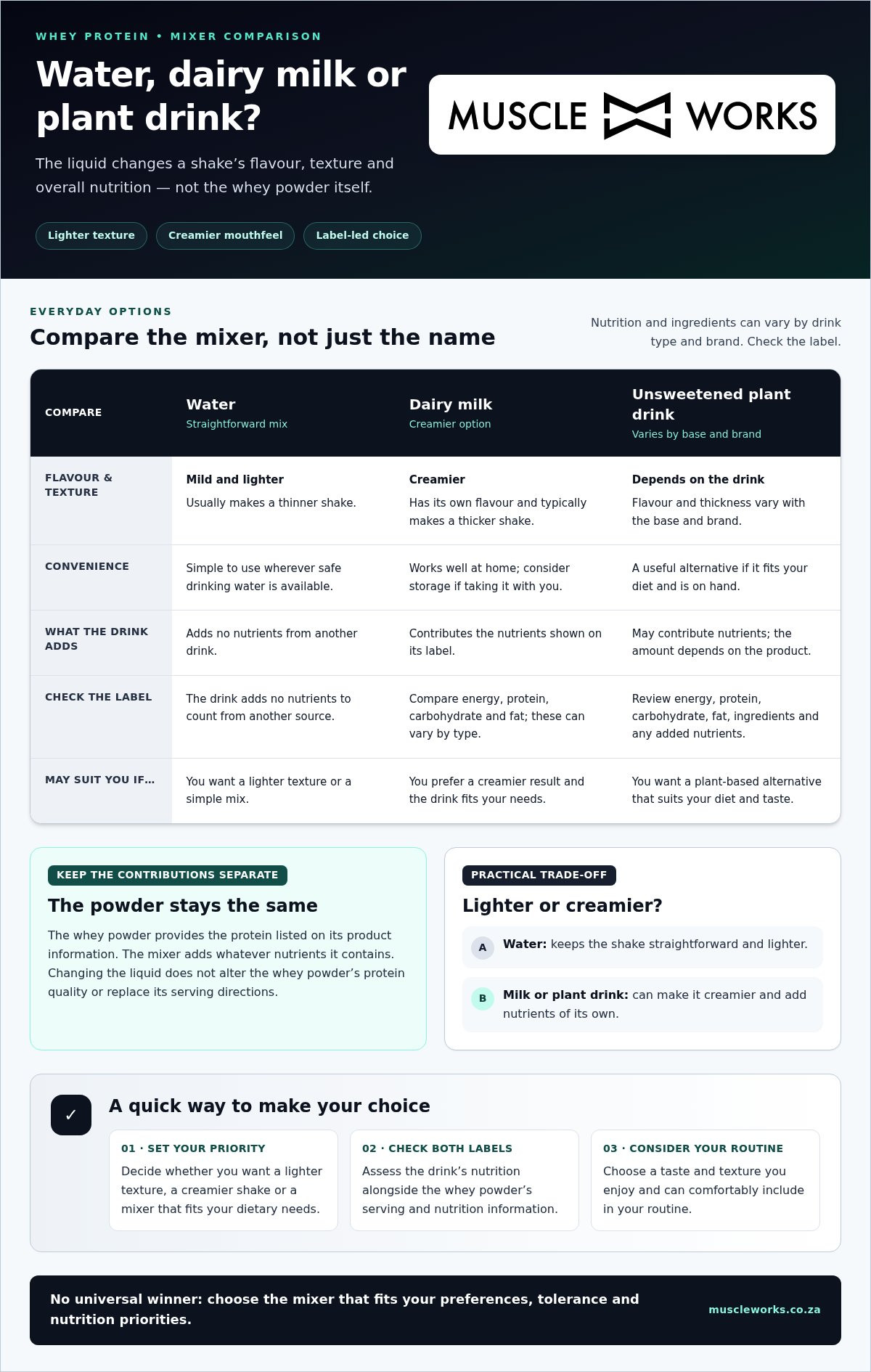
Water, dairy milk and unsweetened plant-based drinks differ in flavour, texture and nutrition. Choose according to whether you want a lighter shake, a creamier mouthfeel or a drink that suits your dietary needs. Compare the labels rather than relying on the drink’s name: nutritional values and ingredients vary by type and brand.
| Liquid | Flavour and texture | Convenience | What to check on the label |
|---|---|---|---|
| Water | Usually mild, with a lighter, thinner result. | Simple to use wherever safe drinking water is available. | Adds no nutrients from another drink. |
| Dairy milk | Typically creamier, with its own flavour. | Works well at home; consider storage if taking it with you. | Check energy, protein, carbohydrate and fat, which can vary by type. |
| Unsweetened plant-based drink | Flavour and thickness depend on the base and brand. | A useful alternative if it fits your diet and is on hand. | Review energy, protein, carbohydrate, fat, ingredients and any added nutrients. |
The trade-off is straightforward: water keeps the shake lighter, whilst milk or a plant drink can make it creamier and add nutrients of its own. Neither option automatically produces a better result. WebMD discusses whey protein’s uses and potential side effects, including its use for improving athletic performance; your choice of mixer still comes down to preference, tolerance and the nutrition details that matter to you.
When is water the better choice for whey protein?
Choose water if you prefer a lighter texture or don’t want to add nutrients from another drink. It’s also practical when you’re preparing a shake away from home and have access to safe drinking water. Water doesn’t guarantee a particular result or change the whey powder’s quality. It simply keeps the mix straightforward.
When might milk or a plant drink suit your shake?
Dairy milk can make a shake creamier and contributes the nutrients listed on its label. Plant-based drinks vary widely: one may be thin and mild, while another is richer or more distinct in flavour. Check the ingredients and nutrition panel, then choose a drink that fits your dietary needs. Follow its storage and use instructions. For a flavour-led option, explore whey protein options and consider how they might work with your preferred mixer.
Which whey protein liquid suits your goal, taste and digestion?
Choose according to your priorities, not a universal ranking. Water is a simple option if you want a lighter-textured shake. Dairy milk or a plant drink may suit you if you prefer a creamier result. Dietary needs and personal tolerance matter too. The best liquid to mix with whey protein is the one that fits your plan and feels comfortable to drink.
Don’t mistake thickness for effectiveness. A richer shake isn’t automatically better, and adding energy from a drink doesn’t guarantee weight gain or improved training results. The liquid changes the shake’s overall nutrition and eating experience; it doesn’t turn the whey powder into a different product. Check both labels and assess the complete serving against your needs.
What should you mix with whey when managing energy intake?
Water avoids adding energy or nutrients from a separate drink, although the whey powder still contributes what its nutrition panel states. If you use dairy milk or a plant-based drink, check its serving information and include it in your overall intake. Products vary by type and brand, so don’t assume all milk or plant-based drinks have the same nutrition. A mixer alone isn’t a weight-loss or weight-gain solution.
What if milk or a particular drink does not agree with you?
Pay attention to how you feel after a shake. If a particular drink seems to cause discomfort, try water or another option that fits your dietary requirements and see whether the change suits you. Read both labels for ingredients relevant to your personal sensitivities, including ingredients in the powder as well as the mixer. A different drink may help you find a more comfortable combination, but no alternative is guaranteed to prevent symptoms.
Keep the test simple: change the mixer, not several parts of the shake at once. That makes it easier to judge whether the taste, texture or tolerance has improved. If discomfort persists or concerns you, seek advice from a qualified health professional rather than relying on a mixer change alone.
How to choose and mix whey protein with your preferred liquid
Make the choice methodically. Set a priority, select a liquid, check its label, then taste the shake and adjust. This helps you find the best liquid to mix with whey protein for your routine without changing several things at once. Follow the whey product label for serving directions and preparation guidance, including the recommended amount of powder.
- 1. Set a priority. Decide whether you want a lighter texture, a creamier shake or a drink that fits your dietary needs.
- 2. Choose a liquid. Start with water, dairy milk or a suitable plant-based drink.
- 3. Check the labels. Review the powder’s serving directions and nutrition information, then check the drink’s ingredients and nutrition panel.
- 4. Taste and adjust. Note the texture and flavour. Make a small change next time if needed.
For product-specific context, read the 100% Whey Protein 1kg guide. Use it alongside the directions on your whey product, not as a substitute for them.
How can you make a smoother whey shake?
Use a shaker or blender suitable for the job. Add the liquid first, then the powder, and mix thoroughly. Starting with liquid can help prevent powder sticking to the bottom or forming dry pockets. If the shake is too thick, add a little more liquid and mix again. If it’s too thin, adjust gradually next time. Use the serving amount stated on the product as your guide.
If lumps remain, check that the lid is secure and mix again, or use a blender if appropriate. Rinse your equipment after use. These simple habits make preparation easier without turning the shake into a complicated recipe.
How do you compare a new mixer fairly?
Change one variable at a time. Keep the whey powder, flavour and serving amount consistent while you try a different liquid. Then assess the shake’s taste, texture, convenience and how it sits with you during normal use. Note what worked, and don’t assume a thicker or sweeter result is automatically better.
Prefer coffee flavours? Explore the protein coffee guide for a flavour-focused example, without treating it as a performance promise. To put the basics into practice, explore whey protein options and choose a powder that fits your routine.
Choose a whey protein liquid you can use consistently
The best liquid to mix with whey protein is the one that fits your nutrition priorities, taste and tolerance. Water keeps the mix simple. Choose dairy milk or a plant drink if its flavour and nutrition suit you. There’s no need to make the thickest shake or add the most ingredients. Consistency comes from finding a combination you enjoy and can prepare without fuss.
Before settling on a routine, check both labels. The whey product label gives its serving directions and nutrition information; the drink label shows the ingredients and nutrients it contributes. If dietary needs or sensitivities shape your choice, review those details whenever you try a different product. Keep your preferred mixer on hand, follow the powder’s preparation guidance and adjust the texture to your taste.
Which Muscle Works whey option should you explore?
Muscle Works offers 100% Whey Protein 1kg and Iso-Tech Whey as whey options to explore. Compare the product information and serving directions for each, then consider how you’d like to prepare it. No single option is automatically right for every goal, preference or dietary need. Let the product details guide your decision.
What is a simple next step after choosing your liquid?
If you’re comparing whey, start with the 100% Whey Protein 1kg guide. It provides product-focused context to read alongside the label. Then pair your chosen whey with water or another drink that works for you, and follow the stated serving directions.
Keep it practical: pick the mixer you like, check the labels and stick with the combination that fits your routine. Explore the 100% Whey Protein 1kg guide to compare Muscle Works whey options.
Settle on a shake that fits your routine
The best liquid to mix with whey protein comes down to your priorities, taste and personal tolerance. Water keeps the mix simple and lighter; dairy milk or a plant drink can bring a creamier texture and its own nutrition. Check both labels, follow the whey product’s serving directions and adjust the liquid gradually until the shake suits you.
There’s no need to chase the thickest mix or assume one drink works for everyone. Choose a combination you enjoy and can prepare consistently. Muscle Works offers 100% Whey Protein 1kg and Iso-Tech Whey to explore. Review the product information, choose your mixer and make the routine your own.
Explore Muscle Works whey protein options and take the next step towards a shake that works for you.
Frequently Asked Questions
Is water or milk better to mix with whey protein?
Neither is universally better; choose according to the texture and nutrition you want. Water makes a simpler, lighter shake without adding nutrients from another drink. Dairy milk usually makes it creamier and contributes its own nutrition. Check the whey powder and milk labels to understand the shake’s total nutrition, then choose the option that suits your taste, dietary needs and routine.
Can you mix whey protein with plant-based milk?
Yes, whey protein can be mixed with a plant-based drink if it suits your dietary needs and preferences. Flavour, texture and nutrition vary by drink type and brand, so check its ingredients and nutrition panel rather than assuming all alternatives are alike. Unsweetened options can still differ in protein and other nutrients. Follow the whey product’s serving directions and the drink’s storage guidance.
What liquid should you use with whey protein when managing calories?
Water adds no energy from a separate drink, making it a straightforward choice if you want to avoid extra energy from your mixer. The whey powder still contributes energy and nutrients, so check its label and serving directions. Dairy milk and plant-based drinks vary by product; compare the nutrition information per serving and include your chosen amount in your overall intake. No mixer alone causes weight loss or gain.
Can you mix whey protein with coffee?
Yes. Coffee can add a distinct flavour, but let it cool before mixing in whey to reduce the chance of clumps, especially if it’s very hot. Mix the powder with a little cool liquid first, then stir that mixture into the coffee, or follow the whey label’s preparation directions. Additions such as milk or sweeteners also affect the drink’s overall nutrition. Muscle Works lists SUPER PROTEIN ICE COFFEE – 450g as a coffee-format option.
Does mixing whey protein with milk change its nutrition?
It changes the nutrition of the finished shake because milk contributes its own nutrients alongside the whey powder. The amount depends on the milk type and serving used. The powder’s own nutrition information remains tied to its stated serving, so read that label separately and then check the milk’s nutrition panel. Add the two contributions together for a clearer picture of the whole shake.
Can you mix whey protein with hot water?
You can mix whey with warm water, but very hot or boiling water may make the powder harder to blend smoothly and can leave clumps. Let the water cool, then gradually stir or shake the powder in, following the product’s preparation directions. For a hot drink, it can be easier to mix the whey with cool water first and combine it with the warm liquid afterwards.
What should you do if whey protein does not mix smoothly?
Check your mixing method first. Add liquid to your shaker before the powder, secure the lid and shake thoroughly, or use a suitable blender. If the shake is too thick, add a little more liquid and mix again. Powder type, liquid choice and temperature can affect texture, so adjust one factor at a time. Use the serving amount and preparation directions on the whey label as your guide.