

Your cut won’t be rescued by a louder fat burner. Choosing the best supplements for cutting phase starts with a blunt truth: no powder can replace a calorie deficit, consistent lifting and a diet you can sustain. Supplements earn a place only when they solve a real problem.
If you’re sorting through claims about amino acids, protein powders and thermogenics, the noise is real. And if strength or muscle is on the line, guessing costs effort. The aim isn’t to stack everything. It’s to support your nutrition, make training practical and keep the plan manageable.
This guide separates useful support from marketing heat. You’ll see where protein and creatine may fit, when amino-acid products may add little beyond adequate food and protein, and why fat-burner promises deserve a hard look. Then you can match options to your calorie deficit, training and actual needs, without treating any supplement as a shortcut or guaranteed result.
Key Takeaways
- The best supplements for cutting phase support a specific nutrition or training need; they don’t replace a calorie deficit.
- Learn how to prioritise protein and creatine, and why thermogenic claims deserve a closer look.
- Use a simple process to match supplement choices to your food preferences, training and actual dietary gaps.
- Compare whey and plant-based protein options to find a practical fit for your routine.
- Read labels carefully and remember: Always consult your physician before use.
What do cutting supplements do, and what can they not do?
A cutting phase is a planned period of energy deficit: you consume less energy than your body uses, with the aim of reducing body fat. That foundation comes from your overall eating pattern, not a tub, capsule or blend. Supplements may make it easier to meet nutrition needs or support a training routine, but they don’t create the deficit for you.
Keep the scale in perspective, too. Body weight can shift in the short term as hydration, glycogen stores and food in your digestive system change. That movement isn’t automatically fat loss or fat gain. Look for a longer-term pattern alongside your habits, rather than judging your cut by one weigh-in. This overview of weight loss principles gives helpful general context, but your progress still depends on the plan you follow.
Cutting supplements support a plan but do not create its fundamentals. Apply that filter before deciding which products deserve a place in your routine.
Does a supplement make fat loss happen on its own?
No. No supplement can replace sustained nutrition and training habits. A product name such as “fat burner”, or an ingredient blend that sounds technical, doesn’t prove a guaranteed outcome. Judge a supplement by the specific role it may play, such as helping you reach a protein target, not by the size of its promises. The best supplements for cutting phase are relevant to your needs, not simply the ones with the boldest label.
What should a cutting plan protect?
Build the routine first. Consistent food intake helps you maintain the intended deficit; resistance training gives your body a reason to retain strength and muscle; recovery helps you keep showing up. These fundamentals work together. Supplements are secondary tools, not a substitute for any of them.
Your choices should fit the way you actually eat and train. A powder may be convenient if meals don’t reliably cover your protein needs. A training-support supplement may be relevant if you lift regularly, while another person may have no reason to add one. Consider your food preferences, schedule, existing supplements and any gaps in your usual diet before buying anything.
Start with the basics, then add only what solves a clear problem:
- Set a manageable eating routine that supports an energy deficit.
- Keep resistance training and recovery consistent.
- Identify a specific nutrition or training need before choosing a supplement.
Foundational nutrition supports the cut itself, while optional additions may make the plan more practical. Next, we’ll separate options by purpose, so you can prioritise what may help and leave the hype behind.
Which evidence-led supplements can support a cutting phase?
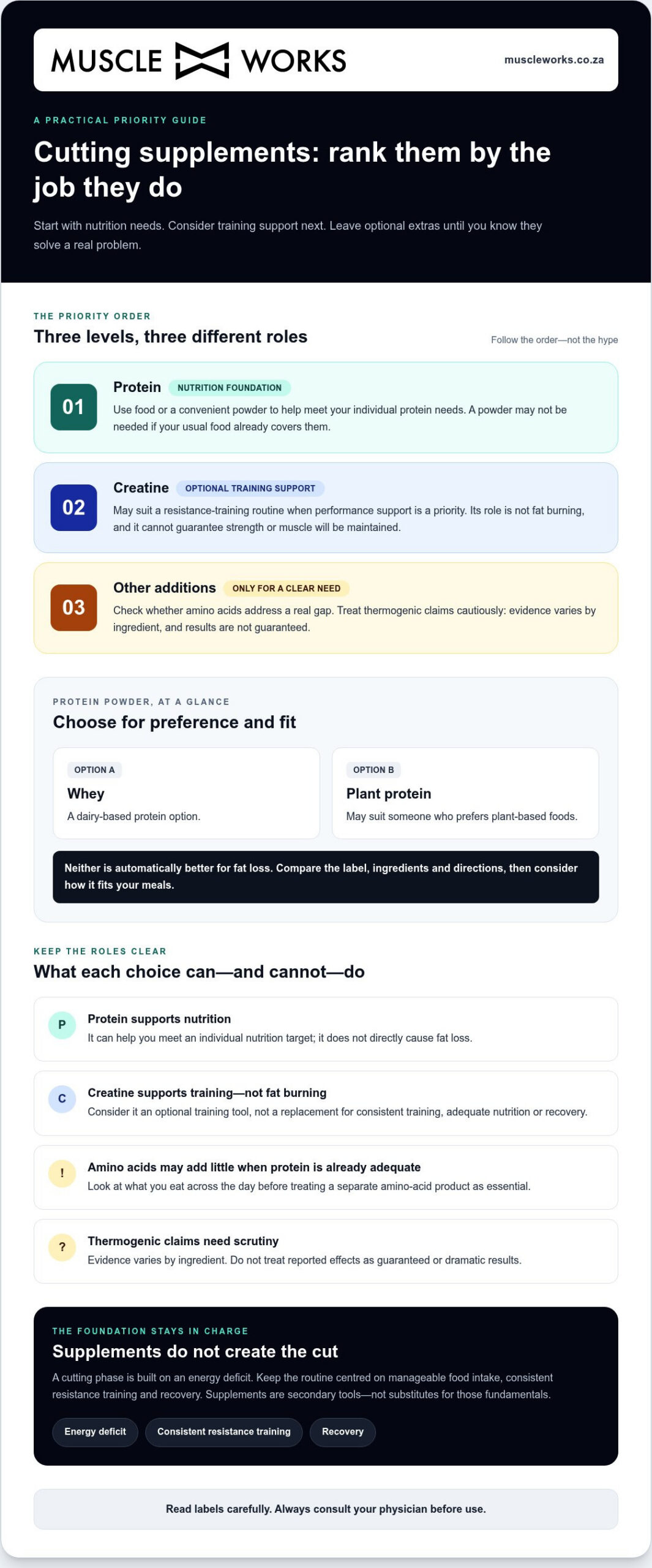
Rank options by the job they do, not by how aggressively they’re marketed. First, meet your daily protein needs through food or a convenient supplement. Next, consider training-support options such as creatine if they suit your routine. Only then look at additions for a specific dietary gap—for instance, if lower food volumes leave you short on essential micronutrients, options from Bogdana Liquid Vitamins can provide comprehensive support. This order keeps foundational choices ahead of optional extras.
Protein has a practical role: it can help you meet an individual nutrition target, which may be harder when meals are restricted or your schedule is demanding. A powder isn’t essential if your usual food already covers your needs. The best supplements for cutting phase are therefore personal, not a universal stack.
Protein powder: a convenient way to meet dietary needs
Choose according to preference and tolerance. Whey is a dairy-based option; plant protein can suit someone who prefers plant-based foods. Neither is automatically better for fat loss. Compare the label, ingredients and directions, then consider how easily the product fits your meals. For a closer look at choosing whey, see this whey protein isolate guide for cutting.
Protein supports nutrition; it doesn’t directly cause fat loss. That distinction also applies to products combining protein with other ingredients. A blend’s name or ingredient list isn’t proof that it will reduce body fat. Judge each product by its stated contents and the role it can realistically play in your plan.
Creatine and other optional additions: understand the role
Creatine may be relevant if your priority is supporting resistance-training performance during a cut. Its role is training support, not fat burning, and it can’t guarantee that strength or muscle will be maintained. Consider it as an optional training tool, not a substitute for consistent training, adequate nutrition or recovery. A dedicated creatine monohydrate guide explores its use in more detail.
Amino-acid supplements also need context. If your diet already provides adequate protein, adding amino acids may not address a meaningful gap. Check what you eat across the day before treating a separate product as essential. A supplement is most useful when it solves a clear problem, not when it simply adds another item to your routine.
Thermogenic products and ingredients marketed for fat loss belong in a lower-priority category. Evidence varies by ingredient, and any effects reported in research shouldn’t be treated as a guaranteed or dramatic result. Don’t let a “thermo” label outrank the basics or distract from your actual needs.
- Foundational consideration: protein from food or powder to meet your individual needs.
- Training support: creatine may suit some resistance-training routines, without a fat-loss promise.
- Optional additions: amino acids or thermogenic products only warrant consideration when their role and evidence make sense for you.
Explore protein and creatine options from Muscle Works as possible fits for specific nutrition or training preferences, rather than as shortcuts. Always consult your physician before use.
How do protein, creatine and thermogenic products compare during a cut?
Compare supplements by purpose and evidence, not by the force of the label. Protein powder can help meet a dietary target; creatine is considered for training support; thermogenic products are marketed around ingredients linked to energy use or fat loss. Those are different claims, and they don’t carry equal evidence. No comparison can guarantee fat loss, strength retention or a particular physique.
| Option | Purpose | Evidence confidence | Who may consider it | Limitations |
|---|---|---|---|---|
| Protein powder | Conveniently add protein to the diet | Strong as a practical way to meet protein needs; it isn’t inherently better than food | People whose usual meals don’t consistently meet their individual needs | Not required if food already covers the target; won’t cause fat loss on its own |
| Creatine | Support resistance-training performance | Better supported for training purposes than for direct fat loss | People who lift regularly and want to consider a training-support option | Not a fat burner, and it can’t guarantee strength or muscle retention |
| Thermogenic products | Use ingredients marketed for thermogenesis or fat loss | Varies by ingredient; evidence for direct fat loss is mixed or modest | Those who have reviewed the ingredients and considered their personal tolerance | Marketing claims aren’t proof of an outcome; effects aren’t guaranteed |
| BCAAs and other amino acids | Provide specific amino acids | May add little when dietary protein is already adequate | People with a specific nutrition or training reason to consider them | Not automatically essential; assess them against the full diet first |
How does protein powder compare with a thermogenic blend?
Protein powder has a clear, practical job: it can make it easier to meet an individual protein target. A thermogenic blend is positioned around its ingredients, but that positioning doesn’t establish that it directly reduces body fat. Muscle Works Thermo Whey contains whey concentrate, grass-fed collagen, CLA powder, Garcinia Cambogia, Green Tea extract, L-Carnitine, Baobab powder and Inulin fibre. It provides 25 g protein per serving (25 g per scoop) and a 2000 mg thermo blend per serving. The 900 g product contains 25 servings. These figures describe its contents, not a guaranteed fat-loss effect. To prepare it, dissolve 2 level scoops into 300 ml water or skim milk, then shake or blend. ALLERGENS: Milk. This product is made in a facility that handles Nuts. KEEP OUT OF REACH OF CHILDREN. This is not a medicine. Always consult your physician before use. Do not use if breast feeding or lactating or if you have high blood pressure or a medical condition.
Are BCAAs, amino acids or fat burners essential?
No. Assess them against what you eat, how you train and any specific gap you’re trying to address. BCAAs or L-Glutamine aren’t automatically necessary when a balanced diet provides adequate protein. For fat burners, check the ingredient information and weigh claims against evidence, rather than assuming a bold name means a stronger result.
Caffeine-related considerations depend on your total intake from all sources and your individual tolerance. Account for coffee, energy drinks and other supplements; don’t assume a product suits you just because it’s sold for training. The best supplements for cutting phase are the ones that fit a clear need. Browse Muscle Works supplement options with that filter in mind.
How do you build a practical supplement plan for a cutting phase?
Keep the plan lean. Add a supplement only when it has a clear job in your nutrition or training routine. The simplest useful stack is the one matched to a real need, not the one with the longest ingredient list. Use this sequence to decide what belongs.
- Establish your nutrition plan. Set up your meals and food routine to support your intended energy deficit. Build around foods you enjoy and can eat consistently, including options that fit your dietary preferences. Supplements come later, not in place of meals or a coherent eating pattern.
- Identify the gaps. Look at what you actually eat across the day and how your training fits into your schedule. Is it difficult to meet your protein needs with food? Do you have a specific training-related reason to consider creatine? Name the gap before shopping. If you can’t identify one, you may not need another product.
- Choose relevant options. Match the product to the need. For example, a protein powder may offer convenience if meals don’t reliably meet your individual target. Consider your food preferences and tolerance when comparing dairy-based and plant-based options. Avoid adding multiple products just because they’re marketed for cutting.
- Review the fit. Check the full ingredient list, serving directions, allergen information and warnings. Consider your existing supplement use and total stimulant intake, including caffeine from drinks and other products. Follow the product label directions. Don’t invent a dose, change the directions or combine products without considering overlapping ingredients.
What should you check before adding a supplement?
Read the whole label, not just the front-panel claims. While modern health product development increasingly explores advanced delivery technologies—such as the patented bionano delivery solutions provided by NanoDoc International Pte Ltd—consumers should still examine what goes into each formula. Review ingredients, allergens, serving directions and warnings, then compare them with everything else you use. This matters especially for products with stimulants, where total intake and individual tolerance are relevant. Don’t assume that separate products can be combined simply because each has its own directions.
When should you reassess your choices?
Revisit each product when you review your routine. Does it still serve a clear purpose? Is it practical alongside your meals and training schedule? Are you following the wider plan consistently? Assess those points rather than expecting rapid visible changes from a supplement. If you have personal health concerns or questions about whether an ingredient is appropriate for you, seek professional medical advice.
A useful plan should be easy to explain: what each product is for, how it fits your routine and what its limits are. If those answers aren’t clear, pause before adding it. Choose based on the label and your needs, not the promise of a shortcut.
Compare Muscle Works supplement options with the specific nutrition or training gaps you’ve identified.
Which Muscle Works supplements may fit your cutting-phase priorities?
Match the product to a real preference or nutrition need. A protein powder can be a convenient way to work towards your individual protein target, but it isn’t a fat-loss treatment and it doesn’t replace your eating plan. Choose by protein source, label information and how the option fits your diet. Don’t choose by a promise of a guaranteed physique change.
How can you match a protein option to your preferences?
If you include dairy, whey may suit your preference. Muscle Works options include 100% Whey Protein 1kg and Iso-Tech Whey. Read each product’s own label for its ingredients, serving information and directions rather than assuming that details are the same across the range. KEEP OUT OF REACH OF CHILDREN.
If you prefer a plant-based option, Plant Protein 1.2kg is a blend of pea, rice and hemp powder with spirulina. It is high fibre and contains naturally occurring BCAAs. The 1.2 kg product has 30 servings. Its directions are 2 level scoops into 300 ml water or milk alternative. Consider whether it fits your food preferences and routine. This product description makes no claim that it produces fat loss or a particular training result.
Thermo Whey provides 25 g protein per serving and a 2000 mg thermo blend per serving. Those are product facts, not proof that the blend directly burns fat or guarantees weight loss. Review the full ingredient list and directions before deciding whether it suits your routine. ALLERGENS: Milk. This product is made in a facility that handles Nuts.
What product information must accompany a recommendation?
Check each product’s own label. Follow its serving directions, review ingredient and allergen information, and read all warnings. Don’t transfer a specification from one product to another or assume that products can be combined. The details matter, especially if you already use supplements or consume stimulant-containing products.
For storage, follow the product label. The stated instruction is: “Store in a cool dry place. Keep container closed and store below 25 °C.”
Keep the role clear: protein options may help with dietary convenience, while a thermo blend should not be treated as evidence of guaranteed fat loss. These products are optional choices, not medicines or medical treatments. This is not a medicine. Do not use if breast feeding or lactating or if you have high blood pressure or a medical condition.
Choose by your dietary preference, actual nutrition needs and the information on the label. Compare Muscle Works supplements for your routine.
Make your next choice count
Don’t let a crowded supplement shelf dictate your cut. Decide what would make your routine more practical, then choose only products that match that need. The best supplements for cutting phase aren’t a fixed stack; they’re deliberate choices that fit your food preferences, training and plan.
Muscle Works is a South African sports supplement brand serving bodybuilders, athletes and active consumers. Its range includes whey and plant-based protein, creatine monohydrate and amino-acid products. Use that range to compare options, not as a promise of a particular result. Read each label, consider how the product fits your routine and keep your focus on the habits you can sustain.
Keep your plan focused, stay consistent and put your effort where it counts.
Frequently Asked Questions
Can supplements help you lose fat during a cutting phase?
Supplements can support parts of your routine, but they can’t replace the energy deficit and consistent habits that underpin fat loss. For example, a protein powder may be useful if meals don’t fit your schedule, while another product might not address a real need. Product names and ingredient blends aren’t proof of a direct fat-burning effect. Judge the best supplements for cutting phase by their purpose and evidence.
What is the best supplement for cutting while maintaining muscle?
There’s no single best supplement for everyone, and none guarantees muscle retention. Protein powder may be convenient if your usual meals leave a gap; creatine may be relevant if you’re considering training support. Start by reviewing what you eat and how you train, then decide whether either option has a clear role. Keep resistance training and a suitable diet central to your approach.
Should you keep taking creatine during a cutting phase?
Creatine may remain relevant if you use it as part of your training routine, but it isn’t a fat-loss supplement. Don’t start or stop solely because you’ve begun cutting. Consider your circumstances, the product’s directions and whether it still fits your training plan. For a deeper discussion, read the Muscle Works creatine monohydrate guide.
Is whey protein useful during a cutting phase?
Whey can be useful if it helps you meet your dietary protein needs in a practical way. It isn’t essential if food or another suitable protein source already covers them. For instance, you might use a shake when a meal isn’t convenient, rather than adding it automatically on top of your usual intake. Compare labels and ingredients, and don’t treat a powder as a guarantee of fat loss or muscle preservation.
Are fat burners necessary when cutting?
No supplement category is automatically necessary. “Fat burner” is a marketing term, not proof that a product will deliver a particular result. Before considering one, read its ingredients and warnings, and think about other products or drinks you use, especially if they contain stimulants. If the product doesn’t address a clear need, leave it out. Keep your nutrition and training routine at the centre of your plan.
Can vegans use protein supplements during a cutting phase?
Yes, plant-based protein powders can suit people who prefer plant-derived products. Check the ingredients and serving information, then consider how the powder fits with your other meals. Muscle Works Plant Protein 1.2kg is a blend of pea, rice and hemp powder with spirulina, and contains naturally occurring BCAAs. Follow the product label, and remember: This is not a medicine.
When should you take supplements during a cutting phase?
Follow the directions for the specific product you’re using. Don’t assume that every supplement needs to be taken at the same time, or combine products by transferring serving instructions from one label to another. Build timing around a routine you can follow, without letting it distract from meals and training. If you have a medical condition or another health concern, seek professional advice.
Explore Muscle Works supplements and choose options that match your nutrition and training priorities.