

What if your bulk stalls because you’re following someone else’s calorie target? For hardgainers, eating enough consistently can be difficult, but simply adding more food without a plan can leave you concerned about unwanted fat gain. A clean bulking diet plan for hardgainers should reflect your appetite, training and actual progress, not rely on a one-size-fits-all meal template.
You don’t need perfect meals or a rigid schedule. You need a repeatable structure that helps you fuel training, meet your protein needs and make sensible adjustments when your weight or gym performance isn’t moving as expected. Keep the goal clear: build lean mass with control, not guesswork.
This guide shows you how to organise meals and portions around your day, choose practical foods in South Africa, and track progress so you can adjust your intake with purpose. You’ll also see how protein supplements may fit when food alone doesn’t suit your routine, without treating them as essential. Build the plan around your real life, then use the results to shape your next step.
Key Takeaways
- A clean bulk pairs deliberate eating with resistance training. Limiting fat gain is a goal, not a guarantee.
- Build your clean bulking diet plan for hardgainers around your current habits, then use your own progress to guide adjustments.
- Choose flexible meal options from familiar South African foods, and organise them around what each meal needs to provide.
- If progress stalls, check your consistency and longer-term trends before making one measured change.
- Structure your eating around appetite and training without relying on fixed calorie rules or rigid meal timings.
What does clean bulking mean for hardgainers?
Eating more isn’t a strategy on its own. A hardgainer needs a plan that supports resistance training and makes a manageable increase in body weight possible, without turning every meal into a free-for-all. The aim is to provide enough energy and nutrients to support training and muscle growth while paying attention to changes in body composition. That is a goal, not a guarantee: individual results vary, and some fat gain may occur.
A clean bulk is a deliberate, monitored approach to eating above your energy needs alongside resistance training. It uses balanced food choices and adjusts intake according to progress, rather than relying on unstructured overeating. It describes how you organise your eating, not a special list of approved foods. For an overview of the term and its contrast with less structured bulking, see What is clean bulking?
“Hardgainer” isn’t a diagnosis or a permanent body type. It’s a common description for someone who finds it difficult to gain weight. Appetite, daily movement, routine and training demands can all affect how easy it feels to eat consistently. Treat the label as a prompt to look at your habits, not a reason to assume your body can’t respond.
Clean bulk versus dirty bulk: what changes?
Both approaches can involve eating above maintenance. The difference is the structure around that intake. A clean bulk prioritises a repeatable pattern, varied foods and progress monitoring. A less controlled bulk may rely more on convenience choices and eating freely, with less attention to trends. This isn’t about banning particular foods. It’s about whether your overall choices help you meet your needs and stay consistent. Neither approach can promise muscle gain without fat gain.
For example, you might build meals around familiar staples such as rice, potatoes, oats, beans, eggs, chicken, maas, fruit and vegetables, then include other foods you enjoy. Judge the overall pattern, not one ingredient. A flexible plan is easier to follow than a strict “clean” list that makes ordinary meals feel like failure.
Why hardgainers need a flexible plan
A fixed calorie target or meal count may not suit the reality of your day. A physically active routine may leave you hungrier, while a busy schedule or low appetite can make large meals difficult. Training time and recovery demands also affect when eating feels practical. Start with a structure you can repeat, then adjust it using consistent observations. Tracking is feedback, not a test of discipline.
- Notice whether your usual meals and snacks are consistent across the week.
- Record body-weight trends and training performance, rather than reacting to one weigh-in.
- Note when appetite, work or training makes your eating pattern difficult to maintain.
These observations help you identify the real obstacle: too few opportunities to eat, meals that don’t satisfy, or an intake that hasn’t kept pace with your routine. The next sections show how to build a flexible clean bulking diet plan for hardgainers, set a useful starting approach and make measured adjustments based on your progress. No copied target. No guesswork disguised as grit.
Set your clean-bulking calories and macros from a useful starting point
Don’t copy someone else’s calorie target or macro split and treat it as your own. Your needs depend on factors such as body size, daily activity, training and your current eating pattern. A calculator or estimate can give you a starting point, but it can’t measure your exact energy needs. Use a consistent method, then let your own trends guide adjustments.
Follow this process before changing your intake:
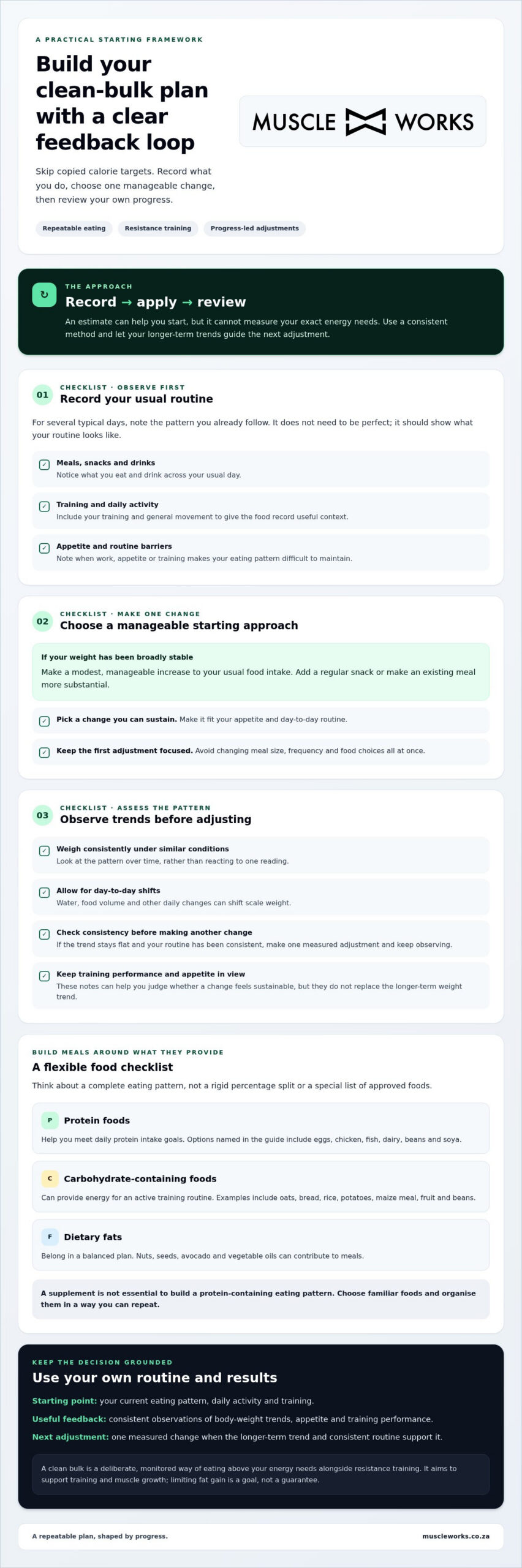
- Record your usual routine. For several typical days, note meals, snacks, drinks, training and general daily activity. The record doesn’t need to be perfect. It should give you a useful picture of what you currently do.
- Choose one repeatable starting approach. If your weight has been broadly stable, make a modest, manageable increase to your usual food intake. You could add a regular snack or make an existing meal more substantial. Pick an approach you can sustain rather than changing meal size, frequency and food choices all at once.
- Observe trends before adjusting. Weigh yourself consistently under similar conditions and look at the pattern over time, not a single reading. Water, food volume and other day-to-day changes can shift scale weight. If the trend stays flat and your routine has been consistent, make one measured adjustment and continue observing.
This gives your clean bulking diet plan for hardgainers a clear feedback loop: record, apply, review. It’s more useful than treating an estimated calorie figure as precise. Keep notes on training performance and appetite too. They can help you judge whether a change feels sustainable, although neither replaces the longer-term weight trend.
How to think about protein, carbohydrates and fats
Think in terms of a complete eating pattern, not a rigid percentage split. Protein foods help you meet your daily protein intake goals. Options include eggs, chicken, fish, dairy, beans and soya. You can spread these across meals in a way that fits your routine. A supplement isn’t essential to build that pattern.
Carbohydrate-containing foods such as oats, bread, rice, potatoes, maize meal, fruit and beans can provide energy for an active training routine. Dietary fats also belong in a balanced plan. Foods such as nuts, seeds, avocado and vegetable oils can contribute to meals. No single food or macro ratio is a magic switch. Build a pattern you can repeat, then assess it against your training and progress.
If you have specific dietary needs, a medical condition or questions about structuring your intake, seek tailored guidance from a registered dietitian. For a broader look at sports nutrition as you shape your routine, explore Muscle Works sports nutrition.
Build a South African clean-bulk meal plan from flexible food choices
Build meals around their purpose, not rigid recipes. Pair a protein food with a carbohydrate source, add vegetables or fruit where they fit, then include an energy-dense addition if the meal needs more staying power. South African staples make this adaptable: rice, maize meal, potatoes, beans, eggs and maas can all find a place. No single food is uniquely effective. The overall pattern matters.
A flexible meal template makes consistent eating easier by letting you swap foods to suit your appetite, schedule and preferences.
| Meal role | Food category | Practical alternatives |
|---|---|---|
| Protein anchor | Eggs, dairy, meat or fish | Eggs, chicken, tinned fish, lean meat, maas or yoghurt |
| Plant-based protein | Legumes, soya or tofu | Beans, lentils, split peas, chickpeas or soya foods |
| Training fuel | Grains and starchy foods | Oats, rice, bread, maize meal, potatoes or samp |
| Colour and variety | Vegetables and fruit | Seasonal produce, frozen vegetables or fruit that travels well |
| Extra energy and flavour | Fats and toppings | Peanut butter, nuts, seeds, avocado or vegetable oil |
Choose foods that make consistent eating easier
Use foods you can buy, prepare and enjoy regularly. A plant-based meal built around beans, lentils, soya or tofu can contribute protein, but it won’t necessarily match a meat or dairy choice in taste, preparation or nutritional composition. Choose what suits your needs and build the rest of the meal around it.
For work, study or training days, pack a sandwich with egg or chicken, yoghurt with fruit, or a container of leftover rice, beans and vegetables. Keep portable choices in your routine so a busy day doesn’t leave a gap between meals. These are options, not rules.
Use a repeatable day structure, not a compulsory meal count
Think in opportunities to eat, not a mandatory number of meals. Breakfast could be oats with milk and fruit, or eggs with bread. Lunch might combine rice or maize meal with beans, chicken or fish and vegetables. After training, have your next suitable meal or snack. Supper can follow the same mix-and-match structure. Adjust the order to suit your day.
If a large meal feels difficult, divide the same foods across smaller eating occasions. If you have little time, prepare an extra portion at supper for lunch the next day. Swap rice for potatoes, beans for eggs, or fresh fruit for a portable alternative. Keep the meal’s role steady while changing the ingredients. A clean bulking diet plan for hardgainers should fit real routines, not demand a perfect menu.
For more ways to complement a food-first training routine, explore sports nutrition options.
Adjust your clean-bulk plan when appetite or progress stalls
A flat weigh-in doesn’t mean your plan has failed. Body weight can shift from day to day, so don’t overhaul your eating because of one reading. Look for a sustained pattern, then check whether your routine has been consistent enough to judge. The aim is a measured response, not a scramble to eat everything in sight.
Review training and food intake together. Progress depends on both the demands you place on your body and the consistency of the food supporting your routine.
What to review before changing your plan
Use this sequence before making an adjustment. Keep the review simple and honest. You’re looking for a useful pattern, not a perfect record.
- Check consistency. Have you followed your usual meal structure and training routine most of the time, or have busy days repeatedly disrupted them? Note any changes in activity or schedule that could affect your routine.
- Review the trends. Compare consistent weigh-ins over time rather than reacting to a single number. Consider strength performance, appetite and how often you managed your planned meals too. A scale trend without this context can be misleading.
- Change one thing. If your weight trend isn’t moving as you intend and your routine has been reasonably consistent, make one manageable change. For example, add a regular snack or make an existing meal more substantial. Keep other parts of the plan steady while you observe what happens.
A jump after a salty meal or a lower reading after a busy day doesn’t reveal your longer-term direction. Avoid abrupt changes, and don’t chase a promised rate of gain. Your response is individual. The useful question is whether your consistent habits are supporting the direction you want without making the plan impossible to maintain.
What to do when eating enough feels difficult
Don’t force down oversized meals. If large portions feel uncomfortable, spread your usual foods across smaller, manageable eating occasions. Shift a snack to a time when your appetite is better, or prepare something portable for work, study or the journey to training. A sandwich, yoghurt with fruit or a simple snack you already enjoy may be easier to manage than another large plate.
Convenience matters. Keep the overall plan food-led, but use practical foods and drinks that fit your day when sitting down for a full meal isn’t realistic. If your appetite remains persistently low, eating causes discomfort or your nutrition needs are more complex, speak to a registered dietitian or an appropriate healthcare professional for tailored guidance.
Run the clean bulking diet plan for hardgainers as a feedback loop: check consistency, review the pattern and make one deliberate adjustment. Keep the next step practical. For support as you build your sports nutrition routine, explore Muscle Works nutrition options.
Where protein supplements fit in a hardgainer’s clean-bulk plan
Start with food, resistance training and consistency. Protein powder is optional. It may be a practical way to add protein when preparing or eating a food-based option doesn’t suit your schedule, but it isn’t a meal replacement or a shortcut to muscle gain. Build your routine around meals first. Consider a supplement only if it fills a genuine gap in your day.
When a protein powder may be a practical option
A packed work or study day, for example, might leave little time to prepare food between meals. In that situation, protein powder could be one convenient option to fit into your routine. Muscle Works offers 100% Whey Protein 1 kg and Plant Protein 1.2 kg as distinct options. Choose according to your preferences and eating pattern, rather than assuming either is essential or superior to food.
To learn more about the whey option, read the 100% Whey Protein 1 kg guide. Keep the decision grounded: consider whether it fits your routine and dietary preferences, and continue building meals from foods that work for you. A powder can complement that structure, but it shouldn’t become the structure itself.
Keep the next step simple and evidence-aware
Before adding anything, look at your usual meals and identify what’s actually difficult. Is it getting protein into a busy day, or is your overall eating pattern inconsistent? If the issue is meal planning, changing the pattern may help more than adding a product. If a convenient protein option suits your routine, use it as one part of your broader food-first approach.
Keep expectations realistic. A supplement can’t replace consistent meals and training, and it can’t guarantee a particular result. Follow the product label and consider your personal circumstances before use. For another supplement-related resource, you can explore the 21 Day Grow Stack guide. Treat it as related reading, not a requirement for your clean-bulk plan.
This is not a medicine and Always consult your physician before use. Do not use if breast feeding or lactating or if you have high blood pressure or a medical condition. KEEP OUT OF REACH OF CHILDREN.
The right choice is one that fits your dietary preferences and routine without displacing meals. Keep tracking your eating and progress, then decide whether a convenience option genuinely helps. That’s the practical role of supplements in a clean bulking diet plan for hardgainers: optional support, while the fundamentals do the heavy lifting.
Put your plan into action, then keep refining it
Your next move doesn’t need to be dramatic. Pick a meal structure you can sustain, follow it alongside your training, and keep a simple record of how it’s working. Use what you learn to make your next adjustment deliberate. That’s how a clean bulking diet plan for hardgainers becomes a working system, not another rigid plan you abandon when life gets busy.
If a convenient protein option suits your routine, Muscle Works offers whey and plant-based protein options online across South Africa. Treat them as optional additions to a food-first approach, not replacements for meals or guarantees of muscle gain. Explore Muscle Works protein options and choose what fits your preferences and routine.
This is not a medicine. Always consult your physician before use. Do not use if breast feeding or lactating or if you have high blood pressure or a medical condition. KEEP OUT OF REACH OF CHILDREN.
Stay consistent, pay attention to your own response and keep moving forward. Build the habit first, then let progress shape the next step.
Frequently Asked Questions
Can hardgainers clean bulk without eating six meals a day?
Yes. Six meals aren’t a universal requirement. Choose a meal frequency that fits your appetite, work or study schedule, and ability to eat consistently. For example, you might prefer three substantial meals with a snack, while someone else may find smaller, more frequent eating easier. Your clean bulking diet plan for hardgainers should work across your normal week, not depend on forcing a fixed number of meals each day.
How long should a clean bulk last?
There’s no fixed duration that suits everyone. Set a review point that gives you enough time to follow your routine and observe meaningful patterns, then consider whether it still fits your training and daily life. Ask whether your habits feel sustainable and whether your progress is moving in the direction you want. Don’t treat a calendar date as a promise of muscle gain. For a tailored plan, consult a registered dietitian.
Can you clean bulk without supplements?
Yes. Meals can provide the foundation of your eating plan, and supplements are optional. Protein powder may be convenient if your schedule makes a food-based choice difficult, but it doesn’t replace consistent meals or training. If you choose to use a product, follow its label. This is not a medicine. Always consult your physician before use. KEEP OUT OF REACH OF CHILDREN.
Should hardgainers eat before bed to gain muscle?
No, a bedtime meal isn’t automatically required. If work, study or training means you finish the day short of a meal, a snack before bed could be a practical way to fit in food, provided it suits your appetite and routine. It could be yoghurt and fruit, or another option you already enjoy. Focus on your overall eating pattern rather than a special time window, and don’t force food if it feels uncomfortable.
Are carbohydrates necessary in a clean-bulking diet?
Carbohydrates can be a useful part of a varied plan, particularly for active people who want practical energy sources around training. Options such as oats, bread, rice, potatoes, maize meal and fruit can fit, depending on your preferences and needs. They aren’t the only useful fuel, and there’s no single required amount for everyone. Build your choices around your training, overall eating pattern and any individual nutrition guidance you follow.
What should I do if my weight is not changing during a clean bulk?
First, check whether your eating, training and weigh-in routine have been reasonably consistent. Compare readings taken under similar conditions over time, rather than reacting to one day’s number. If the longer-term pattern remains unchanged, consider one small, manageable adjustment, such as adding a regular snack, then keep observing. Don’t copy a universal calorie increase or expect a guaranteed rate of gain. A registered dietitian can help tailor your approach.
Is clean bulking the same as eating only healthy foods?
No. Clean bulking isn’t a strict list that divides foods into permitted and forbidden categories. It describes a deliberate approach to eating for weight gain, with attention to food choices and how your plan is working. Flexibility can make a routine easier to maintain, including meals that suit your culture, budget and preferences. One snack or ingredient doesn’t define the whole plan. Look at your overall pattern, not a moral label for individual foods.