

Protein powder won’t build muscle for you. Training, recovery and a suitable diet do the work; powder is simply one way to make planned protein intake more convenient. Yet the common myths about protein powder can make it sound either essential for every athlete or dangerous by default. Neither claim tells the full story.
If you’ve heard conflicting advice from gym mates, social media or supplement marketing, the uncertainty is understandable. Does protein powder help with muscle gain? Is it safe? Do you need it at all? The answers depend on your diet, training and individual needs, not the loudest claim in the gym.
This guide separates evidence from rumour. You’ll learn which claims are myths, where the facts need context, and how protein powder fits alongside whole foods and consistent training. We’ll also cover how to compare whey and plant-based options without declaring one universally superior. Use powder when it solves a practical gap in your routine. Don’t expect it to replace good food, hard work or realistic expectations.
Key Takeaways
- Learn how to separate common myths about protein powder from claims that need more context.
- See why safety and body-composition claims depend on evidence and individual circumstances, not blanket promises.
- Compare protein powders with whole foods by looking at convenience, meal value and your dietary needs.
- Use a simple check of the claim, evidence and product label before trusting supplement marketing.
- Decide whether a powder solves a practical gap in your routine, then choose a source that fits your preferences.
Protein powder myths: what it is and what it is not
Advice about protein powder can swing from “every serious athlete needs it” to “it’s basically a drug”. That noise makes it harder to decide whether it belongs in your routine. Start with the basics: protein powder is a convenient source of dietary protein, not a substitute for the fundamentals that support training progress.
Definition: Protein powder is a concentrated food or supplement product designed to provide protein in powdered form. It may be made from sources such as milk or plants, and its ingredients and nutritional profile vary by product. The overview of protein supplements explains common sources and uses. Protein itself is a nutrient; anabolic-androgenic steroids are drugs that act on hormone pathways. They are not the same thing, and protein powder is not a performance guarantee.
A serving can add protein to your diet when food isn’t practical. It can’t replace resistance training, adequate recovery or a balanced eating pattern. Keep those roles separate. Many common myths about protein powder begin when a useful food supplement is treated as either a shortcut or a threat.
Myth: protein powder is a steroid or an artificial shortcut
Protein supplies amino acids your body uses for normal functions, including building and repairing body tissues. Anabolic-androgenic steroids are synthetic drugs related to testosterone. They affect the body through hormonal mechanisms and carry distinct health risks. Confusing the two blurs the difference between a nutrient and a drug.
That doesn’t mean every powder has identical ingredients, quality or suitability. Read the specific product label rather than assuming all tubs are alike. And don’t expect a scoop to build muscle on its own. Muscle growth depends on suitable training, nutrition and recovery. Powder may help you meet a planned protein intake; it doesn’t replace that process or guarantee results.
Myth: every athlete needs protein powder
Athletes can get protein from food, supplements or a combination of both. Meat, fish, eggs, dairy, beans and other protein-containing foods can all contribute to an eating plan. A supplement is optional, not a compulsory step for athletes or recreational gym-goers. What matters is whether your overall diet meets your needs.
Powder may be useful when a meal isn’t convenient, your appetite is low, or your routine makes it difficult to include a protein-rich food. A shake can be practical after a session or between commitments, but taking it around training doesn’t automatically improve results. Choose it to solve a real gap, not because gym culture says you must. Muscle Works offers whey-based and plant-based protein options, so you can compare different sources and choose according to your preferences.
Protein powder and your health: unpacking safety and body-composition claims
Health claims often arrive in absolutes: protein powder will wreck your kidneys, or it’s completely safe for everyone. Neither is a sound way to judge a food supplement. Your health, total diet, product and amount all matter. Common myths about protein powder are easier to assess when you separate general evidence from advice for an individual.
Myth: protein powder damages healthy kidneys
For adults without kidney disease, current evidence hasn’t established that protein powder itself causes kidney damage when used as part of an appropriate diet. But that isn’t proof that every intake is harmless for every person, or that very high protein consumption has no limits. Research on protein intake and kidney function is interpreted in light of how much protein people consume, for how long and their health status.
Kidney disease changes the picture. Protein needs and dietary advice can vary with the type and stage of a condition, so general fitness guidance may not apply. The National Institute of Diabetes and Digestive and Kidney Diseases’ guidance on eating with chronic kidney disease explains why dietary choices may need to be tailored. If you have diagnosed kidney disease or another relevant medical concern, speak to a doctor or registered dietitian before changing your protein intake or using a supplement.
Myth: protein powder automatically causes weight or fat gain
A powder isn’t a fat-gain trigger. Body weight changes over time in response to the relationship between energy consumed and energy used, alongside other individual factors. Protein powder contributes energy and nutrients like other foods. Adding a shake on top of your usual meals may increase your overall intake; using it in place of another snack may have a different effect. The product alone can’t predict the outcome.
That’s why dramatic promises about weight loss or a specific body-composition result deserve scrutiny. Training, total diet, sleep and consistency all influence progress. A supplement can contribute protein, but it can’t guarantee that added protein becomes muscle or that body fat changes in a particular direction.
Check the product label for serving directions, ingredients, allergens and nutrition information. These details help you decide whether a product fits your needs, but a label isn’t a guarantee of safety or suitability for every person. Harvard Health Publishing outlines potential concerns, including digestive issues and contamination risks, in its overview of potential risks of protein powders. Stop and seek medical advice if you experience concerning symptoms after using a supplement.
If powder suits your routine, compare whey and plant-based protein options by source preference and label details, not promises of guaranteed results.
Whole food versus protein powder: what the comparison really tells you
Whole food and protein powder aren’t rival camps. They’re different ways to meet dietary needs. A meal can supply protein alongside other nutrients and form part of a satisfying eating pattern. A powder offers a compact, convenient protein source. The right choice depends on your diet, preferences, access to food and daily routine, not on a claim that one option always wins.
Myth: whole food is always superior to protein powder
Whole foods can bring more to a meal than protein alone. For example, a meal built around eggs, beans, fish or dairy may also provide other nutrients, depending on the food and what accompanies it. A powder doesn’t automatically offer the same variety. But practical circumstances matter too: if you’re travelling, short on time or unable to prepare a meal, a shake may be a useful way to add protein. Use it to fill a gap, not to displace a varied diet by default.
Compare the options in context:
| Factor | Whole foods | Protein powder |
|---|---|---|
| Convenience | May need planning, preparation or refrigeration. | Can be quick to prepare and easier to carry, depending on your routine. |
| Meal context | Can form part of a meal and provide nutrients beyond protein. | Usually serves as a focused protein addition; it needn’t replace a meal. |
| Ingredients | Varies by food and preparation. | Varies by product, so read the ingredients and nutrition information. |
| Personal needs | Choice can reflect taste, access and dietary preferences. | Source and suitability vary; consider preferences, dietary requirements and label details. |
Myth: all protein powders work the same way
Source matters. Whey-based and plant-based powders come from different ingredients, and products within either category may have different formulations and label information. Don’t assume they’re interchangeable or that one is automatically better for everyone. Check the serving information, ingredient list and allergen details against your own needs. For a product-specific example, review 100% Whey Protein 1kg and assess its label as you would any protein powder.
Absorption claims also need context. A broad claim about speed doesn’t prove that one source will produce better training results for everyone. Your total diet, preferences and consistency matter. If you enjoy preparing meals and have access to protein-rich foods, powder may add little convenience. If your schedule makes that difficult, it may be a practical option. Common myths about protein powder lose their force when you compare real-life usefulness instead of searching for a universal winner.
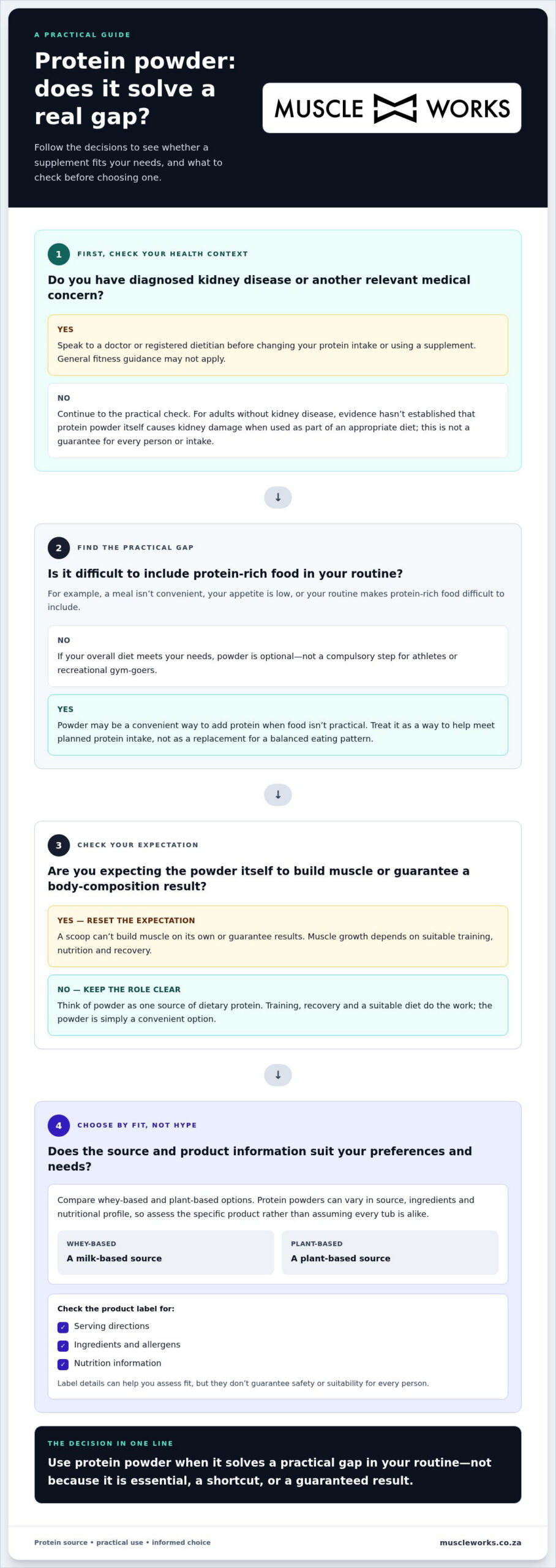
How to assess protein-powder claims without falling for gym myths
A bold claim is not evidence. Separate what a product contains from what someone says it will do. Protein content is a label fact; promises about muscle gain, recovery or fat loss are claims about outcomes. Those outcomes depend on more than one ingredient or supplement. Myths about protein powder thrive when that distinction gets lost.
A four-step check for bold protein-powder claims
Run every claim through this sequence before you believe it or build your routine around it:
- Name the claim. Is it about nutrition, health or performance? “Contains protein” is different from “builds muscle faster”.
- Look for relevant human evidence. Give more weight to research on people and outcomes that match the claim than to a testimonial, gym anecdote or attention-grabbing headline. Check who was studied and what the research actually measured.
- Compare the claim with the label. Read the ingredients, nutrition information and serving directions. A label can tell you what the product states it contains, but it doesn’t prove a promised training result.
- Test its relevance to your routine. Ask whether the product solves a real dietary or practical need. If your meals already meet your needs, another supplement may not add useful value.
Keep this checklist: identify the claim, check relevant human evidence, compare it with the label, then decide whether it fits your needs. This is a practical screen, not a medical assessment. For sport-nutrition context, the International Society of Sports Nutrition’s position stand on protein and exercise discusses both daily intake and timing. Use credible research and qualified health guidance, not marketing language, to judge claims.
Myth: timing matters more than total daily nutrition
There’s no need to treat the post-training period as a magic moment with a rigid deadline. Training nutrition is built across the day, through your overall eating pattern and how it supports your sessions and recovery. A shake may be convenient after exercise if it fits your routine, but the clock alone can’t compensate for an inconsistent diet or training plan.
Think about timing as a practical choice: if you can eat a suitable meal after training, a shake isn’t automatically necessary. If you’re heading straight to work or travelling, a convenient protein source may help you stay on plan. For a related, goal-specific discussion, see this whey protein isolate for cutting guide. It’s one context for considering protein, not proof that a particular product guarantees an outcome.
Put the claim to the test, then choose on evidence and fit. Explore protein options with your routine and label needs in mind.
Choosing a protein powder that fits your routine, not the hype
Make the decision practical. Before choosing a powder, ask whether it solves a real problem: are you regularly short of a planned protein source because of work, travel or limited time to prepare food? If not, buying a supplement may add little to your routine. If it does help, choose by the details that affect your day, not by claims of guaranteed gains.
Use this quick filter:
- Need: Identify when your current eating routine falls short of your plan. Don’t add a serving just because it’s part of someone else’s routine.
- Use: Consider whether a powder is easier to prepare and carry than a suitable food option at that time.
- Preference: Decide whether you’d rather use a whey-based or plant-based source. Neither category is automatically right for everyone.
- Label: Read the ingredients, allergen information, nutrition details and serving directions. Check the actual product rather than relying on a general claim about its category.
Choose by source, dietary needs and everyday use
Whey and plant-based protein are distinct source categories. Your preference, dietary requirements and the product’s label can guide your choice, but don’t assume a source is suitable for a medical condition or that one type is universally superior. Check the ingredient and allergen information for the specific product, then consider how it fits alongside your usual meals.
Be precise about what you need. If you want a portable option between commitments, convenience may matter most. If you’re comparing products for a specific dietary reason, scrutinise the label rather than trusting a broad “clean” or “easy to digest” claim. Serving directions also help you understand how the product is intended to be used. If you have a medical condition or a specific dietary concern, get advice from a qualified health professional.
Where Muscle Works protein options fit
Muscle Works offers whey-based options including 100% Whey Protein 1kg and Iso-Tech Whey, alongside Plant Protein 1.2kg. These are choices within the range, not promises of a particular training or body-composition result. Compare their labels with your preferences and requirements. For more context on one whey option, the whey protein isolate for cutting guide discusses protein in relation to a specific goal.
Common myths about protein powder can push athletes towards an all-or-nothing choice. Skip that trap. If food already works for your routine, keep building around it. If a powder offers useful convenience, select one that fits your needs and use it as part of a considered diet, not as a shortcut. Explore Muscle Works’ protein options when you’re ready to compare them, and let the label and your routine guide the decision.
Make your next nutrition choice deliberate
Let your routine set the standard. Before adding a supplement, identify the specific gap you want it to address, then decide whether a powder is the simplest practical fit. That keeps your choice anchored to your training and day-to-day needs, not pressure from gym talk or promises on a label. Common myths about protein powder lose their grip when you assess claims calmly and choose with purpose.
If you’re ready to compare options, Muscle Works offers whey and plant-based protein powders, including 100% Whey Protein 1kg, Iso-Tech Whey and Plant Protein 1.2kg. Treat them as options to assess against your preferences and each product’s label, not as guaranteed results or essentials for every athlete.
Explore Muscle Works protein options and choose the next step that fits your routine. Keep your standards high, stay consistent and let informed decisions support the work you put in.
Frequently Asked Questions
Is protein powder safe to take every day?
It can fit into a daily diet for some people, but daily use isn’t automatically right for everyone. Consider your total diet, the product’s ingredients and serving directions, and any health conditions or medication. For example, someone with a diagnosed kidney condition should get individual advice before changing protein intake. If you notice an unexpected reaction, stop using the product and speak to a qualified health professional.
Can protein powder replace a meal?
Usually, protein powder on its own shouldn’t be treated as a complete meal. A meal may offer energy, fibre and a wider range of nutrients that a protein supplement doesn’t necessarily provide. If you’re short on time, you could add powder to a more substantial option, such as a smoothie with fruit and other ingredients that suit your diet. Check the label, and don’t assume a shake is nutritionally complete.
Does protein powder work if you do not exercise?
Yes, it still provides dietary protein, which the body uses for normal functions, but it won’t create a training effect by itself. If you’re not exercising, first consider whether your usual meals already meet your needs. A powder may be convenient if they don’t, but it isn’t automatically useful just because it’s available. Choose based on your diet and health needs, not an expectation of muscle gain without training.
Can women use protein powder, or is it only for men?
Women can use protein powder; it isn’t a men-only supplement. The relevant questions are whether it suits your dietary needs, preferences and overall intake. For example, a woman who struggles to prepare a protein-containing snack during a busy workday might find powder convenient, whilst another may prefer food. Read the label for ingredients and allergen information, and seek tailored advice if you’re pregnant, breastfeeding or managing a medical condition.
Does cooking with protein powder destroy its protein?
No, cooking doesn’t simply remove the protein. Heat can change a protein’s structure, a process called denaturation, but that doesn’t mean the protein disappears or becomes useless. The finished recipe still contributes protein, although the amount per portion depends on how much powder you use and how many servings you make. Follow recipe guidance for texture, as high heat can affect how a mixture cooks.
How much protein powder should I use in a serving?
Use the serving directions on the specific product label, then consider how that amount fits your day’s meals. Scoops and serving sizes can vary between products, so don’t assume one scoop always provides the same amount of protein. If you’re tracking intake, use the label’s nutrition information and measure as directed. You don’t need extra servings simply because you trained that day; individual needs differ.
Is plant protein as effective as whey protein?
Plant protein can contribute to dietary protein and support training when the overall diet provides enough protein and essential amino acids. Plant sources differ, just as products within a category can differ, so compare the label and serving information rather than judging by source name alone. Whey may suit some preferences, whilst plant-based options may suit others. Neither is universally superior; choose according to your diet, preferences and requirements.