

Your lifts have stopped climbing. Your physique looks unchanged. Before you tear up your programme or reach for another supplement, find out what’s actually holding you back. Learning how to break through a muscle building plateau starts with a clear diagnosis, not a scattergun overhaul.
Consistent training without visible results is frustrating, especially when it’s hard to tell whether the problem is your workload, nutrition or recovery. But one flat session doesn’t prove you’ve stalled. Compare several measures, such as performance in key lifts and changes in body measurements, and look for a pattern.
This guide will help you confirm whether progress has genuinely stopped, identify the most likely limiting factor and make one focused adjustment. You’ll build a practical plan, track whether it’s working and know when to reassess. We’ll cover training stimulus, food, sleep and recovery first. Supplements come later, as support for a solid plan, not a shortcut around it. Change what the evidence points to, then give that change room to work.
Key Takeaways
- Use trends in strength and muscle size to distinguish a genuine stall from a short-term fluctuation.
- Check training, nutrition and recovery for the most likely bottleneck before changing your programme.
- Learn how to break through a muscle building plateau by testing one focused adjustment at a time.
- Keep training and nutrition records consistent so you can judge whether an adjustment is working.
- Understand where protein powder may help with dietary needs, and why supplements can’t replace sound training, nutrition or recovery.
How to recognise a genuine muscle-building plateau
Putting in the work and seeing no obvious change is frustrating. But a difficult session, a flat week or an unchanged weigh-in doesn’t prove your muscle growth has stopped. Performance and body weight naturally vary, and visual changes can be slow. Reacting to every dip can lead to unnecessary programme changes before you know what’s really happening.
A muscle-building plateau is a sustained lack of progress across relevant measures, judged from consistent records rather than one workout or weigh-in. Muscle gain happens through muscle hypertrophy, a process that can be hard to spot day to day. Look for patterns across several weeks, without treating any one timeframe as a universal rule. The aim is to work out whether growth appears stalled, not to expect visible change after every training session.
What counts as stalled muscle growth?
A single unchanged set may reflect poor sleep, a stressful day, a different warm-up or normal variation. On its own, it says little about overall progress. Review your training and physique records over several weeks, and check whether more than one useful marker is repeatedly flat. A plateau in one lift doesn’t automatically mean muscle growth has stalled across your body.
Strength and size overlap, but they aren’t identical measures. You might stop adding repetitions to one exercise while other lifts improve or measurements change. Technique, confidence and familiarity with a movement can also affect performance. Before calling it a muscle-building stall, ask whether progress has stopped broadly or only on one exercise.
Which progress markers should you track?
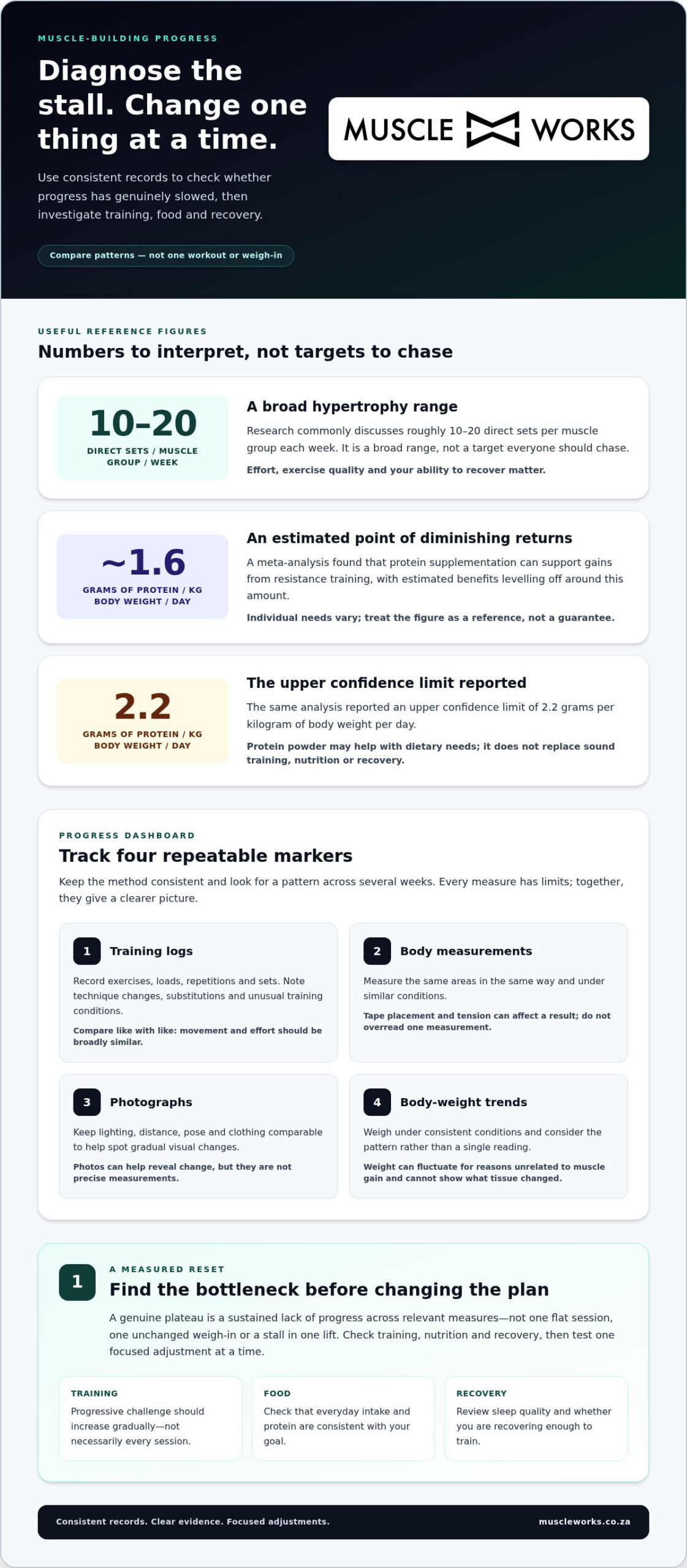
Use a small set of repeatable measures. Each captures a different part of the picture, and each has limits. Keep your method consistent so a real trend doesn’t get lost in inconsistent records.
- Training logs: Record exercise, load, repetitions and sets. Note changes in technique, exercise substitutions and unusual training conditions. A heavier lift is a useful comparison only if the movement and effort are broadly similar.
- Body measurements: Measure the same areas in the same way and under similar conditions. Tape placement and tension can affect the result, so don’t read too much into one measurement.
- Photographs: Use comparable lighting, distance, pose and clothing. Photos can help reveal gradual visual changes, but they aren’t precise measurements.
- Body-weight trends: Weigh yourself under consistent conditions and consider the pattern, not a single reading. Weight can fluctuate for reasons unrelated to muscle gain, so it can’t show what tissue has changed.
Compare the signals. If your lift numbers are steady but measurements or photos suggest change, take that into account. If performance, body measurements and visual records all remain unchanged despite consistent tracking, you have stronger grounds to investigate how to break through a muscle building plateau. First make sure the evidence reflects a sustained trend, not a recording mismatch or one rough stretch.
Why muscle-building progress stalls: training, food, and recovery
Once you’ve checked that progress has genuinely slowed, look for the cause before reaching for a new programme. Muscle growth depends on a training stimulus you can sustain, enough energy and protein to support adaptation, and recovery that lets you return ready to train. A weakness in any one area can blunt the results of effort elsewhere.
Training factors that can hide or limit progress
Progressive overload means gradually challenging your muscles as they adapt. It doesn’t mean adding weight every session. The American College of Sports Medicine’s resistance-training progression guidance supports planned, progressive changes to training. As your body adapts to a repeated training demand, continued progress calls for a gradual increase in challenge, not a heavier lift at every workout.
First, make sure the comparison is fair. Record exercises, sets, repetitions and loads, and note any change in technique or equipment. Replacing a barbell row with a cable row, for example, changes the movement enough that the numbers aren’t directly comparable. Keep your programme consistent long enough to judge its effect.
Then assess the stimulus. Too little challenging work may not give a muscle enough reason to grow; too much can build fatigue faster than you can recover from it. Research commonly discusses roughly 10-20 direct sets per muscle group per week for hypertrophy, but that’s a broad range, not a target everyone should chase. Effort, exercise quality and your ability to recover matter. If loads and repetitions are sliding across several movements and sessions feel unusually draining, adding more sets may deepen the problem.
Nutrition and recovery factors to assess
Check your everyday intake before buying a supplement. If overall food intake is too low to support your goal, or protein is inconsistent, training may not translate into the muscle gain you want. A meta-analysis by Morton and colleagues found that protein supplementation can support gains from resistance training, with estimated benefits levelling off around 1.6 grams per kilogram of body weight per day and an upper confidence limit of 2.2 grams per kilogram. Individual needs vary, so use these figures as a reference rather than a guarantee.
Protein powder can be a convenient way to help meet your needs when meals don’t fit your schedule. If food logistics are the sticking point, explore sports nutrition options to support your diet, not replace it.
Finally, review sleep quality, rest days, stress and the spacing of demanding sessions. Poor recovery can reduce the quality of your next workout, even if your programme looks solid on paper. Don’t assume one tactic will fix everything. To understand how to break through a muscle building plateau, identify the factor most likely limiting you, then test a focused change instead of overhauling training, diet and recovery at once.
How to choose the right plateau fix instead of changing everything
A stalled result doesn’t automatically mean you need harder sessions, more exercises or a brand-new programme. More work can help if your training stimulus is too low. It can backfire if the real issue is accumulated fatigue, inconsistent food intake or poor recovery. Match the fix to the evidence. Start with the simplest plausible bottleneck, then change one thing so you can judge its effect.
Match the evidence to the likely bottleneck
Use your records to narrow the options. Look for a pattern, not one rough workout, and check the basics before making a major change.
| What you notice | What to check first | Focused first move |
|---|---|---|
| Loads or repetitions aren’t progressing across several exercises | Programme structure, effort, technique and consistency of exercise selection | Check that sets are challenging and comparable, then make a gradual training adjustment if needed |
| Training is consistent, but weight and food records suggest you’re eating too little | Overall energy intake and whether protein is consistent day to day | Review meals and portions before adding supplements or changing training |
| Performance and motivation are both dropping | Sleep, stress, rest days and demanding sessions placed too close together | Reduce accumulated fatigue before adding more workload |
These signs point towards useful checks, not guaranteed diagnoses. Several factors can overlap. If your log shows stable training but food intake varies widely, tighten food consistency first. If performance has fallen across multiple movements alongside poor recovery, adding exercises is unlikely to be the smartest first move.
Once you’ve reviewed your training, nutrition and recovery records, keep any adjustment narrow enough to assess. If you’re considering an optional supporting tool after those foundations are in place, read this creatine monohydrate guide separately. Don’t treat a supplement as a substitute for identifying the cause.
When should you change the programme or take a deload?
Change the programme when your records point to a training issue, such as no clear progression or exercises you can’t perform consistently. A deload may make sense when fatigue has built up and is interfering with training quality. It isn’t an automatic response to every plateau. One difficult session isn’t a reason to abandon a programme; look for a sustained pattern first.
A deload is a planned reduction in training stress, such as fewer sets or less demanding work for a period. Use it to manage fatigue, then resume with a clear plan. If the evidence points to low food intake instead, changing the programme or deloading won’t address that bottleneck. The practical answer to how to break through a muscle building plateau is to make the change your records support, keep other variables steady and reassess before adding another intervention.
How to break through a muscle-building plateau with a measured reset
Don’t guess. Build a troubleshooting cycle from your own records: capture a baseline, choose the most likely limiting factor, make one adjustment and review the result. This keeps the plan focused and shows whether the change helped. Changing one variable at a time makes troubleshooting clearer because you can connect a result to the adjustment you actually made.
Build a baseline before making changes
Start with a practical snapshot, not a complicated tracking system. Use information you can collect consistently and compare across similar training conditions.
- Training: Record exercises, sets, repetitions, loads and how hard the work felt. Note technique changes, exercise substitutions or unusual conditions that could make sessions hard to compare.
- Body trends: Track body weight under similar conditions and take relevant measurements in the same way each time. Look at the overall direction, not a single reading.
- Recovery and food: Briefly note sleep quality, energy, rest days and whether meals have been broadly consistent. A simple note is enough; tracking should inform your decision, not become another demanding task.
Keep the baseline long enough to reflect repeated training and nutrition patterns. There’s no single review period that suits every person or adjustment. Choose a window that gives you comparable sessions and enough consistent observations to assess a trend.
Run one adjustment and review the outcome
Use the baseline to select the change that best fits the evidence. If comparable lifts show little progression and recovery is good, adjust one training factor, such as exercise execution or how you progress repetitions. If food records point to inconsistent intake, address that before changing several parts of your programme. If fatigue is building, reduce training stress rather than adding more work.
- Establish the baseline. Save your current training, body and routine records.
- Name the likely cause. Write down what the evidence points to and why.
- Make one adjustment. Keep other major variables as steady as practical so the result stays interpretable.
- Reassess. Compare similar sessions and consistent body measures with your baseline.
If performance improves or another relevant marker moves in the right direction, the adjustment may be helping. Keep tracking before making another change. If results look much the same, don’t immediately pile on sets or add new exercises. Check whether you followed the adjustment consistently and whether the review included enough comparable observations. If not, improve the test. If you did, revisit your original diagnosis and choose a different single change.
If your baseline points to difficulty meeting your protein needs through meals, explore protein options as practical support for your nutrition plan. Keep your records steady and assess the change on its own. That’s how you turn a stalled phase into a decision based on evidence, not impulse.
Where supplements fit when you are breaking a muscle-building plateau
Supplements can support a sound plan. They can’t replace progressive training, adequate nutrition or recovery. If one of those foundations is limiting progress, adding a product won’t fix the underlying issue. First identify the gap, then decide whether a supplement offers a practical way to address it.
Use this quick check before buying anything:
- Training: Is your programme consistent and challenging enough to support gradual progression?
- Food: Are you getting enough energy and protein from your usual meals?
- Recovery: Are sleep, rest and session spacing supporting the work you’re doing?
- Convenience: Is there a specific nutrition need that’s difficult to meet with food alone?
If the first three need attention, start there. A supplement is worth considering when it supports a clear need, not simply because a plateau makes you feel you must add something.
Use protein supplements to support a consistent nutrition plan
Protein powder is a convenient food supplement. It can help you meet your individual protein needs when preparing or carrying a meal isn’t practical. It isn’t a standalone muscle-building solution, and it doesn’t compensate for an inconsistent diet or ineffective training.
Think about your routine. If you regularly miss a useful protein source because of work, travel or a busy day, a powder may make your nutrition plan easier to follow. If your meals already meet your needs, adding more may not address the reason progress has stalled. Compare your normal intake with your target before deciding whether it fills a genuine gap. For a closer look at the category, read the 100% Whey Protein 1kg guide. Plant protein is another option; choose based on your dietary preferences and practical needs rather than assuming one type suits everyone.
Keep supplement expectations realistic
Creatine monohydrate is an optional supplement to consider separately. It doesn’t guarantee muscle gain or resolve a training, food or recovery issue. Evaluate it on its own merits and keep expectations grounded. The same applies to stacks: don’t assume a product can force progress without the foundations in place.
The 21 Day Grow Stack guide is a separate product consideration, not proof that a stack will break a plateau. Before choosing any supplement, name the need it’s meant to support and decide how you’ll tell whether it’s useful. That keeps your approach to how to break through a muscle building plateau focused on evidence, not impulse.
If a supplement fits a real gap in your plan, explore sports nutrition options and choose with purpose. Keep training, nutrition and recovery at the centre of your strategy.
Make your next training block count
Progress isn’t built by reacting to every frustrating workout. It comes from making deliberate decisions, giving them time to work and learning from the result. Keep your next move simple: choose the adjustment your records support, commit to it and stay consistent enough to see what changes.
That discipline applies to nutrition too. If a supplement fills a practical gap, choose it to support your plan, not replace it. Muscle Works offers whey and plant protein options, alongside creatine monohydrate and performance stacks, for athletes considering sports nutrition support.
Take the next step with purpose. Explore Muscle Works performance nutrition and find options that fit your approach. Then put your focus back where it belongs: training with intent, recovering well and tracking measurable progress. You now have a clear way to approach how to break through a muscle building plateau. Stay patient, stay precise and keep building.
Frequently Asked Questions
How long does a muscle-building plateau usually last?
There’s no fixed duration that proves a plateau, because progress and measurement noise vary between people. A demanding week, illness or travel can temporarily disrupt training without signalling a lasting stall. Look for a pattern across your normal routine, not just the time since your last personal best. If several comparable training sessions pass without improvement, use that as a prompt to review your records and routine.
Can I be building muscle if my body weight is not increasing?
Yes. Your body weight can stay stable whilst you gain muscle and lose body fat, particularly if you’re newer to resistance training or returning after time away. The scale measures total body mass, not how that mass is distributed. For example, stable weight alongside improved clothing fit or better performance may suggest change, though neither signal proves muscle gain by itself. Interpret the scale alongside other consistent observations.
Should I train to failure to break through a muscle-building plateau?
No. Taking every set to the point where you can’t complete another repetition isn’t essential, and doing so can make fatigue harder to manage. End a set when you can no longer maintain controlled technique, especially on demanding compound lifts. A final set taken close to your limit may suit some exercises, but don’t turn every workout into a test of maximum effort. Consistent, high-quality work matters more than constant exhaustion.
Will changing exercises help me break a muscle-building plateau?
Sometimes, but changing exercises isn’t automatically the answer. A new variation may help if your current movement causes discomfort, is difficult to perform consistently or no longer suits your equipment. For example, a dumbbell press could replace a barbell press if the latter bothers your shoulder. Allow time to learn the new movement before comparing performance; unfamiliarity can make early sessions look weaker even when the change is useful.
Is a deload week always necessary when muscle growth stalls?
No. A deload is an option when accumulated fatigue is making it difficult to train productively, not a compulsory response to every stall. If you feel recovered and your sessions remain strong, a deload may not address the limiting factor. If you’re unusually run-down, a planned reduction in training stress can provide a reset without abandoning your programme. Return to normal work deliberately, rather than trying to make up missed effort.
Can supplements break a muscle-building plateau on their own?
No. Supplements can’t replace a suitable training stimulus, enough food or effective recovery. If you’re wondering how to break through a muscle building plateau, first identify whether a supplement would solve a specific practical gap. Protein powder may help when food alone makes it difficult to meet your protein needs, while creatine monohydrate is an optional consideration. Neither guarantees renewed growth; judge any supplement as support for a consistent plan.