

More soreness doesn’t mean more progress. A demanding session can leave you stiff enough to dread the stairs or question your next workout. If you’re searching for how to prevent muscle soreness after workout, don’t chase a magic fix or treat pain as proof you trained well. Instead, manage training stress, particularly when you add unfamiliar exercises or increase your effort.
You’re right to want recovery advice that helps you keep moving without derailing your progress. This guide explains why delayed-onset muscle soreness (DOMS) happens, how to reduce the chance of excessive soreness, and which realistic recovery habits may help. You’ll also learn why soreness isn’t a reliable measure of muscle growth, how to distinguish expected post-workout aches from possible injury symptoms, and when to seek professional medical assessment. Build gradually, recover deliberately and don’t confuse discomfort with results.
Key Takeaways
- Learn why unfamiliar or harder training can trigger delayed-onset muscle soreness, and what its usual short-term pattern looks like.
- See how sudden jumps in training load and muscle-lengthening movements can increase soreness, then adjust your plan without abandoning progress.
- Find out what warm-ups, cooldowns, stretching, hydration and sleep can realistically do, and where their limits lie.
- Use a simple step-by-step approach to assess soreness, ease back on the unfamiliar stressor and build training up again gradually.
- Discover how to prevent muscle soreness after workout by prioritising consistent training, adequate food, normal hydration and sleep over quick fixes.
What causes muscle soreness after a workout, and is it normal?
Sore muscles after a new exercise, a harder session or a sudden increase in training volume can be a normal response to unfamiliar stress. It doesn’t mean the workout was better, and not everyone gets sore. Your body may respond more strongly when it encounters a movement or workload it hasn’t adapted to yet.
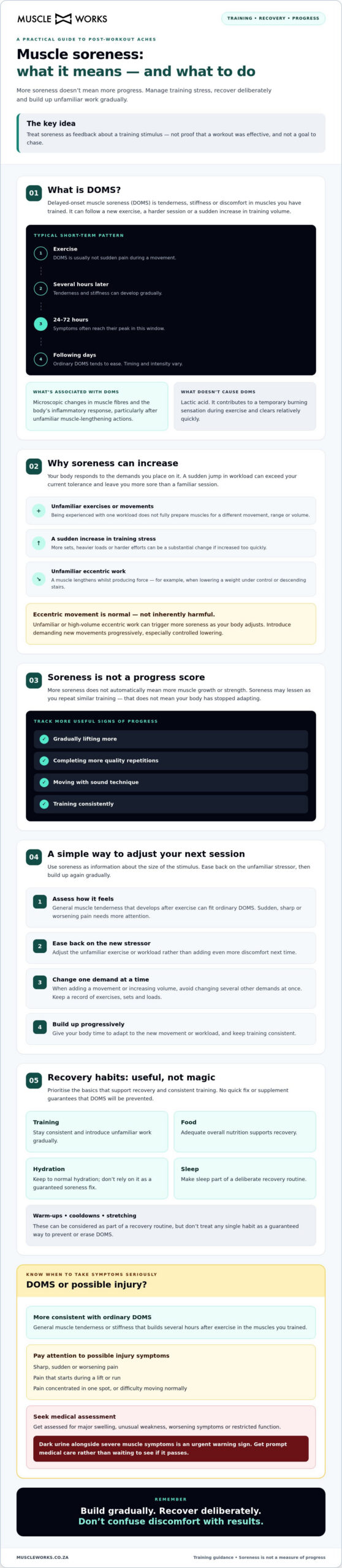
This discomfort is commonly called delayed-onset muscle soreness, or DOMS. It’s associated with microscopic changes to muscle fibres and the body’s inflammatory response, particularly after eccentric actions, when a muscle lengthens whilst producing force. Lowering a weight under control is one example. DOMS isn’t caused by lactic acid. That contributes to the temporary burning sensation during exercise but clears relatively quickly. Understanding the cause is the first step towards learning how to prevent muscle soreness after workout.
What is delayed-onset muscle soreness?
DOMS usually develops gradually, several hours after exercise, rather than as sudden pain during a movement. Tenderness, stiffness and discomfort when using the muscles you trained are common. Symptoms often peak 24 to 72 hours after training, then ease over the following days. The timing and intensity vary, and soreness alone can’t tell you whether a session was productive.
For more background on the mechanisms involved, see this overview of delayed-onset muscle soreness. The key point is that ordinary DOMS tends to feel like a general ache in the muscles you trained, not a sudden warning pain.
How can you tell soreness from a possible injury?
Ordinary DOMS is general muscle tenderness that builds after exercise; sharp, sudden or worsening pain may signal an injury. Pain that starts during a lift or run, stays concentrated in one spot, or makes it hard to move normally deserves attention. Don’t push through it to prove toughness.
Seek medical assessment for major swelling, unusual weakness, worsening symptoms or restricted function. Dark urine alongside severe muscle symptoms is an urgent warning sign. Get prompt medical care rather than waiting to see if it passes. Ease off for expected soreness, but take concerning symptoms seriously.
Why training load and unfamiliar movements drive post-workout soreness
Your muscles respond to the demands you place on them. A sudden jump in sets, heavier loads, harder efforts or unfamiliar exercises can exceed your current tolerance. That doesn’t mean the workout was wrong, but it may leave you more sore than a familiar session. If you change the workload too quickly, your body has less time to adapt.
A new stimulus can make even an experienced trainee sore because fitness is specific: familiarity with one workload doesn’t fully prepare your muscles for a different movement, range or volume. The effect varies between people. What feels manageable to one person may be a substantial change for another.
Why do eccentric exercises often feel more demanding?
Eccentric actions happen as a muscle lengthens whilst producing force. Think of lowering a dumbbell under control or using your thigh muscles to control your body as you descend stairs. These actions are a normal part of movement, not inherently harmful. However, unfamiliar or high-volume eccentric work can trigger more soreness as your body adjusts to that particular demand.
DOMS is linked to microscopic changes in muscle tissue and the body’s inflammatory response. The process is complex, so soreness shouldn’t be treated as a direct measure of muscle damage, or damage as the goal. The practical takeaway is to introduce demanding new movements progressively, especially if they involve a lot of controlled lowering.
Does soreness mean your workout was effective?
No. More soreness doesn’t automatically mean more muscle growth or strength. DOMS is often stronger after a novel challenge, then may lessen as you repeat similar training. That reduced soreness doesn’t mean your body has stopped adapting.
Track more useful indicators: whether you can gradually lift more, complete more quality repetitions, move with sound technique and keep training consistently. If a new exercise leaves you very sore, treat that as feedback about the size of the stimulus, not a reason to chase even more discomfort next time.
To learn how to prevent muscle soreness after workout, manage the training stress rather than trying to eliminate every ache. Keep a record of exercises, sets and loads. When you add a new movement or increase volume, avoid changing several other demands at once. This makes it easier to see what your body tolerates and adjust the next session with purpose.
Training is only one part of recovery. Adequate overall nutrition supports it, though no supplement guarantees prevention of DOMS. If you’re considering convenient food options to help meet your daily protein needs, you can explore Muscle Works protein products.
Which strategies can help prevent or reduce muscle soreness?
Start with your training plan. Build volume, intensity and unfamiliar exercises gradually rather than making a sharp jump in one session. This gives your body time to adapt and is more useful for managing the cause of soreness than relying on a recovery trick afterwards.
Manage training stress to reduce the chance of excessive soreness; use recovery methods to support comfort, not to guarantee a soreness-free workout. Warm-ups, cooldowns, stretching, hydration and sleep all have a role, but none can promise you won’t experience delayed soreness.
Do warm-ups, stretching or active recovery prevent DOMS?
A warm-up prepares you to move and perform the session. Start with easy movement, then use a few lighter, movement-specific sets that build towards your working intensity. This can help you practise the exercise and prepare for the effort, but it isn’t a proven guarantee against DOMS.
A cooldown can help you transition out of hard exercise, whilst stretching may support mobility or feel comfortable. Neither reliably prevents delayed soreness. If you’re stiff the next day, gentle walking or easy cycling may help you feel looser. Keep it easy. Active recovery is an option, not an instruction to train through pain.
Can hydration, sleep and cold therapy make a difference?
Drink normally, with fluid intake suited to the session, weather and your own needs. Extra water isn’t a DOMS prevention strategy. Sleep is part of overall recovery, so protect a consistent routine where you can, but don’t expect one good night to erase soreness.
Cold-water immersion may help reduce how sore you feel for a time, but that’s symptom management, not prevention. A meta-analysis reported in Science Update: Best Recovery Strategies on 18 June 2026 identified it as the most effective approach for reducing perceived DOMS. That doesn’t mean it’s essential or right for everyone, and it doesn’t remove the need to manage training load.
If you’re asking how to prevent muscle soreness after workout, prioritise what changes the stimulus: progress gradually and prepare specifically for the work ahead. Use stretching, easy movement or cold therapy only if they suit you and help you feel more comfortable. Keep normal hydration and sleep in your plan. No single technique can cancel out a workload your body isn’t ready for.
How to adjust your workout to reduce soreness next time
Use soreness as feedback, not a reason to scrap training or push harder. Make one adjustment at a time so you can identify what your body handles well. Change the number of sets, the load, the range of motion or the exercise selection, then see how you respond before adding another challenge.
Follow this simple reset:
- 1. Assess your symptoms. Check whether the discomfort feels like general muscle soreness or is sharp, worsening or limiting normal movement. Don’t treat possible injury symptoms as routine DOMS.
- 2. Reduce the unfamiliar stressor. If a new exercise or workload triggered pronounced soreness, scale back that specific demand. For example, reduce sets or use a lighter load rather than changing your whole programme.
- 3. Resume progressively. Once movement feels comfortable, reintroduce the exercise at a manageable level. Build the workload as your technique and tolerance improve.
- 4. Track your response. Note the exercise, sets, load, soreness and how ready you feel for your next session. Use that record to guide your next adjustment.
How should beginners build training volume?
Start with manageable exercises and sets you can perform with control. Give yourself time to learn the movements and see how you recover before increasing the challenge. Avoid stacking several demanding new exercises into one session. A simple training log can help you spot which changes affect soreness and readiness, without guessing or changing everything at once.
Should you train when your muscles are still sore?
Let function guide your decision. Mild soreness that doesn’t change your movement may allow an easier session, gentle activity or training for an unaffected area. If soreness makes you compensate, alters your technique or interferes with daily tasks, rest or modify the session instead. Don’t force repetitions through pain.
For severe, unusual, worsening or persistent symptoms, stop the session and seek professional medical advice. Training, nutrition and recovery work together; no food or supplement can replace a suitable workload and enough recovery. For background on protein and training, read this whey protein powder science guide. Protein powder can be a convenient food choice if it helps you meet your dietary needs, but it isn’t a guaranteed way to prevent soreness.
Keep your recovery basics in place as you adjust your training. Explore protein options from Muscle Works as one possible way to support your overall nutrition.
Build a recovery routine that supports consistent training
Recovery isn’t one clever hack. It’s the system that lets you train, adapt and return ready for the next session. Keep your programme sustainable, build training demands progressively, eat enough to support your activity, drink normally and protect your sleep routine. These foundations matter more than trying to erase every ache after a tough workout.
If you’re working out how to prevent muscle soreness after workout, focus on what you can repeat consistently. Daily protein needs vary with a person’s overall diet, training and circumstances, so there’s no single target that suits everyone. Adequate energy and dietary protein support training adaptation, but neither food nor supplements guarantee that DOMS won’t occur.
How does nutrition fit into muscle recovery?
Build meals around foods that work for your needs and routine. Whey or plant protein powder can be convenient options if food alone doesn’t suit your schedule or help you meet your dietary needs. They’re optional food choices, not treatments for soreness. Don’t treat amino acids as a guaranteed way to prevent DOMS.
Think of nutrition as one part of the full recovery picture: pair it with a manageable training plan, normal hydration and enough rest. Keep the fundamentals central. If a protein powder would be useful in your routine, explore Muscle Works nutrition options and check product labels to see what fits your needs.
When should you seek professional advice?
Don’t dismiss severe pain, marked swelling, significant weakness or symptoms that worsen. Arrange medical assessment, especially if pain limits normal movement or isn’t settling as expected. Dark urine alongside severe muscle pain or weakness needs prompt medical care. Treat it as urgent, not as ordinary post-workout soreness.
This guidance can help you make sensible training and recovery choices, but it can’t diagnose an injury or replace individual clinical advice. If symptoms concern you, get assessed by a healthcare professional before returning to hard training.
Train consistently, recover with purpose
The best answer to how to prevent muscle soreness after workout isn’t a promise to avoid every ache. Build training demands gradually, especially when adding unfamiliar movements, and use soreness as feedback rather than a score for workout quality. Warm-ups, sleep, hydration and adequate food support your routine, but no single recovery method or supplement guarantees soreness prevention.
Keep the bigger target in sight: steady progress you can repeat. If soreness changes how you move, ease back; if symptoms are severe or worsening, seek medical advice. Recovery should help you train well over time, not pressure you to push through warning signs.
Nutrition is one part of that foundation. Muscle Works offers whey and plant-based protein options, along with amino acid products for sports nutrition. They’re options, not treatments for DOMS. Explore Muscle Works sports nutrition and choose what fits your routine. Stay patient, train smart and keep building.
Frequently Asked Questions
Is muscle soreness after a workout a good sign?
Not necessarily. Delayed-onset muscle soreness (DOMS) can follow unfamiliar or demanding exercise, but it doesn’t reliably measure workout quality, muscle growth or strength gains. You can make progress without feeling sore. Track consistent training, sound technique and changes in performance instead. General tenderness differs from sudden sharp pain, marked swelling or worsening symptoms, which may need medical assessment.
How long does muscle soreness last after a workout?
DOMS often becomes noticeable during the hours after an unfamiliar or demanding session and commonly eases over the next few days. Its timing and intensity vary between people and workouts. Don’t automatically dismiss symptoms that are severe, worsening, unusually persistent or limiting normal movement as routine soreness. Seek professional advice if you’re concerned or notice warning signs.
Can you prevent muscle soreness completely?
No method can guarantee that you’ll avoid all post-workout soreness. To reduce the chance of intense DOMS, introduce unfamiliar exercises and training volume gradually, use sensible technique and allow recovery between demanding sessions. Warm-ups prepare you to exercise, but stretching, extra water or supplements aren’t guaranteed to stop soreness. Focus on how to prevent muscle soreness after workout by managing training stress, not chasing a quick fix.
Should I work out if my muscles are sore?
It depends on how sore you are and whether you can move normally. Mild tenderness may still allow an easier session or training a different area. If pain changes your technique, restricts movement or worsens with exercise, stop and reassess instead of forcing a hard workout. Seek medical advice for severe or unusual symptoms, especially if your strength or ability to function is affected.
Does stretching after exercise prevent muscle soreness?
No, stretching after exercise doesn’t reliably prevent delayed-onset muscle soreness. It may support flexibility or feel comfortable, and a gentle cooldown can help you transition out of a session, but neither replaces sensible training-load management. Introduce unfamiliar movements and volume progressively. Stop any stretch that causes sharp pain. Soreness doesn’t mean you failed to stretch, nor does stretching guarantee you’ll feel fine the next day.
Can protein powder help prevent muscle soreness?
Protein powder can’t guarantee prevention of DOMS. Protein is one part of overall nutrition that supports training adaptation, and a powder may be a convenient way to add protein if your usual food choices don’t meet your needs. It’s optional, not a soreness treatment. Prioritise a suitable training plan, adequate food and recovery, and check product labels for ingredients and dietary information that matter to you.
When is post-workout muscle pain a reason to seek medical help?
Seek prompt medical advice for sudden sharp pain, substantial swelling, unusual weakness, worsening symptoms or pain that significantly restricts movement. Severe muscle pain accompanied by dark urine needs urgent medical attention. DOMS commonly feels like tenderness and stiffness after exercise, but an article can’t diagnose the cause of pain. Stop training and contact a qualified health professional if symptoms concern you.