

The fastest way to waste money on supplements is to expect them to do the work your meals and training aren’t doing. If you’re looking for supplements for skinny guys to gain muscle, start with the real bottleneck: consistent food intake, progressive resistance training and recovery. No powder can replace that foundation.
It’s frustrating to train hard and still struggle to move the scale, especially when supplement shelves promise a shortcut. The answer isn’t to buy everything. Build a routine you can repeat and eat enough to support gradual weight gain. If getting enough food in is the challenge, a convenient protein option may help you stick to your plan. It’s support, not a shortcut.
This guide will help you identify the basics, decide whether protein powder or creatine monohydrate suits your needs, and spot products that may add cost without solving your actual problem. You’ll leave with a simple starting point and realistic expectations for steady progress. No hype, just a clear plan to support the work.
Key Takeaways
- Use progressive resistance training and consistent meals as the base for muscle gain; supplements can’t replace either.
- Choose supplements for skinny guys to gain muscle by identifying a specific gap in your food or training routine first.
- Consider protein powder for convenience when food alone isn’t meeting your needs, and compare whey and plant protein by dietary preference.
- Start with one relevant product, follow its label and avoid stacking overlapping supplements without a clear reason.
- Explore Muscle Works protein, creatine and amino acid options by category, and keep realistic expectations: steady progress depends on consistent habits.
Supplements for Skinny Guys: What They Can and Cannot Do
Supplements are optional tools. They can help cover a specific nutrition or performance gap, but they cannot replace progressive resistance training, enough food or recovery. Protein powder, for example, may be convenient if your meals aren’t providing enough protein. It won’t build muscle on its own.
Supplements can support the muscle-building process; they can’t guarantee a muscle-building result. First establish whether you’re training consistently and eating enough to support growth. Then decide whether a supplement solves a real problem in your routine. Buying products without identifying a gap can add complexity without addressing what’s holding back progress.
A naturally lean build isn’t a barrier to gaining muscle. People vary in appetite, daily activity, training experience and how consistently they eat, so there’s no single explanation for being slim. The Body type (ectomorph) page describes a traditional body-type classification, but that label shouldn’t be treated as a fixed prediction of how your body will respond to training or nutrition.
Can skinny guys build muscle without supplements?
Yes. Consistent resistance training that challenges your muscles over time, alongside suitable nutrition, can support muscle gain without supplements. Powders and other products are conveniences, not requirements. Progress varies with your training history, food intake, sleep and consistency. Focus on habits you can repeat before looking for a product to accelerate them.
If you already meet your nutrition needs through regular meals, a protein supplement may not fill a meaningful gap. If busy days make it hard to eat enough, a convenient option could help you follow your plan. The useful question isn’t “What do skinny guys need to buy?” It’s “What’s making my routine difficult to sustain?”
Why a supplement is not a substitute for a surplus
Energy balance is straightforward: your body uses energy each day, and food provides energy. To gain weight, your intake generally needs to exceed what you use over time. A supplement can contribute to your intake, but it won’t create a surplus if the rest of your eating pattern still falls short. Being lean doesn’t prove that you have a fixed or unusually fast metabolism.
Appetite and routine can make consistent eating difficult. You might skip breakfast, have a small lunch, or find large meals uncomfortable. Look at the pattern across your day. Regular meals and energy-dense choices can help you take in more without relying on one oversized meal. Adding a snack or including foods such as nuts, dairy or avocado may suit your preferences and appetite.
Keep the approach practical. Notice whether you’re eating regularly, completing challenging training sessions and recovering well. If your weight and strength aren’t moving as you hoped, review those basics before adding more products. The foundation comes first. Supplements earn a place when they help you follow it.
The muscle-gain foundation: food, protein and progressive training
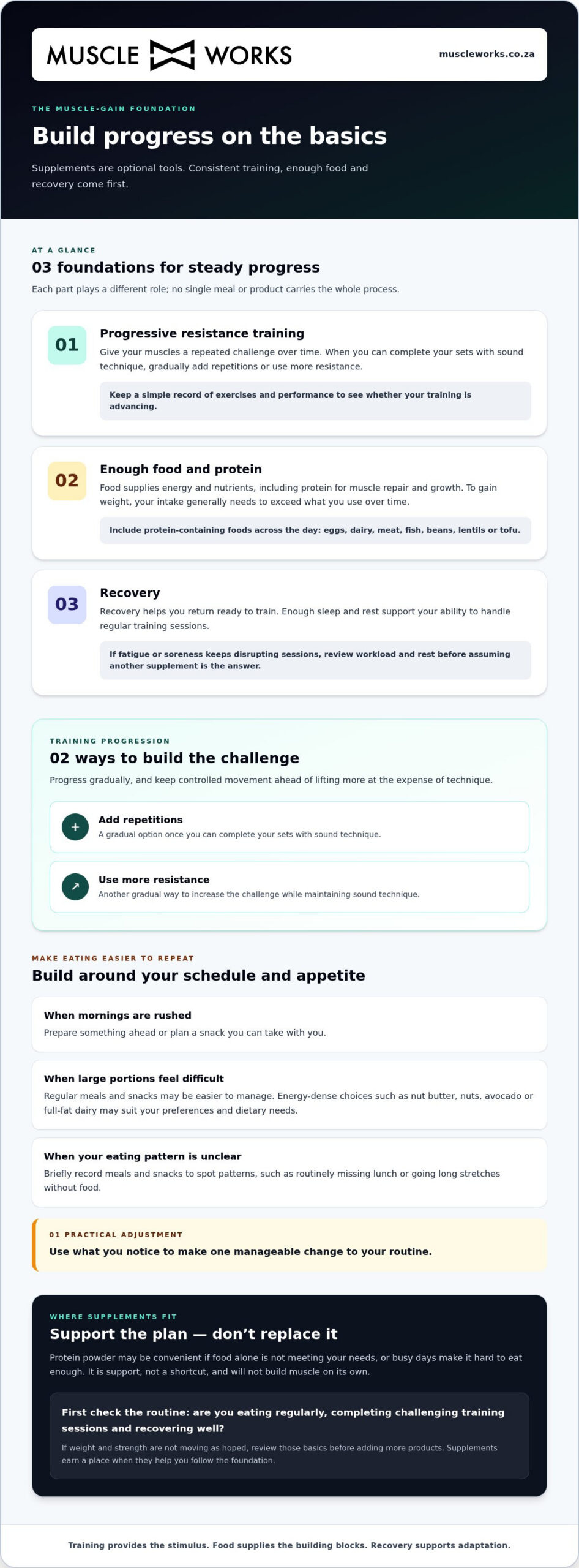
Muscle gain is built through repeated training challenges, enough food and time to recover. Resistance exercise gives your muscles a reason to adapt; food supplies energy and nutrients, including protein for muscle repair and growth; recovery helps you return ready to train. No single meal or supplement carries the whole process.
Protein matters, but don’t turn it into a one-meal test. Include protein-containing foods across your day, such as eggs, dairy, meat, fish, beans, lentils or tofu. A missed meal isn’t a disaster. Your overall eating pattern and ability to keep it consistent matter more than trying to make one meal perfect.
How to build a consistent eating routine
Build meals around your schedule and appetite. If mornings are rushed, prepare something ahead or plan a snack you can take with you. If large portions feel difficult, regular meals and snacks may be easier to manage. Add energy-dense choices, such as nut butter, nuts, avocado or full-fat dairy, where they suit your preferences and dietary needs.
Keep the plan flexible, not rigid. If you’re unsure how much you eat, briefly record meals and snacks to spot patterns, such as routinely missing lunch or going long stretches without food. Use that information to make one practical adjustment. Protein powder can be convenient if food alone isn’t meeting your needs; explore protein options for your routine as one way to support a consistent plan.
What progressive training and recovery contribute
Progressive resistance training means giving your muscles a repeated challenge over time. Once you can complete your sets with sound technique, you might gradually add repetitions or use more resistance. Keep a simple record of your exercises and performance so you can see whether your training is advancing. There’s no need to change your whole programme every week.
Choose a routine you can follow consistently, and prioritise controlled movement over lifting more at the expense of technique. Regular sessions build the training stimulus; enough sleep and recovery help you handle it. If fatigue or soreness keeps disrupting your sessions, review your workload and rest rather than assuming another supplement is the answer.
Training provides the stimulus, food supplies the building blocks and recovery supports adaptation. Treat that as your operating principle before considering supplements for skinny guys to gain muscle. Creatine is one option covered later in this guide; the Creatine Supplementation for Muscle Gain overview from Mayo Clinic offers further context. Keep the sequence simple: establish your routine, identify what’s missing, then consider targeted support.
Which supplements for skinny guys deserve priority?
Start with the gap, not the biggest stack. If meals don’t consistently provide the protein you need, protein powder may be a practical first option. Creatine monohydrate has a different role: it’s used to support performance in repeated, high-intensity exercise, but it doesn’t provide calories or replace food. Other products, including amino acid supplements, are lower priority unless you have a clear reason to use them.
This is the simplest way to assess supplements for skinny guys to gain muscle: match a product to a real need, then judge whether it fits your routine.
| Category | Potential role | Who may find it useful | Key caveat |
|---|---|---|---|
| Protein powder | A convenient way to add protein to your day | Someone who struggles to meet their protein needs through meals | It’s optional, and shouldn’t displace a balanced eating pattern |
| Creatine monohydrate | Support for performance during repeated, high-intensity exercise | Someone doing regular resistance training who wants to consider this category | It isn’t a calorie source or a substitute for training and food |
| Amino acids and specialised products | May serve a more specific purpose | Someone with a clear, evidence-based reason to use them | Don’t assume they’re necessary just because they’re marketed for muscle gain |
Protein powder: whey or plant protein?
Whey is animal-derived, whilst plant protein may suit people who prefer plant-based options or choose to avoid dairy. Decide based on dietary preference, tolerance and what you can use consistently. Neither is a requirement for muscle gain. Muscle Works offers whey options such as 100% Whey Protein, as well as Plant Protein 1.2kg. Compare the product information with your needs, and use powder as a convenient addition rather than a replacement for meals.
Creatine and other options: what to consider
Creatine is distinct from protein: it isn’t a source of dietary protein or energy, and it doesn’t replace your training plan. Creatine monohydrate is the form to focus on when considering this category. Muscle Works offers creatine monohydrate; follow the product label rather than guessing at use. If you have a health condition, take medication, or have questions about suitability, speak with a qualified health professional before using it.
Keep the order disciplined: address a food gap with a suitable protein option if needed; consider creatine separately; leave amino acids and specialised products until you can identify a specific reason. More products don’t automatically mean better results. Choose only what supports a consistent plan.
How to choose and use muscle-gain supplements consistently
Choose with a clear process, not a crowded shopping list. The aim is to find one product that makes a consistent training and food routine easier to follow. Use this sequence before you buy:
- Review your routine. Look at your training sessions and meals across a typical week. Are you training regularly? Are you eating in a way that supports your goal?
- Identify the bottleneck. Pinpoint what’s hardest to manage. It might be getting enough protein from meals, or it might be keeping training and eating consistent.
- Choose one relevant product. Select a category that addresses that specific gap, then follow its label. Avoid combining products with overlapping purposes without a clear reason.
The right supplement is the one that addresses a real, consistent gap. A product that doesn’t solve a problem in your routine is unlikely to make that routine easier.
Match the supplement to your real bottleneck
If preparing or eating enough protein-rich food is difficult, a protein powder may offer convenience. Choose between whey and plant protein according to your dietary preferences, tolerance and routine. If you eat a plant-based diet, plant protein is an alternative to consider. But if meals or training are irregular, tackle that first. A supplement can’t organise your week for you.
Use a simple routine and assess progress
Introduce one product at a time. That makes it easier to judge whether it fits your routine and how you tolerate it. Read and follow the product label, and don’t assume that taking more or combining several products will improve results. Keep your approach straightforward enough to repeat.
Assess progress over a meaningful stretch of consistent habits, rather than reacting to a single weigh-in or workout. Body weight naturally fluctuates from day to day. Look at the trend alongside training performance and how consistently you’ve been eating. If the trend isn’t moving as you intend, review your food and training routine before adding another product. Avoid expecting a fixed transformation timeline; progress differs between people.
This decision framework keeps supplements for skinny guys to gain muscle focused on practical support, not guesswork. Select a product only after you know the gap it should address, then give yourself time to follow the routine and assess it. If you’ve identified a need, explore Muscle Works supplements by category and compare the options with your plan.
Muscle Works supplements: build your stack around the basics
Muscle Works is a South African sports supplement brand offering whey and plant protein, creatine monohydrate and amino acid supplements. Use those categories to address a specific need, not to build the biggest stack. Keep regular meals and progressive training in place, then choose products that suit your diet, routine and priorities. The goal is a useful fit, not a promise of instant change.
For supplements for skinny guys to gain muscle, start by asking what you want a product to help you manage. If it’s protein intake, compare protein options. If you’re considering creatine or amino acids, look at those as separate categories rather than assuming every product belongs in one stack.
Choose a protein option that fits your routine
Muscle Works offers 100% Whey Protein 1kg and Iso-Tech Whey as whey options, alongside Plant Protein 1.2kg for those exploring plant-based protein. Choose based on your dietary preference, tolerance and how a product fits into your day. Product names alone don’t tell you whether an option suits you, so review its product information. Muscle Works also offers Beef Aminos, a separate amino acid option to consider if you have a clear reason to use that category.
- Whey options: Consider these if whey fits your diet and routine.
- Plant protein: Consider this category if you prefer a plant-based option.
- Amino acid supplements: Treat these as a separate choice, and identify a clear reason before adding them.
Add other products only when they fit the plan
Creatine monohydrate is another distinct category in the Muscle Works range. The 21 Day Grow Stack is a named offering, but its name isn’t a guarantee of a particular transformation. Review product information and consider each option on its own merits. Don’t add several products at once simply because they’re grouped around a muscle-building goal.
A simple decision check can keep your choices grounded:
- Identify the need you’re addressing, such as a dietary preference or a specific product category you want to consider.
- Read the relevant product information and follow its directions.
- Keep your food and training routine consistent so you can judge whether the product fits your habits.
Choose deliberately. A stack should support your plan, not distract from the work that drives it. If you’re considering the named bundle, read the product information for the 21 Day Grow Stack.
Keep food and training at the centre of your approach. Once you’ve identified a relevant category, explore Muscle Works performance supplements and compare the options with your needs.
Make your next step count
Muscle gain is earned through habits you can repeat, not a perfect plan you follow for a week. Pick one practical adjustment you can maintain: prepare a meal ahead, record your training, or identify where a suitable supplement could make your routine easier. Then stick with that approach long enough to judge whether it fits. Keep expectations realistic and let consistent effort do the heavy lifting.
Use the same discipline when choosing supplements for skinny guys to gain muscle. Be clear about the gap you want to address, read product information carefully and avoid buying extras without a purpose. Your plan should work around your preferences and daily routine, not make them harder to manage.
When you’re ready to compare options for your plan, explore Muscle Works performance supplements. Choose deliberately, keep showing up for your training and build progress one solid habit at a time.
Frequently Asked Questions
Can skinny guys gain muscle without taking supplements?
Yes. Supplements aren’t a prerequisite for muscle gain. A beginner can start with a manageable resistance-training routine, meals that meet their needs and enough recovery. If you’re new to training, focus on learning consistent movement patterns and recording your sessions before adding products. If progress stalls, review what’s happening across your week rather than assuming your body type makes muscle gain impossible.
Which supplement should a skinny beginner take first to build muscle?
Choose based on the problem you need to solve, not a universal “first supplement”. If you regularly fall short on protein because meals are difficult to organise, a protein powder may be convenient. If your eating and training habits are inconsistent, start by improving those. Add only one product with a clear purpose, and follow its label so you can judge how well it fits your routine.
Is whey protein or plant protein better for gaining muscle?
Neither is automatically better for everyone. Whey is made from milk, while plant protein may suit people who avoid animal products or prefer a plant-based choice. Consider dietary preferences, tolerance and whether the option is practical to use regularly. Check the product label for its nutrition information and ingredients, then count it as one part of your overall diet rather than treating it as a complete meal plan.
Can creatine help skinny guys build muscle?
Creatine may support performance during repeated, high-intensity exercise, which can make it relevant to someone doing resistance training. It isn’t a calorie source, and taking it alone won’t guarantee muscle gain. Consider your health, training and other supplements before using it. Follow the product label, and speak with a qualified health professional if you have a medical condition, take medication or are unsure whether creatine is suitable for you.
How much protein do skinny guys need to gain muscle?
Protein needs depend on body weight, activity, overall diet and health. A commonly used sports-nutrition target for people doing resistance training is around 1.6-2.2 grams per kilogram of body weight per day, but it isn’t a personalised prescription. Spread protein-containing foods across meals if that suits your appetite.
Do mass gainers work if you struggle to eat enough?
A mass-gainer product may make it easier to consume extra energy, but it won’t guarantee weight or muscle gain. Check its nutrition information and ingredients, and consider whether a shake fits your appetite better than another meal or snack. You can also make ordinary meals more energy-dense with additions such as nut butter or avocado. Keep track of your eating pattern and adjust if the product replaces meals you still need.
How long does it take to see muscle-gain progress?
There’s no reliable deadline that applies to everyone. Training experience, eating habits, sleep and consistency all affect progress, while day-to-day body-weight changes can reflect more than muscle. Use several indicators, such as workout records, how your clothes fit and body-weight trends over time. If those indicators aren’t changing, review your routine and eating pattern before concluding that a supplement is the missing piece.
Are muscle-building supplements safe for everyone?
No supplement is automatically suitable for every person. Ingredients, health conditions, medication use and individual tolerance can all matter. Read the label, stick to its directions and avoid combining products without understanding their ingredients. If you’re under 18, pregnant, managing a health condition, taking medication or unsure about a product, speak with a qualified health professional before use. Stop taking a product and seek advice if you experience an unwanted reaction.