
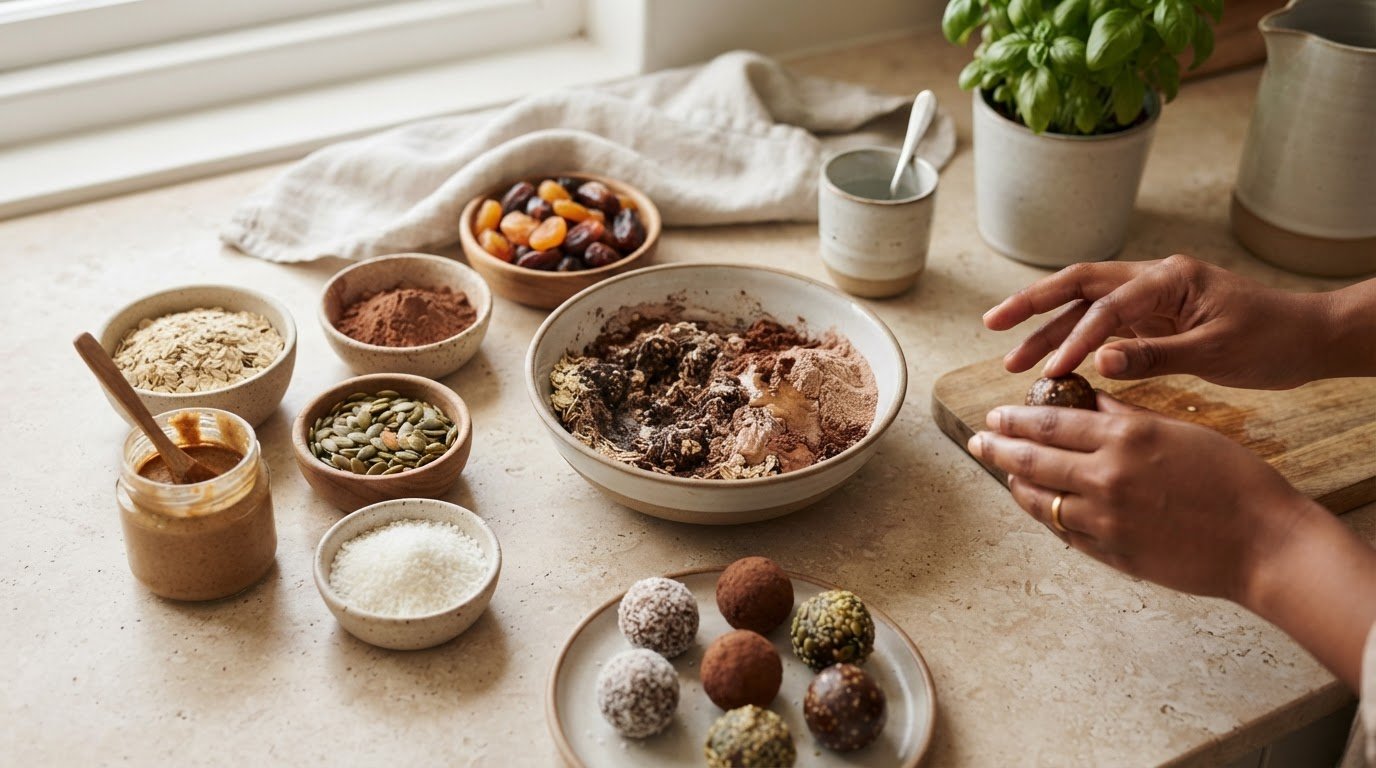
Protein powder isn’t the fix for every protein ball. The right texture comes from balancing the dry ingredients with enough binder and moisture. This no-bake protein balls recipe shows you how to make snack bites that hold together and taste good, without switching on the oven.
If you’ve ended up with a dry, chalky mix or sticky balls that won’t keep their shape, you know a fixed ingredient list doesn’t always deliver. Protein powders absorb liquid differently, so adjust as you mix rather than adding more powder and hoping for the best.
Start with a simple method and accessible ingredients, then fine-tune the consistency with small amounts of liquid until the mixture rolls easily. You’ll also find ways to adapt the recipe for whey or plant protein, customise the flavour and prepare a convenient snack for your routine. The key is to check the texture at each step, so you can make a useful adjustment before shaping the balls.
Key Takeaways
- A no-bake protein balls recipe balances dry ingredients with a sticky binder and optional flavour additions.
- Use the base quantities as a starting point, then make small, measured adjustments to suit your ingredients.
- Check whether the mixture is dry, sticky or crumbly before changing it. Mix again after every gradual adjustment.
- Customise with additions such as cocoa, seeds or dried fruit. Keep allergens in mind and store the finished snack according to its perishable ingredients.
No-bake protein balls: what they are and why the mixture matters
No-bake protein balls are portionable snacks mixed and shaped without oven baking. Their simple structure combines a dry base, a sticky binder and optional flavour additions. Oats are a common base, but they aren’t the only option. Other suitable dry ingredients can give the mixture body, while nut or seed butter helps it cling together.
Protein powder affects that balance because it absorbs moisture. Different powders may leave the mixture firmer or drier, so the same amount of liquid won’t necessarily work every time. Add liquid gradually, mix thoroughly and check the consistency before adding more. This helps you avoid a mixture that crumbles or clings to your hands when you try to roll it.
A protein-ball mixture holds together when its dry ingredients are evenly coated with enough sticky binder and moisture to form a pliable dough. Think of it as a compact snack in the broader family of energy bars, rather than a miniature baked treat.
What ingredients make protein balls hold their shape?
Oats or another suitable dry base provide structure and give the balls a compact texture. Nut butter, such as peanut or almond butter, or a seed butter adds stickiness and richness. Some recipes use honey or syrup as an extra binder; others rely on the butter alongside another liquid. The right combination depends on your ingredients and the consistency you’re aiming for.
Are no-bake protein balls different from baked snacks?
Yes. This method relies on mixing, shaping and chilling, rather than oven heat to set a batter. Expect a dense, chewy snack, not the crumb of a cake or the crispness of a biscuit. As there’s no baking step, handle ingredients cleanly and follow safe storage guidance for what you’ve used, especially if the recipe includes perishable ingredients.
Easy no-bake protein balls recipe: ingredients and method
This no-bake protein balls recipe gives you a flexible starting point, with measured ingredients and room to adjust the texture. Make the base first, then add extra flavours once the mixture holds together.
Ingredients for a flexible protein-ball base
Base recipe:
- 100 g rolled oats
- 60 g protein powder, either whey or plant-based
- 120 g smooth nut or seed butter
- 60 g honey
- 1 tablespoon milk or water to start, with a little extra if needed
Optional additions: Add up to 1 tablespoon cocoa powder or 2 tablespoons seeds or chopped dried fruit. Start with modest amounts, as extra dry ingredients can affect how well the mixture binds.
Whey and plant protein can both work, but they may absorb liquid differently, so the amount needed can vary. Choose whey or plant protein powders to suit your preference, then adjust the liquid gradually. Nut butter may contain peanuts or tree nuts. Seed butter can be an alternative, but check ingredient labels for allergen and cross-contamination information. Oats may also carry allergen or cross-contact warnings, so check the packaging if this matters to you.
How to mix, shape and chill the batch
Follow the steps in order and use the texture check to guide your adjustments. Don’t pour in all the liquid at once.
- Combine the dry ingredients. Stir the oats and protein powder together in a bowl so the powder is evenly distributed. Mix in any optional dry additions.
- Add the binders. Stir in the nut or seed butter and honey until the mixture looks evenly coated.
- Check and adjust. Press a small amount between your fingers. If it holds together, it’s ready to shape. If it crumbles, add milk or water a teaspoon at a time, mixing again after each addition. If it feels overly sticky, mix in a small amount of oats and reassess.
- Shape evenly. Roll portions between your palms into compact balls. Keep them a similar size so they chill evenly.
- Chill until firm. Arrange the balls in a covered container and refrigerate for 30 minutes before serving.
Once the texture is right, you can fine-tune the mixture for your chosen protein powder.
Whey or plant protein? Adjust the recipe for better texture
Whey and plant protein can both be used in a no-bake protein balls recipe, but neither guarantees the same texture every time. The powder’s formulation, the other ingredients and the amount of liquid all affect the mixture. Treat the base recipe as a starting point and adjust one ingredient at a time.
Use this comparison as a guide, not a rule. Check the mixture as you work, since powders within the same category can behave differently.
| Protein powder | Possible texture tendency | Adjustment approach | May suit |
|---|---|---|---|
| Whey | May make the mixture feel dry or firm, depending on the powder and recipe. | Add milk or water a little at a time; mix and reassess. | Readers who prefer whey protein in their recipe. |
| Plant protein | Texture and liquid absorption can vary between formulations. | Start with less liquid, then add small amounts until the mixture presses together. | Readers choosing a plant-based powder. |
How to adapt protein balls with whey powder
Start with the base recipe’s measured amount of whey powder. Mix it thoroughly with the dry ingredients before adding the binder, then check the consistency before shaping. If the mixture feels dry or cracks when pressed, add the chosen liquid in small increments and mix again each time. For more on whey, see the 100% Whey Protein 1kg guide.
Don’t estimate the finished balls’ protein content from the powder alone. The total depends on every ingredient and the number of portions you make. If you need a figure, calculate it from the nutrition information for the ingredients and the final batch size.
How to adapt the recipe with plant protein
Plant protein powders can differ in texture and absorption from one formulation to another. Start with the recipe’s stated quantity and avoid changing the powder, binder and liquid all at once. If the mix won’t hold together, add a small splash of liquid, mix well and check again before adding more. Plant Protein 1.2kg is one plant-based powder option for adapting the recipe.
Focus on the feel of the mixture, rather than assumptions about the powder category. It should press into a cohesive portion without crumbling or feeling excessively sticky. Once it reaches that point, shape and chill as directed.

Fix dry, sticky or crumbly protein balls before shaping
Pause before changing the mixture. Identify the problem, make one small adjustment and mix again. A no-bake protein balls recipe can go from workable to difficult to shape if you add too much liquid, oats or protein powder at once. Extra powder may seem like an easy fix for stickiness, but it can leave the mixture dry and harder to roll.
Diagnose the texture first, then make a small, measured adjustment and reassess before adding anything else.
- Dry or crumbly: The mixture won’t hold when pressed or breaks apart as you roll it.
- Too sticky: It clings heavily to your hands and won’t form a neat ball.
- Soft but balanced: It holds together but feels too soft to shape cleanly. Chilling may firm it up without changing the ingredient balance.
What to do when the mixture is dry or crumbly
Add a little of the liquid or sticky binder already used in the recipe. Mix thoroughly, then pause briefly to let the ingredients take up the added moisture. Press a small portion between your fingers and reassess. If it still crumbles, add another small amount and repeat. Avoid pouring in a large splash: powders and dry bases vary, so a fixed extra quantity may be too much.
Don’t try to rescue a dry mixture by adding more protein powder. That increases the dry ingredients and can make the balls even tougher to shape. Use the recipe’s chosen liquid, or a little more of its binder, to bring the mixture together.
What to do when the mixture is too sticky
Work in a little of the recipe’s dry base, such as oats, then mix thoroughly before deciding whether to add more. Avoid tipping in a large amount of dry protein powder, as it can change the flavour and leave the mixture dense. If the ingredients seem balanced but the mix is simply soft, cover and chill it before shaping. A cooler mixture may be easier to handle.
Clean, lightly damp hands can also help reduce sticking as you roll. Keep your hands only slightly damp, since excess water can make the outside of the mixture slippery. If the balls still resist shaping, return to the texture check rather than forcing them into shape.
Make controlled adjustments, one at a time, to get the consistency right. Explore protein powder options for your next batch.
Store, customise and serve your no-bake protein balls
Once shaped, transfer the balls to a clean, airtight container and keep them refrigerated. This helps protect their texture and freshness, particularly if you used milk or another ingredient that needs chilling. Follow the storage instructions for your ingredients and don’t leave the batch out beyond safe conditions. Discard any balls that show signs of spoilage or have been stored unsafely.
There isn’t one storage duration that suits every version of this no-bake protein balls recipe. Ingredients and handling affect how long a batch keeps, so make an amount you can use promptly and follow any relevant package guidance. Keep the container covered between servings.
Easy flavour variations without breaking the recipe
Customise the recipe after you’ve made the base successfully. Start with one small addition, then check the texture before adding anything else.
- Cocoa: Mix in a little cocoa powder for a chocolate note. As it adds dry matter, reassess the mixture before shaping.
- Seeds: Stir in a modest amount of seeds for extra crunch. Too many can make the mixture harder to bind.
- Dried fruit: Add a small handful of chopped dried fruit for sweetness and chew. Keep the pieces small so they distribute evenly.
These are optional variations, not replacements for the measured base recipe. Check labels and consider allergens, especially with nut or seed butters and packaged mix-ins. If a coffee-inspired flavour appeals, explore the protein coffee guide.
Portion and serve to suit your routine
Divide the batch into evenly sized portions so it’s easy to take one or two from the container. Pack only what you plan to eat and keep the rest refrigerated. Have a portion as a convenient snack before or after training, or keep some ready for a busy day. Treat it as a practical snack, not a promise of a particular training result.
Build your routine around food that suits your needs and preferences. For a coffee-based option in your wider snack rotation, explore the protein coffee guide.
Make your next snack work for you
A reliable no-bake protein balls recipe isn’t about forcing every powder into the same mix. Start with the measured base, check the texture, then adjust gradually until the mixture holds together. Small changes work better than adding extra powder and hoping for the best.
Keep the ingredients simple, customise with a little cocoa, seeds or dried fruit, and refrigerate the batch according to the ingredients you’ve used. Whey and plant protein are both options, but each may need a different amount of liquid to reach a workable consistency.
Ready to choose a powder for your next batch? Muscle Works offers whey and plant-based protein powders to suit different preferences. Explore Muscle Works protein options, then put the method into practice: mix, adjust and shape a snack that fits your routine.
Frequently Asked Questions
How do you make no-bake protein balls?
Mix the dry ingredients, add the binder and shape the mixture into balls before chilling. For the base recipe in this article, combine 100 g rolled oats with 60 g protein powder, then mix in 120 g smooth nut or seed butter and 60 g honey. Add a tablespoon of milk or water to start. If the mixture won’t hold when pressed, add a little more liquid, mix and reassess. Shape evenly and refrigerate for 30 minutes.
Why are my protein balls too dry or crumbly?
They may contain too much dry ingredient for the amount of binder and liquid, or the protein powder may have absorbed more moisture than expected. Add a small amount of the recipe’s chosen liquid or binder, mix thoroughly and wait briefly before checking again. Repeat gradually if needed. Avoid adding more protein powder to fix crumbling, as that can make the mixture drier and harder to shape.
Can you make protein balls without protein powder?
Yes. You can leave out the protein powder and use a dry ingredient such as almond flour to help give the mixture structure. The result will have a different texture and nutritional profile, so don’t assume it provides the same protein content. Add the binder and liquid gradually, then check that the mixture holds together when pressed. If using almond flour or nut butter, consider relevant allergies and check ingredient labels.
Can you use plant protein in no-bake protein balls?
Yes, plant protein can be used in a no-bake protein balls recipe. Different powders may vary in texture and moisture absorption, so you might need to adjust the base recipe’s liquid amount. Mix the powder with the dry ingredients first, then add the binder and assess the mixture before shaping. If it seems dry, add a little liquid, mix again and reassess. Plant Protein 1.2kg is one plant-based powder option.
How long do no-bake protein balls last?
There isn’t one storage duration that suits every batch. The ingredients, preparation and storage conditions all matter, particularly if the recipe includes milk or other ingredients that need refrigeration. Keep the balls in a clean, airtight container in the fridge and follow the storage instructions on ingredient packaging. Make a batch you can use promptly, and discard it if you notice signs of spoilage or it has been kept outside safe conditions.
Do no-bake protein balls need to be refrigerated?
Refrigerate them if the recipe contains ingredients that need chilling, such as milk, and follow any storage directions on the packaging. Chilling can also help the balls firm up and keep their shape. Store them covered in a clean, airtight container to help protect their texture and freshness. Don’t leave them out beyond safe conditions, and discard them if they show signs of spoilage.
Can you freeze homemade protein balls?
Homemade protein balls can generally be frozen in a suitable airtight, freezer-safe container. Separate layers if needed to help prevent them sticking together, and label the container with the date. Thaw the portions you plan to eat in the fridge, and avoid refreezing food that has been thawed unless safe handling guidance for the ingredients allows it. The texture may change after freezing, so check the consistency before serving.
Are no-bake protein balls a meal replacement?
Not automatically. Protein balls are portionable snacks, and their ingredients and nutritional content vary from recipe to recipe. A few balls may not provide the range or amount of nutrients you’d expect from a full meal. Check the ingredients and portion size, and fit them into your eating routine according to your needs. Treat them as a convenient snack rather than assuming they replace a balanced meal.