

Neither whey nor plant protein is automatically best for protein shakes for weight control. Whey contains all nine essential amino acids, but the right choice depends on your dietary needs, preferences and how the shake fits your overall eating pattern. A shake can help you manage your intake, but it does not override energy balance.
Protein can support fullness, which is why the amount in a serving matters. A review suggests that 25-30 g of protein per meal can improve weight loss and weight management. But adding a shake on top of your usual meals adds calories too, so it may work against your goal if it doesn’t replace or balance other intake.
Mayo Clinic states that losing weight requires burning more calories than you consume. This article explains how whey and plant proteins compare, what to consider when choosing between them and how to use a shake as a convenient meal component, not a shortcut. Focus on the protein source, the full nutrition profile and the shake’s role in your day.
Key Takeaways
- Choose whey or plant protein based on your dietary needs, preferences and how well it fits your routine.
- Use the protein amount per serving to help plan meals, rather than assuming every shake provides the same support for fullness.
- Count a shake as part of your overall intake. Adding it to your usual meals can work against weight loss if it increases your total energy intake.
- For a more satisfying midday option, consider how the shake fits alongside fibre-rich foods and other sources of nutrients.
- Keep whole foods in your eating pattern; a protein shake is a convenient option, not a complete substitute for balanced meals by default.
Is whey or plant protein better for weight loss?
Neither whey nor plant protein guarantees more weight loss than whole foods. A protein shake can help when it replaces a higher-energy choice and fits your planned intake. Foods such as beans, eggs and yoghurt also provide protein.
Whey protein and weight-loss evidence
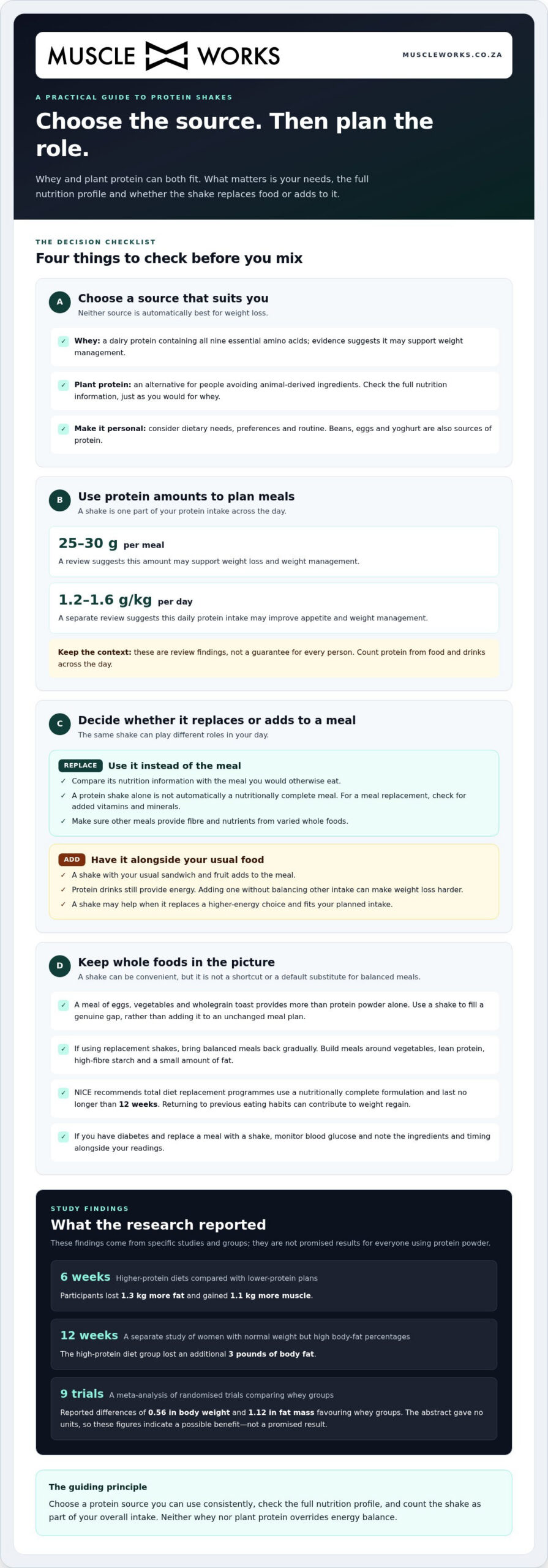
Whey protein is a complete protein containing all nine essential amino acids, and evidence suggests it may support weight management. A meta-analysis of nine randomised trials reported differences of 0.56 in body weight and 1.12 in fat mass favouring whey groups, but its abstract gave no units. Treat those figures as evidence of a possible benefit, not a promised result.
Other studies show how protein intake can matter during calorie restriction. In a six-week study, participants on higher-protein diets lost 1.3 kg more fat and gained 1.1 kg more muscle than those on lower-protein plans. In a separate 12-week study, women with normal weight but high body-fat percentages lost an additional 3 pounds of body fat on a high-protein diet. These findings concern specific study groups, not every person using protein powder.
Protein intake and body-fat loss
Protein intake is the amount of protein consumed through food and drinks across the day; it matters because a shake only helps if it supports a suitable overall eating pattern. A review suggests that 1.2 to 1.6 g/kg a day may improve appetite and weight management. A separate review suggests 25-30 g per meal may support weight loss, giving you a practical framework for assessing meals and shakes.
Whole foods and shakes serve different roles. A meal of eggs, vegetables and wholegrain toast provides more than protein powder alone, while a shake can be easier to portion when time is tight. Use a shake to fill a genuine gap rather than adding it to an unchanged meal plan.
A meal replacement needs more than protein. If you use a shake instead of a meal, choose one with added vitamins and minerals and consider what else you eat throughout the day. Replacing meals may reduce daily calorie intake, but returning to previous eating habits can contribute to weight regain. Relying heavily on shakes can also displace whole foods and their fibre.
When choosing a shake for weight management, compare the protein source and full nutrition information, including energy and added ingredients. Whey suits people who include dairy; plant protein offers an alternative for those avoiding animal-derived ingredients. Neither option overrides energy balance. Choose one you can use consistently and fit it into meals that include a variety of whole foods.
If I don’t need to lose weight, can I still use the shake for an easy convenient midday meal?
Yes. A shake can be a convenient midday meal if it suits your routine and nutrition needs. The key question is whether it replaces lunch or is added to your usual food.
Safe meal replacement use
A meal replacement is a shake used instead of a meal, not alongside the meal it replaces. This distinction matters because protein drinks still provide energy, and adding one without reducing other intake can make weight loss harder. For lunch, compare the shake’s nutrition information with the meal you would otherwise eat. A protein shake alone is not automatically a nutritionally complete meal.
If you plan to use a product as a meal replacement, check whether it has added vitamins and minerals to help meet micronutrient requirements. Also consider how your other meals provide fibre and nutrients from whole foods. If a liquid lunch leaves you hungry or replaces foods that provide variety, it may not suit your needs as an everyday meal.
Replacing meals and returning to normal eating
Replacing meals means deliberately using a shake instead of solid food; returning to normal eating means gradually bringing balanced meals back into the routine. The transition matters because returning to previous habits after a weight-loss programme can lead to weight regain. NICE recommends that total diet replacement programmes use a nutritionally complete formulation and last no longer than 12 weeks.
After a weight-loss phase, use replacement shakes less often as you reintroduce meals. Build meals around vegetables, lean protein, high-fibre starch and a small amount of fat. If you replace every meal, add vegetables to improve fibre intake. This keeps whole foods in your routine instead of relying on liquid nutrition alone.
Replacing rather than adding a meal
A replacement takes the place of lunch; an addition goes on top of lunch. That distinction can affect your overall intake, even if the shake seems small. For example, drinking a shake with your usual sandwich and fruit adds to the meal. Having it instead of lunch changes your meal pattern, but does not automatically make the shake nutritionally complete.
Before mixing a shake, decide what role it will play. If it replaces a meal, assess its nutrition profile and keep your other meals varied. If it is a snack alongside lunch, include it in your overall intake rather than treating it as calorie-free. A dietitian can help plan nutrition around your needs and routine.
People with diabetes should monitor blood glucose when replacing a meal with a shake, to see how it affects them. A liquid meal can differ from a familiar lunch, so note the ingredients and timing alongside your glucose readings. For a protein-powder option, compare the protein powder range with the role you want it to play in your day.
Which type of protein is best for protein shakes?
The right shake provides useful protein and fits your eating pattern. Compare the full nutrition label, not just the protein content, then consider the calories, fibre and fats in any ingredients you add.
Most protein shakes provide between 10 and 30 grams of protein per serving. That range makes the label a practical starting point: check the serving size, protein quantity and energy, then compare them with what you’d otherwise eat. A larger scoop or calorie-dense additions can change the shake’s role from light snack to substantial meal.
Satiety matters too. More than 35 grams of protein at one time appears most effective for reducing hunger and desire to eat, and increasing fullness. That finding doesn’t mean every shake needs to exceed that amount. Match the serving to your wider protein intake and meal plan, rather than assuming more powder always means better weight control.
Build a balanced shake with ingredients that add nutrition without turning it into an unplanned high-energy drink. For example, plain protein powder blended with fruit and unsweetened milk differs from a mix loaded with sweetened yoghurt, syrup and generous nut butter. For those making their drinks on the go, portable blending appliances from CraftCart make it simple to combine ingredients into a smooth mix. Nuts and seeds add healthy fats, but most provide around 5-7 grams of protein per 28 grams, so they’re not a direct substitute for a protein serving.
Fibre is another piece of the equation. A shake made only with powder and liquid may contain little fibre, depending on its ingredients. Oats provide around 5 grams of protein per 40 grams, whilst also adding substance to a blend. Greek yoghurt or soy-based plant yoghurt can contribute around 6-10 grams of complete protein per 100 grams. Use additions deliberately, and keep the overall meal in view.
A healthy choice involves more than a high protein count. Mayo Clinic recommends fruit, vegetables, whole grains, low-fat or fat-free dairy products, and protein-rich foods as part of healthy food choices for weight loss. It also advises avoiding too much food with added sugars, salt or saturated fat. Apply this guidance to a shake by checking sweeteners and choosing ingredients that complement your meals.
Supporting muscle mass involves getting enough protein throughout the day, alongside an appropriate training and eating pattern. A shake can fill a gap when a meal falls short, but it cannot replace the wider range of foods that supplies fibre and other nutrients. Check the label, account for every addition and choose a shake that suits its role: snack, meal component or convenient protein source.
Energy deficit and weight management
Weight change depends on the balance between energy consumed and energy used. A shake or protein powder affects that balance only through its place in your overall routine.
Creating an energy deficit
An energy deficit means using more calories than you consume, which Mayo Clinic identifies as necessary for weight loss. No single food or drink overrides your overall eating pattern. Adding a shake to your usual meals increases intake, while using it instead of a more energy-dense option can change the balance. Track the whole meal, including milk, fruit and other additions.
Start with an approach you can sustain. Mayo Clinic recommends fruit, vegetables, whole grains, low-fat or fat-free dairy products, and protein-rich foods as healthy choices for weight loss. It also advises limiting foods high in added sugars, salt or saturated fat. Assess the whole plate rather than cutting carbohydrates without considering their source or the rest of your diet.
Movement adds another part of the equation. Mayo Clinic advises about 30 minutes of activity, such as brisk walking, most days of the week, plus strength training of all major muscle groups at least two times a week. Exercise can support the energy balance, whilst strength work supports a routine that helps preserve muscle during weight management. Pair training with meals that provide enough protein and varied nutrients.
Low-calorie diets have evidence for short-term changes: some evidence suggests following one for six to 12 weeks can decrease weight and improve insulin resistance. That period is not a universal prescription. The food pattern, energy intake and ability to maintain it all shape the effect. A practical approach is to build repeatable meals first, then judge whether a shake genuinely helps.
Weight regain and ongoing management
Weight regain is an increase after weight loss, and the habits that follow a diet can influence long-term management. A review suggests a high-protein diet during the first 3-12 months after losing weight may help minimise regain. Keep protein-rich foods in regular meals, and use a shake only where it supports that pattern.
A UK total diet replacement trial illustrates both outcomes and the need for follow-through. At 12 months, participants in its diet group lost an average of 10.7 kg; the adjusted difference from usual care was 7.2 kg. Also at 12 months, 45% of that group lost at least 10% of their weight, compared with 15% receiving usual care. These results describe a specific programme, not a guarantee for every lifestyle.
For day-to-day management, review what affects your intake: meal timing, portions, drinks, activity and changes to your routine. A shake may be convenient during a busy workday, but its effect depends on what it replaces and how it fits your energy needs. Aim for balance, include exercise and treat protein powder as one option, not the driver of weight loss.
Choosing whey or plant-based protein
Choose a shake based on dietary fit, ingredient source and its role in your eating routine. Whey contains all nine essential amino acids, while a plant-based option may better suit someone avoiding dairy.
Start with the protein source. Whey comes from milk, so it is unsuitable for people avoiding dairy or with a milk allergy. Plant protein avoids animal-derived ingredients, but products can differ in their sources and formulations. Check the ingredient list and allergen information against your needs. The product name matters less than knowing what each serving contains.
Next, compare the serving size and protein amount. Most shakes provide between 10 and 30 grams of protein per serving. Use that figure alongside protein from food, rather than treating a scoop as a complete measure of your daily needs. For example, a shake may suit a day when lunch is short on protein, whilst another meal may already supply enough.
Look beyond protein. Review the nutrition information for energy, carbohydrates, sugars and other ingredients, then decide whether the shake works as a snack, meal component or meal replacement. A powder mixed with water differs from one blended with sweetened yoghurt, fruit and nut butter. Each addition changes the drink, so include the whole serving in your intake.
For a plant-based choice, assess the product’s protein source and how it fits with the rest of your eating pattern. Soy-based plant yoghurt provides around 6-10 grams of complete protein per 100 grams, while tofu provides around 5-13 grams per 100 grams, depending on variety. These foods show that plant-based eating can include complete protein sources; a powder should still be reviewed on its own label.
In South Africa, choose a product with clear labelling, a full ingredient list and readable serving information. If a supplement is described as registered, check what the stated registration refers to; registration wording alone does not tell you its protein content or suitability. Compare the label with your dietary requirements, including allergies, and rely on the nutrition details rather than broad claims.
Vitamins and minerals matter if you intend to replace a meal. A meal replacement should include added vitamins and minerals to help meet micronutrient requirements. Protein powder can be a convenient way to add protein, but that does not automatically make it a balanced meal. Keep whole foods in your routine and use the product for a clear purpose.
The practical takeaway: choose whey if dairy fits your diet and you want its complete amino-acid profile; choose plant protein if it better matches your preferences or dietary restrictions. Then check the serving, ingredients and nutrition panel. Compare whey and plant protein options to find a format that fits your routine.
Muscle Works: 100% Whey Protein 1kg
100% Whey Protein 1kg from Muscle Works is an option for adding whey protein to your eating routine. Consider it when whey suits your dietary needs and you want a convenient protein source to fit around meals or training.
Use a shake with a clear purpose. Check the serving information and include it in your overall intake. If weight management is your goal, the shake works within your energy balance, not outside it. It does not automatically replace a balanced meal, so keep whole foods in your routine and build meals around your needs.
Prefer a plant-based option? Muscle Works also offers Plant Protein 1.2kg. Choose the source that fits your diet, then use it consistently as part of a considered eating pattern. Visit muscleworks.co.za to explore the available protein options.
Make your next nutrition choice count
Turn what you have learned into a routine you can maintain. Decide what you need from a shake: a convenient protein option, a midday drink or support for a training goal. Then match the product and its nutrition information to that role. Base your choice on your wider eating pattern, not bold claims or promises of a shortcut.
Muscle Works offers options including 100% Whey Protein 1kg, SUPER PROTEIN ICE COFFEE – 450g and the 21 Day Grow Stack. Explore them with your goal in mind, and consider how each could fit into your day. Protein shakes for weight control can be part of a considered routine, but consistency comes from choices that work alongside your meals and activity.
If you want help deciding which option suits your needs, contact Muscle Works for advice. Take the next step with a clear plan, stay consistent and keep building habits that support your goals.
Frequently Asked Questions
Are shakes as filling as food?
Not always; fullness depends on a shake’s protein, ingredients and serving, as well as what you compare it with. More than 35 grams of protein at one time appears most effective for reducing hunger and increasing fullness. A shake with only powder and water may feel different from solid food. If you’re hungry soon afterwards, have it alongside fruit or another filling food.
Can I replace all three meals and just have some fruit or salad to add fibre?
Fruit or salad alone doesn’t make three daily shakes nutritionally complete. NICE recommends that total diet replacement programmes use a nutritionally complete formulation and last no longer than 12 weeks. Vegetables can help improve fibre intake if all meals are replaced, but a narrow food range may still leave gaps. A dietitian can help assess whether a structured replacement plan suits you and how to return to meals.
How do different protein powders compare?
Whey comes from milk and contains all nine essential amino acids; casein also provides all essential amino acids. Plant powders use plant-derived ingredients, so compare each product’s protein source and nutrition label rather than assuming every blend is alike. Pea, rice or soy-based products may suit different eating preferences. Check allergens, serving information and added ingredients before choosing a powder for your routine.
How can protein shakes help with weight control?
Protein shakes for weight control can help manage intake if a shake replaces a food or drink and fits your energy needs. For example, using one instead of a higher-energy café snack changes what you consume; adding it to your usual meals increases intake. Protein may support fullness, but the rest of the day still matters. Plan the shake as a specific snack or meal component, not an automatic extra.
How much protein should adults eat daily for weight management?
A review suggests that 1.2 to 1.6 g of protein per kilogram of body weight a day may improve appetite and weight management. This review-based range isn’t a personal prescription for every adult. Your current diet, activity and health needs affect what is appropriate. Include protein from meals as well as shakes, and don’t treat a single serving as your whole day’s target.
How many calories should a protein shake contain for weight control?
For protein shakes for weight control, there is no universal calorie target. The useful amount depends on whether the shake is a snack, part of a meal or a replacement, and how it fits your daily intake. Read the nutrition panel for the prepared serving, including milk or other additions. A shake mixed with water differs from one blended with yoghurt, fruit and nut butter.
What ingredients should you look for in a protein shake for weight loss?
Choose a powder with a clear protein source, readable serving details and a nutrition panel you can assess. If it replaces a meal, added vitamins and minerals help meet micronutrient requirements. For a snack, consider whether its protein suits your day and whether other foods provide fibre. Check added sugars and account for extras such as sweetened milk, syrups or nut butter.
What are the risks or side effects of using protein shakes regularly?
Regular shakes can add energy if you drink them alongside your usual meals, and relying on them heavily may displace whole foods. A meta-analysis of 28 trials involving adults without kidney disease found no difference in kidney filtration between higher and lower protein intakes. That finding doesn’t establish suitability for people with kidney disease. Consider your total diet, allergies and health needs before making shakes a daily habit.