

What if adding body mass is making you heavier, not more effective? A nutrition plan for a rugby forward should match the repeated efforts, collisions and recovery demands of the role, not chase scale weight for its own sake. Power needs purposeful fuelling.
Forward play can empty the tank, but generic athlete meal plans often miss the mark. Fitting meals around work, training, appetite and kick-off times can be a challenge too. The answer isn’t guesswork or endless plates of food. It’s matching what you eat to the work you’re doing.
This guide shows you how to adjust food intake across training and match days, build practical meals from familiar options such as oats, maize meal, eggs, chicken, beans and rice, and adapt them for different dietary preferences. You’ll also learn what to monitor as you pursue useful strength, how recovery fits into the plan, and when a sports dietitian may help you make individual adjustments. Keep it food-first. Fuel the job. Recover ready for the next session.
Key Takeaways
- Build a nutrition plan for a rugby forward around your actual workload and recovery needs, not assumptions about a forward’s size.
- Adjust energy and carbohydrate intake as training demands change, using lighter, demanding and match days as practical guides.
- Use a repeatable sequence for preparation, pre-session fuelling, hydration and recovery, shaped by timing, appetite and conditions.
- Organise meals and fluids across the week so match preparation and recovery don’t depend on last-minute decisions.
- Review training quality, energy, appetite and recovery over time; don’t judge progress by a single scale reading.
What makes a rugby forward’s nutrition plan different?
Forwards don’t need one standard menu or a plan based on body-size stereotypes. They need fuelling that matches their own training, match role and recovery. A nutrition plan for a rugby forward is a flexible framework for daily meals, food and fluids around training, and recovery afterwards. It gives structure without demanding the same intake every day.
Rugby can combine repeated high-intensity efforts, physical contact and periods of lower-intensity movement. That mix places demands on energy, concentration and recovery, but the workload varies between players and across the week. Age, body mass, health, training schedule and goals all affect individual needs. The broad principles of sports nutrition provide a foundation; your plan must fit the work you actually do.
How forward roles shape the demands of the week
A front-row player may face different scrum and contact demands from a second-row or back-row player, but position labels don’t tell the whole story. Match minutes, tactical role and playing style matter. So does the work outside the match: gym sessions, field training, recovery days and travel can all change the week’s total load.
Let workload, not position name alone, guide fuelling. A demanding field session or long match may call for more support than a lighter skills session or rest day. Map out the week’s sessions and match commitments, then adjust meals and recovery around the work ahead.
Why body mass alone is not a performance plan
Body mass is one measure, not the end goal. Assess it alongside strength, repeat-effort capacity, skill execution, recovery and your ability to stay available for training. If changing your body mass is a goal, the change should support those outcomes rather than undermine them.
Aggressive weight gain or restriction without supervision can compromise health or performance. Avoid drastic changes. If you have a medical condition, want to change body composition rapidly, or have concerns about disordered eating, seek individual guidance from a qualified sports dietitian or other appropriate health professional.
How to set daily energy, carbohydrate and protein priorities
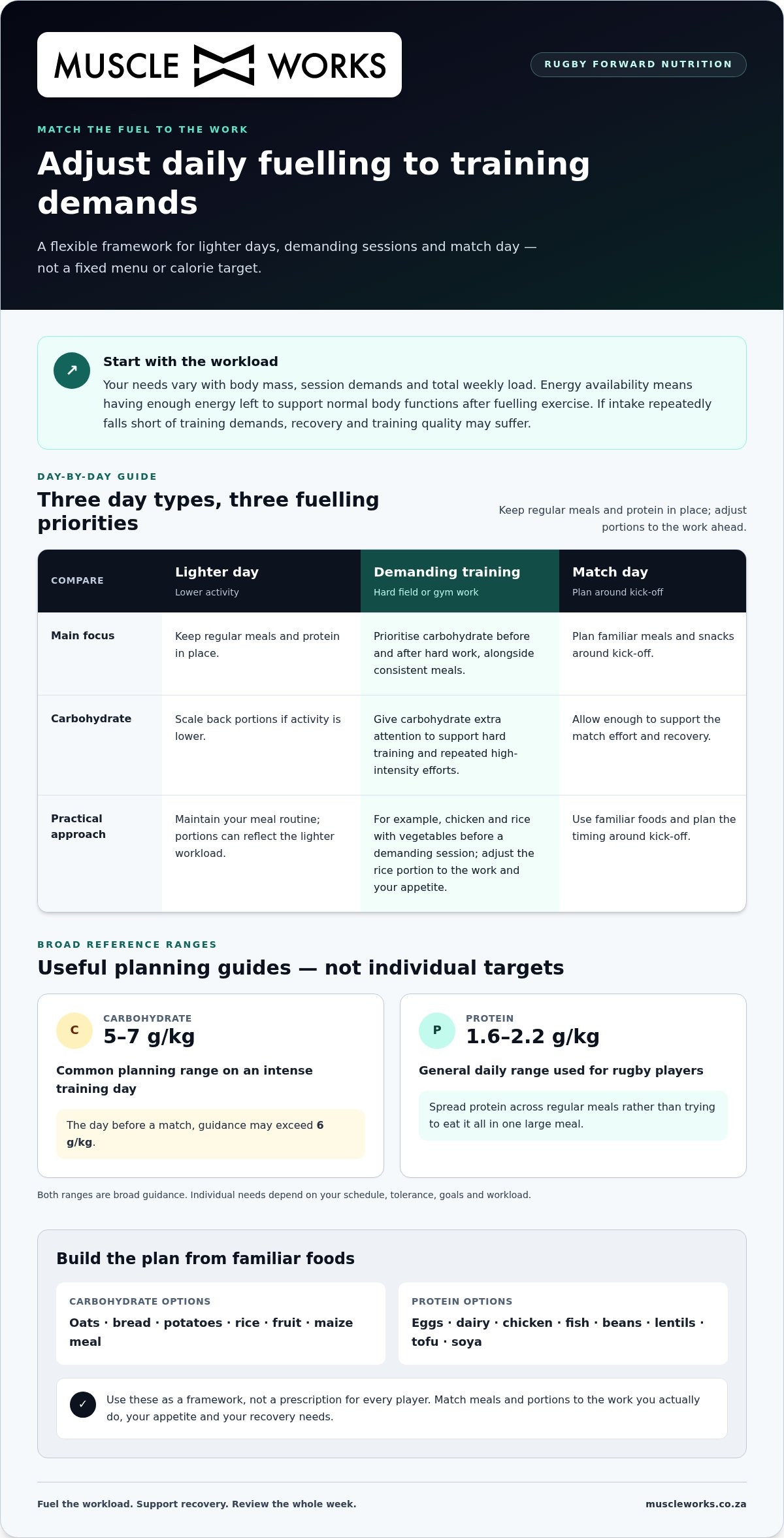
Energy availability means having enough energy left to support normal body functions after fuelling exercise. If food intake repeatedly falls short of training demands, recovery and training quality may suffer. Build the day around the work ahead, then adjust portions as workload changes. A nutrition plan for a rugby forward should be a framework, not a fixed calorie target.
Your needs vary with body mass, session demands and total weekly load. Use this guide to set priorities, not as a prescription for every player. World Rugby’s nutrition guidelines offer additional rugby-specific context.
| Day type | Fuelling principle |
|---|---|
| Lighter day | Keep regular meals and protein in place; scale back carbohydrate portions if activity is lower. |
| Demanding training day | Prioritise carbohydrate before and after hard field or gym work, alongside consistent meals. |
| Match day | Plan familiar meals and snacks around kick-off; allow enough carbohydrate to support the match effort and recovery. |
Adjust carbohydrate to training and match demands
Carbohydrate is a key fuel for hard training and repeated high-intensity efforts. Practical options include oats, bread, potatoes, rice, fruit or maize meal. For example, have chicken and rice with vegetables before a demanding session, then adjust the rice portion to suit the work and your appetite. On an intense training day, a common planning range is 5-7 g of carbohydrate per kilogram of body mass; the day before a match, guidance may exceed 6 g/kg. These are broad reference ranges, not individual targets. A sports dietitian can tailor them to your schedule, tolerance and goals.
Spread protein across meals for recovery
Protein provides building blocks for muscle repair and adaptation. Include a source at regular meals, such as eggs, dairy, chicken, fish, beans, lentils, tofu or soya. A general daily range used for rugby players is 1.6-2.2 g per kilogram of body mass. Treat it as a guide for your overall intake, rather than trying to eat it all in one large meal. Start with food. If a busy schedule makes a meal impractical, a convenient supplement may help you meet your personal target. 100% Whey Protein is one option to consider alongside meals, not instead of them.
Keep the plan grounded in consistent food and training demands. If you’re considering a convenient addition to your routine, explore sports nutrition options.
What should a rugby forward eat before, during and after training?
Use a simple sequence, then adapt it to the session. A nutrition plan for a rugby forward should account for training intensity and length, appetite, travel time and kick-off schedule. Don’t force a large meal when you’re heading straight to the field, and don’t leave fuelling until you’re already drained.
- Prepare. Check the session time and pack food and fluids if travel or work makes a meal difficult. Choose familiar options you tolerate well.
- Fuel before. Make your pre-session meal carbohydrate-led, with a protein source. Adjust the size and timing to your appetite and digestion.
- Hydrate during. Keep fluids accessible and drink regularly, with more attention in hot conditions or during a long, demanding session. Your needs depend on sweat loss and the environment.
- Recover after. If a full meal is practical, combine carbohydrate, protein and fluids. After a hard session, this might be potatoes with eggs and vegetables, or maize meal with beans and yoghurt.
- Resume normal meals. Return to your usual meal pattern so recovery doesn’t depend on one snack or shake.
Build a pre-training and pre-match meal
Keep it familiar. Oats with yoghurt and fruit, or maize meal with eggs, can provide carbohydrate alongside protein. If you have little time or appetite before training, try a smaller snack such as a banana or yoghurt rather than forcing a full meal. There’s no single meal time that suits every player. Account for digestion, travel and the gap between eating and kick-off.
Practise your match-day food and fluid routine during training. Don’t try unfamiliar foods, supplements or meal timings for the first time on match day. Rehearsal helps you learn what sits comfortably and fits your schedule.
Recover after contact, conditioning and matches
After contact work, conditioning or a match, choose a practical combination of carbohydrate and protein, then drink to replace fluids lost. A meal could be rice with chicken, or potatoes with eggs and beans. If you’re travelling or your appetite is low, pack fruit, yoghurt or a sandwich. A shake can also be convenient when a meal isn’t practical, but it doesn’t need to replace regular food.
Whole foods are the starting point. If you’re exploring options beyond them, read about amino acid supplements and consider their place in your overall routine rather than treating them as a substitute for meals.
How to organise hydration and meals across a rugby week
A weekly routine keeps fuelling practical, even when work, travel and training times shift. Map meals and snacks against your rugby calendar before the week starts, then adjust portions to the day’s workload. This makes a nutrition plan for a rugby forward easier to follow without relying on last-minute choices.
- Training days: Pack a meal or snack for before or after the session, plus fluids you can access during training.
- Lighter days: Keep regular meals and hydration habits, adjusting food portions to match the lower workload.
- Match preparation: Plan familiar foods and fluids around travel and kick-off. Use training sessions to practise the routine.
- Recovery: Have a meal ready for after the match, or pack portable options if you’ll be travelling.
Create a repeatable meal-preparation system
Choose a few flexible staples and prepare them in batches: oats, rice, potatoes or maize meal; seasonal vegetables and fruit; and protein sources such as eggs, beans, chicken, tinned fish or yoghurt. Combine them in different ways across the week. For example, serve cooked potatoes with eggs at one meal and beans at another. Pack portable snacks such as fruit, bread or yoghurt for training days.
Adapt the same framework to your needs. Vegetarian players can use eggs, dairy, beans, lentils or tofu; plant-based players can build meals around beans, lentils, soya and other suitable plant proteins. Choose dairy-free alternatives if needed. If appetite is low, try smaller, more frequent meals or snacks rather than forcing a large plate. A simple plan should be flexible enough to work through a busy week.
Hydrate without relying on guesswork
Fluid needs vary with session length and intensity, weather, clothing, sweat rate and personal tolerance. Start hydrated, keep fluids available during activity and drink afterwards in response to thirst and the session’s conditions. Hot training conditions may increase fluid losses, so pay attention to how you feel and how your body responds. Don’t force the same volume as another player.
If you have access to individual sweat-loss data, use it to inform your routine. Weighing before and after exercise can be one optional assessment method, but interpret results with qualified guidance rather than treating a single weigh-in as a prescription. Seek medical support for concerning symptoms such as confusion, fainting or persistent vomiting, or for ongoing health concerns.
Build consistency first. If a convenient protein option would help you plan around training, explore protein supplements as an addition to meals, not a replacement for them.
How to review your rugby-forward nutrition plan and use supplements wisely
A plan only earns its place if it supports your training and recovery. Review it regularly, using more than body mass as your scorecard. Short-term scale changes can’t prove that a plan is working or failing; look for patterns across training, meals and how you feel.
Track the signals that matter and adjust gradually
Keep a simple log for a few weeks. Note demanding and lighter sessions, what you ate around them, and how you felt during training and recovery. Check these signals:
- Training quality: Could you complete the work with focus and consistency?
- Recovery and energy: Are you generally ready for the next session, or repeatedly feeling run down?
- Appetite and consistency: Are meals manageable, and can you follow the plan around work and travel?
- Body-composition goals: Are changes gradual and relevant to your wider performance goals?
Change one practical variable at a time. You might add a snack before a demanding session or prepare an extra meal for a busy day, then observe the pattern rather than changing everything at once. A registered sports dietitian can help set individual targets, account for medical needs, or investigate persistent problems with energy, appetite or recovery.
Where protein and creatine supplements may fit
Food comes first. Meals built from familiar protein sources can form the foundation of your nutrition plan for a rugby forward. Protein powder is an optional, portable choice when preparing or carrying ordinary food isn’t practical. It can help you meet an individual protein target, but it doesn’t need to replace a meal by default. Check ingredients and serving guidance on the current product label, and consider whether it suits your needs.
Creatine monohydrate is also optional, not a requirement for every player. Research its suitability for you and consider your health, goals and sport-specific guidance before using it. If you compete under anti-doping rules, check current guidance and take care with supplement contamination risk; no supplement should be treated as automatically suitable just because an ingredient is familiar. For more detail, read this creatine monohydrate guidance.
Build the routine around consistent meals, training demands and recovery. If you’re ready to explore optional additions, explore Muscle Works sports nutrition.
Fuel with purpose, then review your progress
A strong nutrition plan for a rugby forward follows the work: match food and fluid to training demands, build consistent meals around carbohydrate and protein, and make recovery part of the week. Review training quality, energy, appetite and recovery over time. Don’t let a short-term change on the scale make the call for you.
Keep food at the centre. Supplements are optional tools, not shortcuts or substitutes for a sound routine. A convenient protein option may help when a meal isn’t practical, whilst creatine monohydrate is something to research and assess individually.
Muscle Works is a South African sports supplement brand serving athletes and bodybuilders, with whey protein, plant protein and creatine monohydrate in its range. If you’re considering an optional addition to your food-first approach, explore Muscle Works sports nutrition.
Stay consistent. Adjust with purpose. Build a routine that helps you turn up ready for the next session.
Frequently Asked Questions
What should a rugby forward eat in a day?
A rugby forward should eat regular meals that provide carbohydrate, protein, fruit or vegetables, and enough overall energy for that day’s work. On a demanding training day, meals might include oats and yoghurt, chicken with rice and vegetables, and eggs with potatoes. Add snacks such as fruit or bread if needed. A nutrition plan for a rugby forward should adjust portions to training, match demands, appetite and recovery, rather than repeat one fixed menu.
How much protein does a rugby forward need each day?
A general evidence-based range for rugby players is 1.6-2.2 grams of protein per kilogram of body mass per day. That’s a guide, not an individual prescription: needs depend on body mass, training and personal circumstances. Spread protein across regular meals using foods such as eggs, dairy, chicken, fish, beans or lentils. If food isn’t practical, a protein supplement can be a convenient addition, but it doesn’t need to replace meals.
What should a rugby forward eat before a match?
Choose familiar, carbohydrate-rich food with some protein, and plan it around kick-off, travel, appetite and digestion. Oats with yoghurt and fruit, or maize meal with eggs, are practical examples. If a full meal feels too heavy or there’s little time, a smaller snack such as fruit may suit you better. Practise your match-day routine during training. Don’t test unfamiliar foods or supplements for the first time on match day.
What should a rugby forward eat after training?
After training, have a meal that combines carbohydrate and protein, with fluids to replace losses. For example, serve rice with chicken and vegetables, or potatoes with eggs and beans. If travel or a low appetite makes a full meal difficult, pack portable options such as fruit, yoghurt or a sandwich. A shake can be convenient, too. Keep it as an option within a food-first routine, not an automatic substitute for meals.
Do rugby forwards need more calories than backs?
Not automatically. A forward’s energy needs may be higher than a back’s in some cases, but position alone can’t determine intake. Body mass, training volume, match minutes, role, recovery and individual goals all matter. Compare your own workload across demanding and lighter days, and adjust food intake accordingly. If you’re aiming to change body composition or struggling with energy and recovery, seek individual advice from a registered sports dietitian.
Should rugby forwards take creatine?
Creatine monohydrate is optional, not essential for every rugby forward. Consider it only after reviewing current evidence, your health needs and sport-specific guidance, ideally with a qualified professional. Supplements can carry contamination risks, so competitive players should take particular care and follow relevant anti-doping advice. Start with consistent meals, training and recovery habits; don’t expect a supplement to replace them or guarantee better performance.
How should a rugby forward stay hydrated during training?
Start training hydrated, keep fluids available, and drink during and after the session according to conditions, duration, sweat losses and your tolerance. Heat and a demanding session can change fluid needs, so don’t copy another player’s intake or force a universal volume. Individual sweat-loss assessment may help guide a plan. Seek medical support for concerning symptoms such as fainting, confusion or persistent vomiting, or for ongoing health issues.