
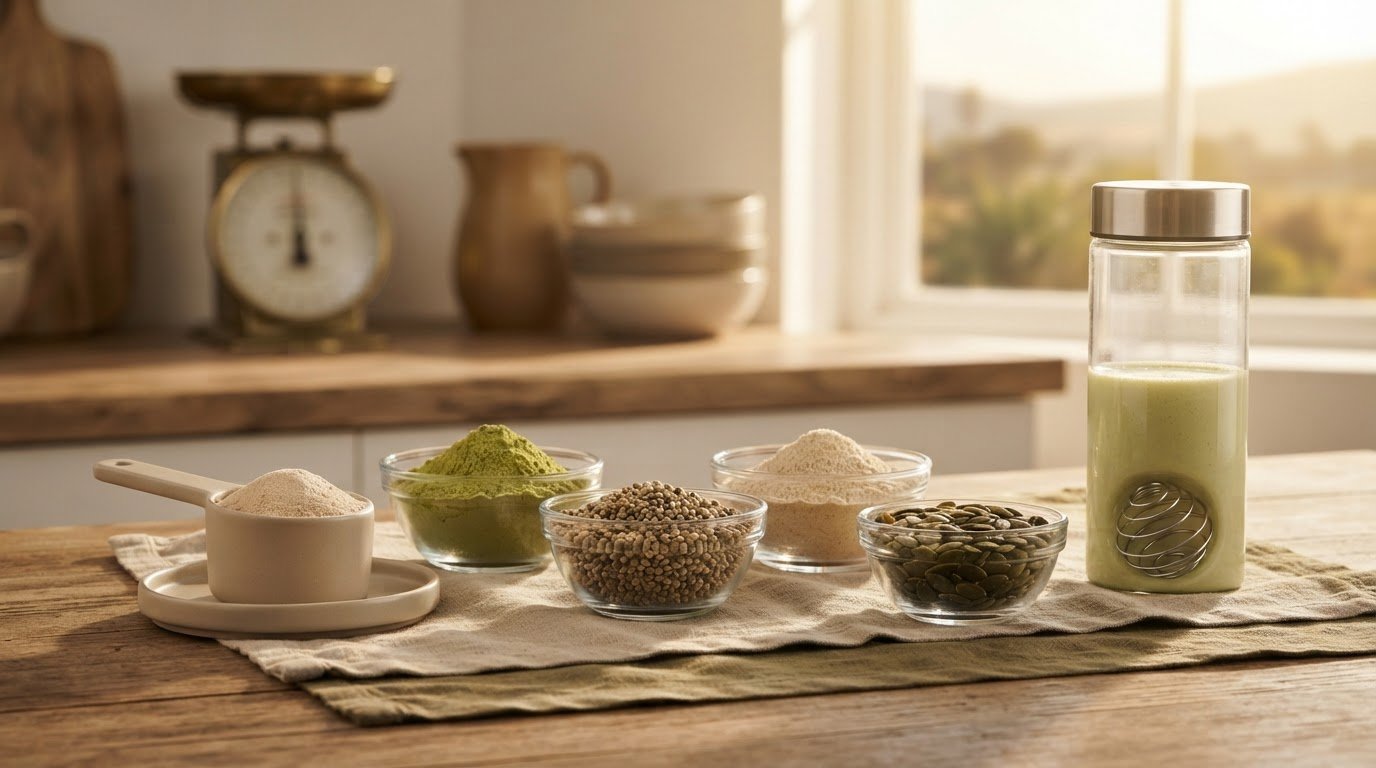
More protein isn’t automatically better. Adults should avoid consuming more than twice the recommended daily protein intake; for men, that intake is 55 g, whilst athletes may need 1.4 to 2 grams per kilogram of body weight. A soy-free plant protein powder still counts towards your total, alongside the protein you get from food.
When comparing plant proteins, check the source and the full ingredient list. Pea, hemp, brown rice and pumpkin seed have different nutritional profiles, while the label shows whether soy is included.
This guide explains how to compare protein content and ingredients, and what to consider for weight management, allergies, absorption and muscle support. Use the checks below to find a powder that fits your dietary needs and routine, rather than assuming one option suits everyone.
Key Takeaways
- Scan ingredient lists for soy protein, soy lecithin, soya and hydrolysed soy protein, including when the front label emphasises plant-based ingredients.
- Compare protein per serving with your overall daily intake, not just the headline number on the pack.
- Pea, hemp, brown rice and pumpkin seed offer different ways to build a soy-free plant-based protein choice.
- For a soy allergy, read the allergen statement too; cross-contamination warnings can matter as much as the main ingredients.
- Weigh protein content, added ingredients and how well a powder fits your nutrition goals before choosing it for weight management or training.
1. Does Vegan Protein Powder Help With Weight Loss?
Vegan protein powder can fit into a weight-loss plan if it helps meet your protein needs without adding more energy than your meals allow. It does not cause fat loss by itself. Compare protein, total energy, added sugars and serving size with what you would otherwise eat or drink. A shake added to your usual meals affects your intake differently from one replacing a snack.
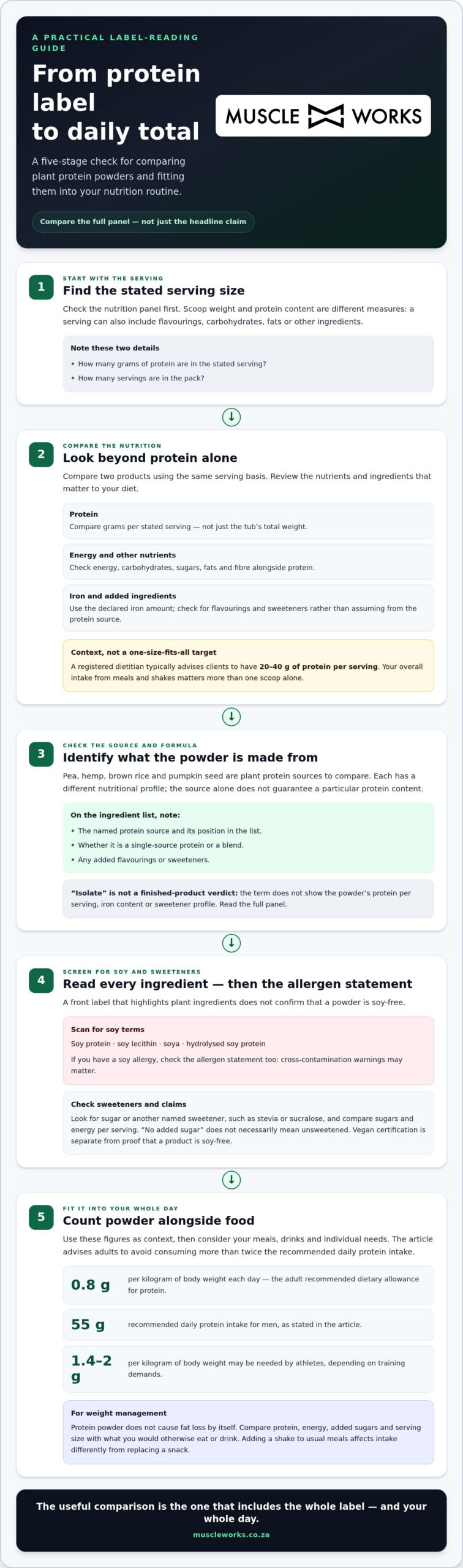
Check the ingredient list, not just the front-of-pack claims. To avoid soy, look for terms such as soy protein, soy lecithin, soya and hydrolysed soy protein. These may appear in flavoured blends or other ingredients, even when pea or rice protein is prominent. If you have a soy allergy, read the allergen statement too, as it may flag cross-contamination.
Sweeteners affect both taste and nutrition. Check whether the powder contains sugar or another sweetener, such as stevia or sucralose, and compare the nutrition information for the stated serving. “No added sugar” does not necessarily mean unsweetened: a product may use a non-sugar sweetener. Choose according to your taste, dietary needs and overall intake.
- Ingredients: look for the plant protein source and scan every listed ingredient for soy terms.
- Sweeteners: identify the named sweetener and compare sugars and energy per serving.
- Allergen statement: check for soy warnings, especially if you have a diagnosed allergy.
- Certifications: treat vegan or other certification marks as separate from proof that a powder is soy-free. Read the ingredient and allergen information to assess soy specifically.
According to the Department of Health, adults should avoid consuming more than twice the recommended daily protein intake. The recommended daily protein intake for men is 55 g. Athletes may need 1.4 to 2 grams of protein per kilogram of body weight, depending on training demands. Count powder alongside food, rather than treating a shake as protein-free nutrition.
In South Africa, you can find plant protein powders through online supplement retailers and physical nutrition shops. Before buying, compare the ingredient list, allergen statement and nutrition panel. A product name alone does not confirm that a powder is soy-free.
For muscle gain or general nutrition, choose a powder that fits your dietary needs and helps you reach your overall protein target. Mix a serving with 250-300 ml of water or a milk alternative, following the product’s directions, and include it in your daily intake rather than stacking servings without considering food.
2. Protein content and nutrition information
Compare the protein figure per serving, then check what else comes with it. The adult recommended dietary allowance for protein is 0.8 grams per kilogram of body weight each day. A registered dietitian typically advises clients to have 20-40 grams of protein per serving. These figures give useful context, but your total from meals and shakes matters more than one scoop alone.
Begin with the serving size on the nutrition panel. Scoop weight and protein content are different measures: a serving may also contain flavourings, carbohydrates, fats or other ingredients. Compare the grams of protein per serving, and note how many servings are in the pack. A larger scoop does not automatically mean a more protein-dense formula.
A protein isolate is an ingredient processed to separate it from some other components of its source. The term alone does not show the finished powder’s protein per serving, iron content or sweetener profile. Read the full nutrition panel and ingredient list. When comparing a pea-protein isolate with a blend, for example, check the protein and other listed nutrients rather than treating “isolate” as a quality verdict.
Iron is worth considering in a plant-based diet, but its amount cannot be inferred from the protein source. Check the product’s nutrition information and consider the rest of your meals. Beans, lentils, tofu and fortified foods can also provide iron, with amounts varying by food and preparation. Plant foods provide non-haem iron, which the body absorbs differently from haem iron in animal foods. A powder should not replace a varied diet.
- Protein: compare grams per stated serving, not just the tub’s total weight.
- Energy and other nutrients: review carbohydrates, sugars, fats and fibre alongside protein.
- Iron: use the declared amount on the panel; don’t assume every vegan protein contains a meaningful quantity.
- Ingredients: check whether the formula is a single-source protein or a blend, and note added flavourings or artificial sweeteners.
For a practical comparison, place two labels side by side. Match serving sizes, then compare protein, iron and any other nutrients relevant to your diet. This makes it easier to assess a soy-free plant protein powder by its nutrition rather than its front-label claims. If you track your intake, include the powder alongside meals and drinks so your daily total reflects all sources.
3. Pea, hemp, pumpkin seed, and rice protein options
Pea, hemp, brown rice and pumpkin seed are common soy-free plant protein sources. Each is a source to compare, not a guarantee of a particular protein content. Check the named source, its position in the ingredient list and the protein per serving. This helps distinguish a single-source powder from a blend.
Pea protein contains all nine essential amino acids. It can suit shoppers seeking a plant-based alternative to soy, but the nutrition panel still matters. Compare protein per serving with your needs and other foods. Flavour and texture also affect how easily it fits into a shake, porridge or smoothie. Choose a format you will use consistently.
Hemp protein is another plant-based option. The word “hemp” alone does not tell you its nutritional value, so check the serving size, protein content and added ingredients. If you plan to mix it into oats or a smoothie, consider how its taste and texture work with those foods. Choose a powder that suits your routine and dietary requirements.
Pumpkin seed protein is another alternative, often described as rich in antioxidants. That description does not replace the nutrition panel. Check protein content and ingredients, then compare it with pea, hemp or rice powders using the same serving basis. It can add variety, but let the product label guide your decision.
Brown rice protein is another soy-free source. It may be sold on its own or combined with pea or other plant proteins. For a blend, identify every protein source and compare the total protein per serving. The ingredient list, rather than the front label alone, shows whether the formula combines several sources or relies on one.
Use this quick comparison before buying:
- Name the source: identify pea, hemp, pumpkin seed, brown rice or a blend.
- Compare the label: match serving sizes and protein figures across options.
- Check the ingredients: scan the complete list for soy ingredients and added flavourings.
- Test the routine: consider whether the powder works in water, a milk alternative or food.
For muscle-building or general nutrition, your total protein intake across the day matters. Pea protein’s amino acid profile is one factor to compare; serving size, your overall diet and the powder you will use consistently matter too. Choose an option that meets your dietary needs and fits the way you prepare food.
4. Potential allergy, thyroid, and mineral-absorption concerns
A soy-free label can help narrow options, but people with a soy allergy need to inspect more than the product name. The United States Food and Drug Administration recognises soy as one of nine major food allergens. Read the ingredient list and allergen statement, including any warning about cross-contamination. A powder without soy listed as an ingredient may still carry an allergen warning.
Soy-free plant powders may suit people avoiding soy, provided the product information supports that choice. If you have a diagnosed soy allergy, read the allergen statement as well as the ingredient list: a soy-free claim alone does not address possible cross-contamination. Allergy and intolerance are not interchangeable, so be clear about why you avoid soy before choosing a formula.
Pea, rice, hemp and pumpkin seed powders each have their own ingredient lists. Check for other allergens or ingredients you need to avoid. A powder may combine several protein sources with flavourings and other ingredients, so review the full formula rather than assuming a pea-based or rice-based product contains only that protein.
Soy is often discussed in relation to thyroid concerns because it contains isoflavones, plant compounds that can weakly mimic oestrogen in the body. Research on hormonal effects at typical dietary intake is mixed, and most evidence suggests the effect is small. This describes soy and hormonal effects; it does not establish a specific thyroid effect for every person or protein powder. Consider the ingredient separately from your individual health circumstances.
For questions about mineral absorption, use the label as one part of the picture. The ingredient list and nutrition panel show what a powder contains, but not how your overall diet affects nutrient absorption. Consider the powder alongside meals, other supplements and your usual food choices. For example, compare the nutrients listed for a rice-protein blend with those in the meals around it, rather than treating one serving as a complete nutrition plan.
Pea, rice and hemp powders may cause digestive discomfort for some people, depending on the formula and serving. Sweeteners, flavourings or added fibres may also affect how a product feels after consumption. If discomfort follows a particular powder, note its ingredients and how you use it. Do not assume the protein source alone explains the reaction.
Use a simple screening routine: read every ingredient, check the allergen statement, identify the protein source and review the nutrition panel. Compare these details with your allergy or intolerance concerns. Pea protein’s amino acid profile, for example, does not tell you whether a product contains an allergen or suits your dietary needs.
5. Plant-based protein sources and product comparisons
Compare plant protein powders by source, protein per serving, ingredient list and amino acid profile. Pea, hemp, brown rice and pumpkin seed are common soy-free sources, but they are not interchangeable. A single-source powder has one primary protein; a blend combines sources. Neither is automatically the better choice. Let your dietary needs, daily intake and taste preferences guide the comparison.
Pea protein contains all nine essential amino acids. Its bioavailability is slightly lower than soy protein’s, but adequate total protein throughout the day can compensate for that difference. With adequate total protein intake, pea protein can support muscle building comparably to whey and soy protein. It is a practical option for people seeking plant-based protein without soy.
Hemp, brown rice and pumpkin seed offer other sources to consider. Pumpkin seed protein is described as rich in antioxidants, while protein content and other nutrients vary between products. Compare nutrition panels using the stated serving sizes. The source name alone does not tell you a product’s protein amount, texture or added ingredients.
“Protein isolate” is a useful label term, but it does not settle the comparison. Check the grams of protein per serving and the full ingredient list. For example, compare a pea protein isolate with a pea-and-rice blend. Note serving size, added flavourings and any ingredients you avoid. Assess the finished formula, not just the word “isolate”.
Which soy-free plant protein powders have complete amino acid profiles? Pea protein contains all nine essential amino acids. For hemp, pumpkin seed and rice options, check the product’s nutrition details rather than assuming their profiles match pea protein.
What soy-free plant protein powders are available in South Africa? Shoppers can look for powders made from pea, hemp, brown rice or pumpkin seed through online supplement retailers and physical nutrition shops. Check each product’s ingredient and allergen information: a source name alone does not establish that the finished powder is soy-free.
Use the same comparison method for each product. First, identify the protein source or blend. Next, match serving sizes and compare protein per serving. Then check added ingredients and allergen information. Finally, consider how the powder fits into your meals and training. This keeps the decision focused on useful differences rather than front-label claims.
- Prefer simplicity? Compare single-source powders and inspect their full ingredient lists.
- Want variety? Assess blends by the named sources and their protein per serving.
- Prioritise muscle support? Include the powder in your overall daily protein intake.
The key takeaway: pea protein has a complete amino acid profile, while other sources broaden your options. Choose a formula that suits your dietary requirements and that you can use consistently.
Muscle Works: 100% Whey Protein 1kg
100% Whey Protein 1kg is a dairy-derived option for readers who want whey protein rather than a plant-based powder. It isn’t suitable for a vegan diet. If you’re specifically avoiding soy, assess the product’s ingredient and allergen information before choosing it; whey describes the protein source, not whether soy is present.
For a plant-based option, Muscle Works also offers Plant Protein 1.2kg. Compare its product information with your dietary requirements and the criteria covered above. Choose based on the protein source and ingredients that fit your needs, not the product category alone.
Visit muscleworks.co.za to explore Muscle Works’ protein options.
Make your next nutrition choice count
Set your next step by deciding what matters most. If avoiding soy is essential, use the ingredient and allergen information to guide your choice rather than assuming every plant-based powder will suit you. A soy-free plant protein powder should fit both your dietary requirements and your everyday routine.
For other nutrition goals, Muscle Works offers 100% Whey Protein 1kg, SUPER PROTEIN ICE COFFEE – 450g and the 21 Day Grow Stack. These are distinct options, so choose according to the product information and the role you want them to play in your nutrition plan.
Ready to explore the range or discuss your next step? Contact Muscle Works for help. Keep your choice deliberate, stay consistent with your nutrition, and move forward with purpose.
Frequently Asked Questions
Is it possible to take too much protein?
Yes. According to the Department of Health, adults should avoid consuming more than twice the recommended daily protein intake. The recommended dietary allowance for adults is 0.8 grams per kilogram of body weight each day, and the recommended daily intake for men is 55 g. Count protein from meals, snacks and shakes together. Adding powder without considering food can push your total higher than intended.
Why Choose a Soy-Free Protein Powder?
A soy-free plant protein powder may suit people avoiding soy because of an allergy, intolerance or personal preference. Pea, hemp, brown rice and pumpkin seed powders provide different plant-based sources to compare. Read the full ingredient list and allergen statement instead of relying on a front-label claim. Check for any other ingredients that may not suit your diet.
Does Vegan Protein Powder Help With Weight Loss?
A soy-free plant protein powder can fit into a weight-loss eating plan, but the powder itself does not cause weight loss. Consider whether a shake replaces a snack or adds to your usual meals, and account for its serving and ingredients. For example, compare a flavoured shake with the snack you would otherwise eat. Choose an option that fits your preferences and helps you manage your overall food intake.
Who could benefit from using a protein supplement?
A protein supplement may be useful for athletes with higher protein needs, or for people who find it difficult to include enough protein in meals. It can also be convenient when preparing food is impractical. Treat it as one part of your eating pattern, not a replacement for varied meals. The right choice depends on your diet, training demands and ingredient requirements.
Why Avoid Soy Protein Isolate?
There is no general reason for everyone to avoid soy protein isolate. Someone with a soy allergy or intolerance may choose to exclude it, while others may avoid soy for personal reasons. Soy contains isoflavones, and research on hormonal effects at typical dietary intake is mixed; most evidence suggests the effect is small. If soy is a concern, check the complete ingredient and allergen information.
Which plant protein sources are soy-free, such as pea, rice, hemp and pumpkin seed?
Pea, brown rice, hemp and pumpkin seed are common soy-free plant protein sources. Pea protein contains all nine essential amino acids. The other sources provide alternatives, but their nutrition varies by product and formula. Compare protein content and full ingredients on each label. Blends may combine sources, so check every listed ingredient rather than judging a powder by its main protein alone.
How much protein per serving do popular soy-free plant protein powders provide?
Protein per serving varies between soy-free plant protein powders, so use each product’s nutrition panel. Compare the grams of protein and serving sizes on the labels. A registered dietitian typically advises clients to have 20-40 grams of protein per serving, but your needs depend on total daily intake and diet. Count the powder alongside protein from meals, rather than assessing it in isolation.
What are the best soy-free plant protein powders in South Africa by price and value?
There is no single best option for every South African shopper. Compare protein per serving, serving count, ingredients and allergen information, then consider how the powder fits your diet and routine. Value is about more than pack price: a powder that suits your needs and gets used consistently may be a better fit than one chosen on cost alone. Read the current product label before deciding.