

Your supplement shelf doesn’t need a pink label or a six-product stack to support stronger lifts. If you’re comparing strength training supplements for women, question whether women-specific formulas offer anything beyond familiar ingredients, and whether the basics are safe and suitable for you.
That uncertainty is understandable. A product can sound targeted without being useful, while a straightforward option may help if it fills a genuine gap. Consistent training, enough food, protein and recovery still do the heavy lifting. Supplements support the work; they don’t replace it.
This guide compares the main options against your training goals, diet and preferences. You’ll see where protein powders, including whey and plant-based choices, and creatine monohydrate fit, plus what to consider with amino acids, safety and suitability. The aim is a focused, realistic approach, not an oversized stack or exaggerated promises.
Key Takeaways
- Compare strength training supplements for women by purpose, evidence and fit, not by gendered branding.
- Consider when protein powder offers practical convenience, and how whey and plant-based options suit different preferences.
- Creatine monohydrate is a separate consideration from protein, not a universal requirement.
- Compare protein, creatine and amino acid products by their intended use and what to consider before choosing.
- Build a simple plan: clarify your goal, review your diet, assess one category and reassess its usefulness.
Strength training supplements for women: what they can, and cannot, do
Strength-training supplements are optional products intended to complement eating and training. Protein powders, creatine and amino acid products are common examples of bodybuilding supplements, but they have different purposes. The key question isn’t whether a product is marketed to women. It’s whether it suits your needs and has a clear role in your routine.
A supplement may make part of your nutrition routine more convenient. For example, protein powder can be a practical way to add protein when preparing or eating a meal doesn’t fit your schedule. That convenience doesn’t mean the powder itself will directly increase strength or muscle. Results depend on the wider picture, including training, nutrition and recovery.
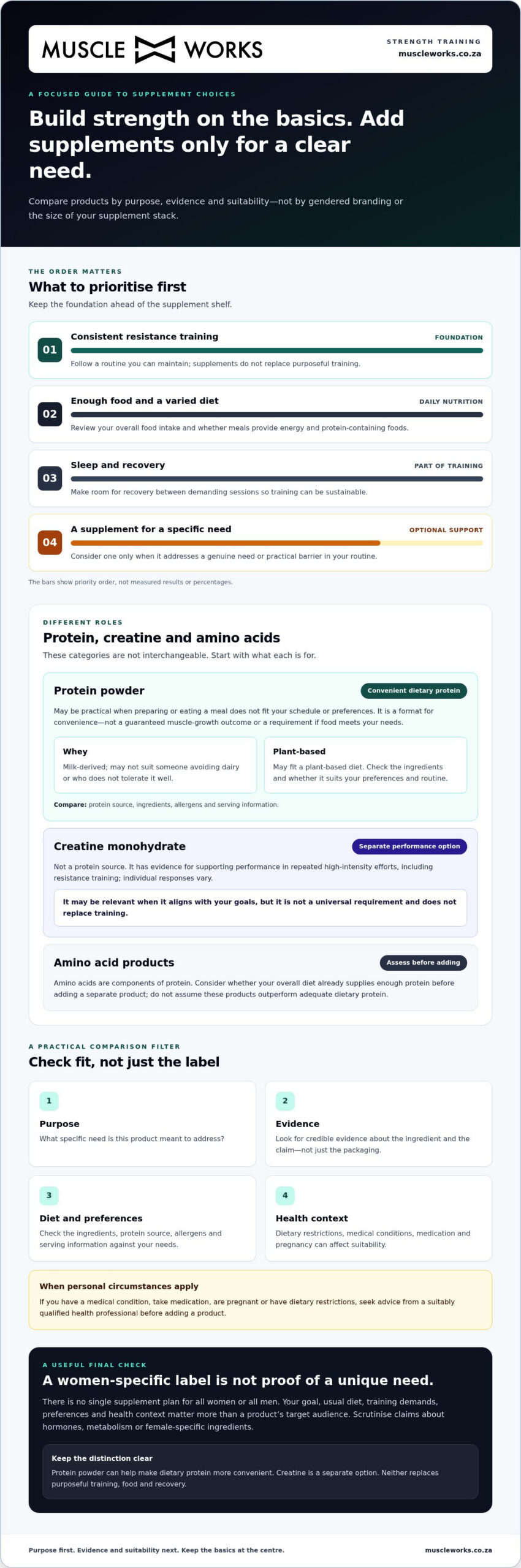
Supplements can support your routine; training, food and recovery build its foundation.
Do women need different supplements from men?
There’s no single supplement plan for all women or all men. Your goal, usual diet, training demands, preferences and health context matter more than a label’s target audience. A “for women” formula doesn’t prove a unique need or a better result. Scrutinise claims about hormones, metabolism or female-specific ingredients, and look for credible evidence about the ingredient and the claim, not just the packaging.
Individual circumstances can affect what’s suitable. Dietary restrictions, medical conditions, medication and pregnancy can all influence supplement decisions. If one of these applies, get advice from a suitably qualified health professional before adding a product.
What should come before the supplement shelf?
Start with a consistent resistance-training programme and enough overall food to support your routine. Balanced meals can provide energy and a range of nutrients, while protein-containing foods contribute to your daily intake. Sleep and recovery matter too. They help make training sustainable and give your body time between demanding sessions.
Keep the order clear:
- Follow a resistance-training routine you can maintain.
- Review whether you’re eating enough and getting a varied diet.
- Make room for sleep and recovery alongside training.
- Consider a supplement only if it addresses a specific need or practical barrier.
No powder or capsule can make up for a routine that keeps breaking down. If training is inconsistent or meals regularly fall short, address those patterns first. Then assess strength training supplements for women by their purpose, evidence and fit, rather than promises of fast results.
How protein and creatine fit into a strength-training plan
Protein powder and creatine serve different purposes. Protein powder can make it easier to add dietary protein when meals don’t fit your routine. Creatine monohydrate is a separate supplement studied for its role in repeated, high-intensity exercise. Neither is compulsory, and one cannot replace the other. The National Institutes of Health’s Dietary Supplements for Exercise and Athletic Performance fact sheet reviews the evidence and considerations behind both.
Protein powder: whey or plant-based?
Choose according to dietary preference, ingredients and how you’ll use it. Whey is milk-derived, so it may not suit someone avoiding dairy or who doesn’t tolerate it well. Plant protein may fit a plant-based diet; check its ingredients and whether the product works for your preferences and routine. Either format is a convenient option, not a requirement if food already meets your needs.
Muscle Works offers options in both categories: 100% Whey Protein 1kg, Iso-Tech Whey and Plant Protein 1.2kg. Compare the ingredient list and serving information with your dietary needs. For more on whey, read the whey protein guide.
Creatine and amino acids: where do they fit?
Creatine monohydrate isn’t a protein source. It’s a distinct option with evidence for supporting performance in repeated high-intensity efforts, including resistance training, though individual responses vary. It may be relevant if that aligns with your goals, but it isn’t a universal requirement. For a closer look at the evidence and practical considerations, see the creatine monohydrate guide.
Protein helps you meet a dietary need; creatine is a separate performance option, and neither replaces purposeful training.
Amino acid products are another category to assess, not an automatic upgrade. Amino acids are components of protein, so consider whether your overall diet already supplies enough protein before adding a separate product. Muscle Works’ Beef Aminos and L-Glutamine are examples of amino acid products, but their relevance depends on your diet, training needs and the specific product. Don’t assume they outperform adequate dietary protein.
Identify the need first, then compare the category and ingredients. If you’re weighing up options, explore Muscle Works protein and creatine supplements against your goals and preferences.
How to compare strength training supplements for women
Compare products by purpose, evidence and suitability, not packaging. A powder may be convenient, but its format alone doesn’t show that it’s effective. Likewise, a label aimed at women doesn’t establish that women need a separate formula. For a broader review of ingredients and research, consult the NIH Office of Dietary Supplements’ evidence-based guide to supplements.
| Category | Potential purpose | What to consider |
|---|---|---|
| Protein powder | A convenient way to add dietary protein when food doesn’t fit your routine or preferences. | Check the protein source, ingredients, allergens and serving information. It’s a format for convenience, not a guaranteed muscle-growth outcome. |
| Creatine monohydrate | A separate option for people assessing evidence related to repeated high-intensity exercise. | It isn’t a protein source or a universal requirement. Review the product directions and consider whether it suits your goals and health context. |
| Amino acid products | An optional category to assess in light of your diet and training needs. | Check which amino acids are included and why you’re considering them. Don’t assume a separate product is automatically more useful than adequate dietary protein. |
Which supplement category matches your goal?
Start with the gap you’re trying to address. If meal timing or dietary preference makes getting protein less convenient, a powder may be worth considering. If you’re interested in performance-related evidence, assess creatine separately. Consider amino acid products in context, rather than adding them by default. None should be treated as a shortcut or guaranteed result.
Use the same criteria for strength training supplements for women as for any other supplement: what it contains, what it’s intended to do, and whether it fits your routine. Don’t rank products by gendered branding or assume one category is best for everyone.
How to read labels and assess claims
Read the full label before deciding. Check serving information, ingredients, allergens and directions, then consider whether they suit your diet and intended use. If a claim is unclear, look for evidence about the specific ingredient and the outcome being promised. A convenient format and persuasive packaging are not proof of effectiveness.
Be sceptical of promises of rapid transformation, hormone balancing or guaranteed results. These claims deserve careful scrutiny, especially if they imply that one product can replace training, food or recovery. For South African products, refer to current official South African regulatory guidance where relevant. Verify applicable requirements rather than relying on assumptions or label claims.
Build a simple supplement plan around your training and diet
A useful plan starts with a clear reason, not a crowded cupboard. Decide what you want a supplement to address: perhaps a practical barrier to getting protein through food, or an interest in a particular ingredient’s evidence. Then consider whether your meals, training routine and recovery already support that goal. Supplements should fill a considered gap, not become another routine you can’t explain.
A practical decision sequence for choosing supplements
Keep the process focused. Work through these steps before choosing among strength training supplements for women:
- Clarify your goal. Name the specific need or convenience problem you’re trying to address.
- Review your diet and routine. Consider whether food already meets your needs and whether the product would fit your usual habits.
- Choose a relevant category. Compare suitable product types and ingredients with your goal, dietary preferences and the product’s directions.
- Check suitability. Review the label, including ingredients, serving information, allergens and directions. Consider your health context before use.
- Reassess. Ask whether the product remains useful as your training, eating habits or preferences change.
Make one deliberate change at a time. If you add several products together, it’s harder to tell which is useful or causing an unwanted reaction. Keep track of what you’ve changed and how it fits into your routine. Don’t set a dose by guesswork or assume a universal intake target applies to you. Follow the product directions and seek qualified guidance if you’re unsure.
When to pause and seek professional advice
Get individual advice from a qualified health professional before using supplements if you have a medical condition, take medication, are pregnant or are breastfeeding. Your circumstances can affect whether an ingredient is suitable and whether it could interact with treatment. A general guide cannot assess your personal health history.
If you experience a concerning reaction after taking a supplement, stop using it and seek advice from a qualified health professional. Don’t try to diagnose the cause yourself or push through symptoms. Clear decisions beat guesswork.
Keep the plan simple: identify a need, choose one relevant category, check suitability and review whether it still earns its place. Explore Muscle Works protein, creatine and amino acid options as you compare categories with your goals and preferences.
Choose your next step: focused support, not an oversized stack
The best next step is the one that addresses a clear need in your routine. Protein powder may offer convenience if food doesn’t suit your schedule or dietary preferences. Creatine monohydrate is a separate option to assess against your goals and the available evidence. Amino acid products may suit particular preferences or needs, but they’re not an automatic upgrade to an otherwise adequate diet.
Keep the approach focused on your actual needs
Choose a category only when you can explain why it belongs in your plan. A powder won’t guarantee muscle growth, creatine isn’t required for everyone who strength trains, and no supplement can replace consistent training, food and recovery. Adding several products at once also makes it harder to work out which is useful, suits you or causes an unwanted reaction.
Start with one deliberate choice. Review its ingredients and directions, consider how it fits your diet and routine, then reassess its usefulness as your habits or goals change. This keeps strength training supplements for women tied to individual needs, rather than broad claims about what women should take.
Explore suitable Muscle Works options
If convenience is the priority, compare 100% Whey Protein 1kg with Plant Protein 1.2kg based on your dietary preferences and the product information. If you’re considering creatine, assess creatine monohydrate as its own category, not as a replacement for protein. These are options to compare, not essentials or promises of a particular result.
Amino acid products are another category to approach with a clear reason. Read the amino acid supplement guide to understand the category before deciding whether it fits your diet and training needs. The 21 Day Grow Stack is an optional bundle example, not a necessary starting point. Assess any bundle by its contents and whether each product has a place in your individual plan.
Keep the decision disciplined: identify the need, compare the relevant category and choose only what fits. Explore Muscle Works supplements to review the options against your goals and preferences.
Make your next supplement choice count
Strong results start with consistent training, enough food and recovery. Supplements come second. The best strength training supplements for women aren’t defined by pink packaging or an oversized stack. They address a clear need, fit your diet and routine, and stand up to careful scrutiny.
Protein powder can offer convenience when food doesn’t suit your schedule or preferences. Creatine monohydrate is a separate option to assess against your goals and the evidence. Amino acid products may also be relevant in context, but no category is essential for every woman who strength trains. Choose deliberately, introduce one change at a time and reassess its usefulness.
Muscle Works is a South African sports supplement brand offering whey and plant protein, creatine monohydrate and amino acid products. Compare these categories against your own criteria, not exaggerated promises. Explore Muscle Works supplements and choose a focused next step that fits your training and diet.
Keep showing up, keep your approach grounded and let consistency lead the work.
Frequently Asked Questions
Do women need different strength training supplements from men?
No, not automatically. Supplement choices should reflect your goals, diet, training, preferences and health context, rather than gendered packaging alone. Some individual needs differ, but women aren’t one uniform group, and neither are men. Look for evidence supporting the specific ingredient and claim. If a product promises to balance hormones or is labelled “female-specific”, check whether reliable research supports that benefit instead of assuming the formula is necessary.
What supplements are useful for women who lift weights?
Protein powder may be useful if it helps you add protein conveniently or fits your dietary preferences. Creatine monohydrate is a separate option to consider if you’re interested in evidence around repeated high-intensity exercise. Amino acid products may suit particular needs, but aren’t automatic additions. The most useful choice depends on what your diet and routine need. Supplements support the plan; they don’t replace consistent training, balanced meals or recovery.
Is creatine safe for women?
Creatine monohydrate is a well-studied supplement, but whether it’s suitable depends on your personal health context. Follow the product directions and don’t assume a dose that suits someone else is right for you. If you have a medical condition, take medication, are pregnant or are breastfeeding, seek guidance from a qualified health professional before use. Stop taking it and seek advice if you experience a concerning reaction.
Can protein powder help women build muscle?
Protein powder can help you add protein to your diet, which may support muscle growth when paired with appropriate resistance training and adequate overall nutrition. It isn’t a muscle-building shortcut, and you don’t need it if food already helps you meet your needs. Whey and plant protein are different options to compare by ingredients, dietary preferences and practicality. Choose for fit and convenience, not a promise of guaranteed gains.
How much protein should a woman who strength trains have?
Needs vary with body size, training, diet and health. For women aiming to build muscle, a commonly cited daily range is 1.6 to 2.2 grams of protein per kilogram of body weight. Treat this as a general range, not an individual prescription or a target everyone must reach. Consider protein from all foods and supplements together, and seek advice from a qualified dietitian if you need a personalised target.
Are supplements marketed specifically for women better?
Not just because they’re marketed to women. A gender-specific label doesn’t prove that a product has a better formula, stronger evidence or a unique benefit. Compare the ingredients, serving information, allergens and directions with your needs. Scrutinise claims about hormones, metabolism or rapid results, and look for evidence on the actual ingredients and claimed outcomes. Choose based on suitability and evidence, not colour, wording or assumptions about what women need.
Should I take protein, creatine and amino acids together?
Not by default. Protein powder may be a convenient way to add dietary protein; creatine is a separate option, and amino acid products should be assessed against your diet and training needs. Taking all three doesn’t guarantee better results, and adding several products at once makes it harder to assess usefulness or tolerance. Identify a clear reason for each product, check suitability and consider introducing one change at a time.