

More protein doesn’t automatically mean more fat loss. Whey isolate for fat loss in South Africa is best understood as a protein option, not a fat-burning shortcut: it usually contains at least 90 percent protein. Whey protein comes in three types: concentrate, isolate and hydrolysate.
If you’re aiming to lose fat, you may be looking for whey isolate for fat loss in South Africa that fits your eating plan without adding unnecessary hassle. If dairy-based shakes leave you feeling bloated, the type of whey may matter too.
This guide explains what whey protein is and how it can fit into a weight-loss approach. A scoop does not replace consistent habits. You’ll learn how isolate differs from concentrate and hydrolysate, why its lower lactose content may suit some people who experience lactose-related bloating, and what to consider when choosing a type. Choose protein that works for your needs, and let the rest of your plan do the heavy lifting.
Key Takeaways
- Compare whey products by their protein content, ingredients and serving information, not tub size or price alone.
- Use whey as a practical way to support your eating plan; fat loss still depends on the overall pattern of what you eat.
- If dairy-based shakes leave you bloated, whey isolate may be worth considering because it contains less lactose and may be easier to digest for some people.
- Choose between isolate and concentrate based on your digestion, dietary needs and product details, rather than assuming one causes more fat loss.
- Build your daily protein intake around meals and your training goals, then use a supplement to fill a gap when it suits your routine.
What is whey protein?
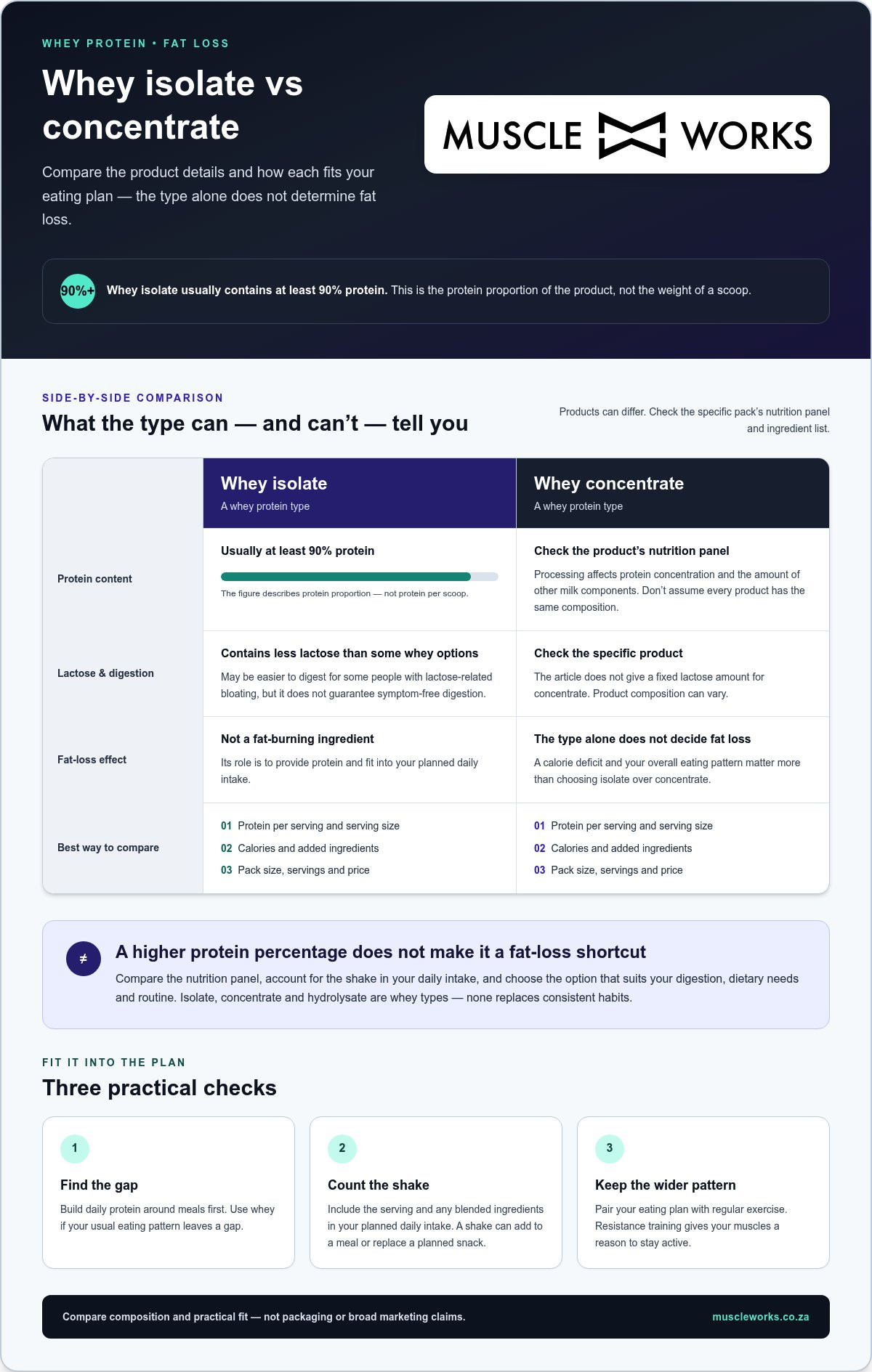
Whey protein is a milk-derived protein separated during cheesemaking. It provides a concentrated way to add protein to meals or drinks. The three types are concentrate, isolate and hydrolysate. Processing changes their protein concentration and the amount of other milk components. Whey isolate usually contains at least 90 percent protein. That figure describes the protein proportion, not the weight of a scoop. Check the nutrition panel to compare protein per serving with the serving size. A product name alone cannot tell you how much protein each portion supplies.
South African listings show different prices for products with different sizes, ingredients and protein amounts. Compare like with like before judging value. Check the price alongside the pack size, serving information and nutrition panel. A larger tub may cost more upfront, so compare its price with the servings and protein it provides. Flavourings and other ingredients can also distinguish products. Treat a displayed price as specific to that product, not as a guide to every whey protein.
When assessing a premium whey isolate listing, consider the product details alongside its displayed price. Read the ingredient list and nutrition panel, then note the pack size and serving information. Compare protein per serving with a whey product of a similar size. This gives you a more useful basis for judging value than the name or headline price alone. Don’t assume every product labelled “isolate” has the same composition. The ingredient list and nutrition information show what that specific product contains. Use those details to decide whether it fits your dietary needs.
Are South African whey protein products tested or certified for quality and banned substances? Some may be tested or certified, but this does not apply across the category. Quality certification and banned-substance testing are different, and a label alone does not demonstrate either. Look for a named testing or certification programme linked to the specific product rather than relying on general claims about whey.
Compare products consistently. First, identify whether each is concentrate, isolate or hydrolysate. Next, compare the stated protein per serving and pack size. Read the ingredients for additions relevant to your diet, then weigh the price against servings and protein content. This separates a product’s value from packaging, flavour names and broad marketing claims. For fat loss, whey is a protein source, not a special price category. Choose based on composition and practical fit, not the assumption that the highest-priced option works best.
Whey protein and weight loss
Whey can help fill a protein gap during fat loss. Its role is practical: it can support your eating plan, but it does not create a calorie deficit by itself.
Isolate Compared with Concentrate
When comparing isolate and concentrate for fat loss, check the nutrition panel. The type alone does not determine whether you lose body fat. Compare protein per serving, calories and added ingredients, then account for the serving in your daily intake. If both products suit your needs, choose one that fits your routine and budget. Isolate is not a fat-burning ingredient.
Use the same comparison method for every product. A shake with sweeteners or other additions still contributes to your overall intake. Consider whether it replaces a planned snack or adds to your usual meals. That difference affects how it fits into your calorie deficit.
Daily Protein for Fat Loss
Your daily protein target depends on your body, food intake and training demands. Build it from meals first, then use whey to fill a gap. Review a typical day: include protein at meals, note where intake falls short, and decide whether a shake would help. Don’t use a scoop as a reason to skip varied meals. Food also provides other nutrients and can contribute to fullness.
For example, if breakfast contains little protein, a shake may be more useful then than after a meal already centred on protein. Base the decision on your actual eating pattern. A precise target depends on personal factors, so don’t copy someone else’s intake without context.
Using Isolate with Diet and Exercise
Pair whey isolate with a calorie deficit and regular exercise. The deficit supports weight loss, while resistance training gives your muscles a reason to stay active. Whey adds convenient protein, but it cannot replace balanced meals or consistent training. Count the shake in your daily intake, especially if you blend it with other ingredients.
How should you use whey isolate alongside a calorie deficit and exercise? Fit a serving into your planned intake, and use it where meals leave a protein gap. NPL recommends taking whey protein within 30 minutes after a workout to support recovery and growth. Timing can support your routine, but the overall eating and training pattern matters more.
Make recovery part of the plan. A lean-muscle plan recommends 7-9 hours of sleep during rest hours. Alongside adequate rest, supporting your daily energy and vitality with natural wellness products from gara-health.com can help sustain an active lifestyle. Keep meals, training and sleep consistent, then review how the routine feels and fits your needs. If a shake pushes your intake above your planned deficit, adjust the meal or serving rather than treating the supplement as separate from your diet.
Whey isolate and lactose-related bloating
Whey isolate may suit people who experience lactose-related bloating. It contains less lactose than some whey options, but that does not guarantee freedom from digestive symptoms.
Whey isolate can be used as a protein supplement, but possible digestive effects include bloating or discomfort, particularly for people with lactose sensitivity. According to NPL, isolate or hydrolysed whey can reduce bloating for some people because these products contain less lactose and may be easier to digest.
Lactose is the milk sugar that can trigger symptoms in people who struggle to digest it. Whey comes from milk, so processing matters. Isolate is processed to remove more non-protein components than concentrate, which can make it a more suitable option for some people concerned about lactose. NPL also identifies hydrolysed whey as a type that may be easier to digest. Check the ingredient and nutrition panels rather than relying on the product name alone.
Follow the product’s stated serving instructions. Try mixing it with water first, rather than milk, which adds another source of lactose. Keep the drink simple. If you combine whey with milk, yoghurt, fruit and other ingredients, it is harder to tell which one affects your digestion. Note what you used and how you felt afterwards. This practical comparison can help you spot patterns without changing several parts of your routine at once.
Use these steps to make a clearer comparison:
- Read the label for whey type and listed ingredients.
- Choose water as the mixing liquid for your first trial.
- Keep other ingredients consistent between drinks.
- Record the serving and any digestive symptoms afterwards.
These steps don’t diagnose lactose intolerance or another digestive condition. They can help you notice whether a particular drink affects your comfort. Bloating may have more than one cause, including ingredients added to flavoured powder. Check the full ingredient list for sweeteners and other additions. If symptoms continue after you change the drink, don’t assume lactose is the cause.
Whey isolate and hydrolysed whey can still contain milk-derived ingredients. Lower lactose does not mean lactose-free, and easier digestion for some people does not mean everyone will be symptom-free. Lactose sensitivity and milk allergy are also different. If you have a known allergy or persistent digestive symptoms, get appropriate medical guidance before using a milk-based supplement.
For a fair comparison, change one factor at a time. For example, compare an isolate mixed with water against your usual milk-based shake, keeping the serving and other ingredients steady. Use the label to understand the product and your own recorded response to assess comfort. The aim is to find a protein option that fits your diet without making digestion harder to manage.
Does whey isolate help with fat loss compared with whey concentrate?
Whey isolate does not automatically lead to more fat loss than concentrate. Both are protein options. Fat loss depends on your overall calorie intake, not the whey label alone. Compare the nutrition panels and choose the type that fits your diet, digestion and routine.
Processing distinguishes the two types. Isolate usually contains at least 90 percent protein, whilst concentrate retains more non-protein components. The exact composition varies by product, so read each label rather than assuming every tub matches. Compare protein and energy per serving, serving size and ingredients. A product’s type is useful information, but it cannot tell you how that serving fits your daily intake.
Use this label check for both options:
- Compare protein per serving, not just the front-of-pack claim.
- Check the serving size and energy information.
- Read the ingredients for flavourings and other additions.
- Assess whether the drink replaces food or adds to your usual intake.
For example, if a serving of isolate provides more protein for its stated serving size, it may suit someone prioritising a concentrated protein source. But if concentrate meets your protein needs and fits your food plan, isolate offers no automatic fat-loss advantage. Compare products as sold, since formulations and serving sizes differ. Use the same criteria for both, not a headline claim or tub size.
The practical difference may matter more than the category. Someone concerned about lactose-related bloating may prefer isolate, which contains less lactose than some whey options. Someone without that concern may focus on protein per serving, taste and how the product fits their meals. According to NPL, isolate or hydrolysed whey can reduce bloating for some people because these products contain less lactose and may be easier to digest. That relates to digestion, not fat loss directly.
Keep the calorie deficit in view. A shake contributes to your daily intake, even if it is labelled isolate. If you blend it with milk, fruit or other ingredients, count those too. Replacing a planned snack may fit differently from adding a shake after your usual meals. The deciding factor is your total daily intake, not the powder’s category.
Choose concentrate if its label, ingredients and serving suit your needs. Choose isolate if its protein concentration or lower lactose content better matches your priorities. With either type, consider how the serving fits your meals and training routine. Whey isolate for fat loss in South Africa is a useful search, but your choice comes down to the product details and the plan around it.
How much protein should I eat daily for fat loss while preserving muscle?
Your daily protein target depends on body mass, training and food intake. Build it around your actual routine, not a generic number copied from someone else. A calorie deficit affects the context: protein must fit your overall intake, while meals still need to support training and recovery. Whey can fill a gap, but it does not set your target.
Start by reviewing your food intake. Write down a typical day, including meals, snacks and drinks. Mark foods that provide protein, such as eggs, dairy, beans, fish, meat or tofu. Then identify the meal with the smallest contribution. That is a practical place to consider a shake, rather than adding one automatically. Repeat the review on training and rest days if your meals differ.
Body mass is one factor in estimating protein needs, but it is not the only one. Training style, the size of your calorie deficit, your current diet and health needs all affect the decision. Resistance training places different demands on your eating plan than a routine with little strength work. Your target should make sense alongside these factors and the rest of your diet.
Use this process to organise your intake:
- Record meals and protein sources across a normal day.
- Compare meal patterns on training and rest days.
- Find the meal where a convenient protein source would help.
- Count a shake within your daily food and drink intake.
- Review the plan as your training or eating pattern changes.
For example, if breakfast is mostly toast and fruit, adding a protein source may balance the meal. If lunch already includes fish, beans or another substantial protein source, a shake may fit better elsewhere. Use the product label to count the serving accurately. A scoop is not a universal measure, so follow the serving details on the specific pack.
Preserving muscle during fat loss also requires a coherent training plan. Resistance exercise gives muscles a reason to remain engaged, while protein provides part of the diet needed to support them. Neither a shake nor a high-protein meal replaces sound training. Keep your calorie deficit and exercise routine aligned, and avoid letting shakes crowd out varied meals.
Adjust based on the full pattern, not one meal. If your intake feels difficult to manage, a registered dietitian can help personalise the target using your body mass, training and health context. For a convenient protein option, explore protein choices and compare their serving information with your food plan.
Muscle Works: 100% Whey Protein 1kg
Muscle Works: 100% Whey Protein 1kg is an option for adding whey protein to your eating plan. Consider it when meals leave a protein gap and a shake suits your routine. It is a whey protein product, so don’t assume it is an isolate. If lactose-related bloating is a concern, compare the product label and whey type with the guidance above before choosing. Keep your serving within your overall daily intake, and use it to complement meals rather than replace a balanced plan. The right choice depends on your needs, label details and preferences, not a fat-loss promise.
For more information, visit muscleworks.co.za.
Make your next choice count
Choose a routine you can sustain. Before choosing a shake, decide where it fits in your day and what role it needs to fill. If you’re choosing whey isolate for fat loss in South Africa, focus on dietary fit, convenience and how the product works with your meals. A supplement should support a plan you can follow, not distract from it.
Muscle Works offers 100% Whey Protein 1kg, SUPER PROTEIN ICE COFFEE – 450g and the 21 Day Grow Stack. Consider which option aligns with your current goal, then use the product information to guide your choice. Keep your approach focused and consistent.
Contact Muscle Works for help choosing an option for your routine. Take the next step with a clear plan and keep building towards your goal.
Frequently Asked Questions
What are current South African prices per kilogram for whey isolate?
There isn’t one standard price per kilogram across South African whey products. Muscle Works lists Iso-Tech Whey at R649, but its product information describes a blend containing whey isolate and also identifies the product as 1.8kg, listed as a 900g product. Check the pack weight shown at purchase before calculating a per-kilogram comparison. Don’t treat the price of a whey blend as the price of pure isolate.
Is whey isolate suitable for lactose intolerance or dairy allergies?
Whey isolate may suit some people with lactose intolerance, but it remains milk-derived. NPL says isolate or hydrolysed whey can reduce bloating for some people because these products contain less lactose and may be easier to digest. Lactose intolerance is different from a milk allergy. If you have a dairy allergy, don’t assume isolate is suitable: check allergen information and get medical advice before using a milk-based product.
Which whey isolate brands are available in South Africa?
The article mentions Muscle Works 100% Whey Protein and an Isozero Whey Protein listing.